In a major legal blow to Pakistan-based terror mastermind, globally designated terrorist, and Hizbul Mujahideen chief Mohammad Yousuf Shah alias Syed Salah-ud-din, a special court in Kashmir has issued a non-bailable warrant (NBW) against him in a long-pending terror case registered by the Jammu and Kashmir Police in 2012.
The order was passed by Special Judge (NIA) Budgam, Yahaya Firdous, who observed that the investigation had yielded sufficient prima facie evidence directly linking the Hizbul supremo to serious offences under the Unlawful Activities (Prevention) Act (UAPA).
"After perusal of the case diary, it is evident that the Investigating Officer has collected adequate material connecting the accused with offences punishable under Sections 13, 18, 20 and 39 of the UAP Act, besides Section 506 of the RPC," the court noted while issuing the warrant.

The judge further recorded that the Hizbul chief is deliberately evading arrest, leaving the court with no option but to issue a non-bailable warrant and direct the Jammu and Kashmir Police to arrest him.
"As per the statement of the Investigating Officer, the original case diary has been forwarded to the competent authority for sanction, following which the chargesheet will be filed before the competent court for trial in absentia," the order said.
Fled to Pakistan during peak of terrorism
Syed Salah-ud-din fled to Pakistan in 1993, during the peak of terrorism in Jammu and Kashmir. He was designated an individual terrorist by India in October 2020 and continues to operate from Pakistan, where he is alleged to be guiding and instructing Hizbul Mujahideen cadres as well as operatives of the United Jihad Council (UJC), also known as the Muttahida Jihad Council (MJC)—an umbrella body of nearly 13 Pakistan-based, Kashmir-centric terror outfits.
Apart from instigating and operationalising terror activities in India, particularly in the Kashmir Valley, Salah-ud-din is accused of raising funds and routing finances through trade routes, hawala channels, and international money transfer networks to sustain militant operations.
Over the years, Indian agencies have accused him of orchestrating terror attacks, funding militancy, and directing cross-border terrorism from Pakistani soil.
In 2017, the United States designated Salah-ud-din as a global terrorist, citing his role in directing militant violence in Jammu and Kashmir.

Sons sacked, terror funding case tightens noose
All three sons of Syed Salah-ud-din were earlier terminated from government services by the Union Territory administration for their alleged involvement in terror-related activities.
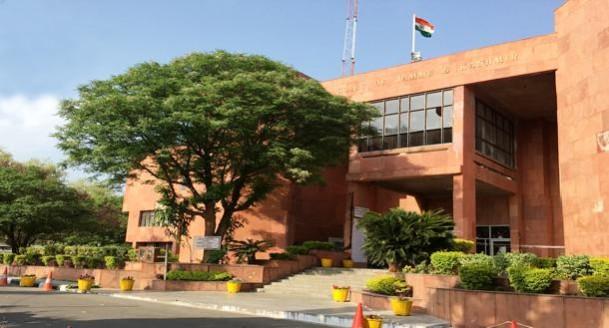
On July 10, 2021, two of his sons—Syed Ahmad Shakeel, employed at the Srinagar-based Sher-e-Kashmir Institute of Medical Sciences, and Shahid Yousuf, posted at the Jammu-based Sher-e-Kashmir University of Agricultural Sciences and Technology—were dismissed for their alleged involvement in terror funding, working as overground workers, and facilitating arms and logistics for terrorists.
Investigations revealed that they were involved in raising, receiving, collecting, and transferring funds through hawala transactions to finance the activities of the Hizbul Mujahideen.
On August 13, 2022, the Jammu and Kashmir government also terminated the services of Salah-ud-din's third son, Syed Abdul Mueed, who was working as Manager (Information and Technology) in the the Department of Industries and Commerce.
All three dismissals were carried out under Article 311(2)(c) of the Constitution, which permits termination without a departmental inquiry in the interest of national security.
Two of his sons, Shahid and Shakeel, have since been arrested by the National Investigation Agency (NIA) in a terror funding case, further exposing what agencies describe as a deep-rooted terror-financing network linked to the Hizbul chief.
With the issuance of the non-bailable warrant, investigators say legal pressure on Salah-ud-din has intensified significantly, signalling India's continued push to hold Pakistan-based terror handlers accountable, even as they operate from across the border.