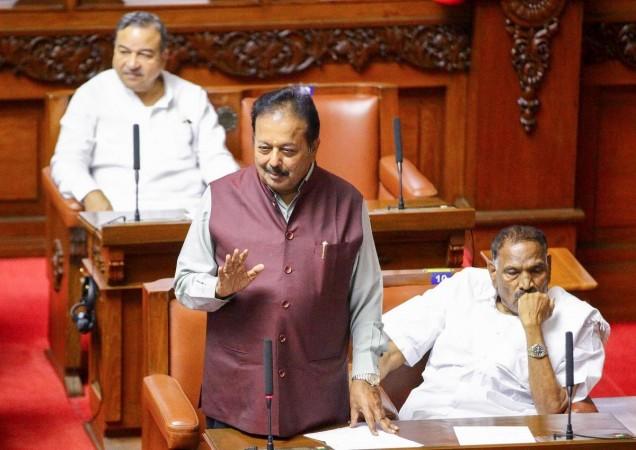
Karnataka Water Resources Minister N. Cheluvarayaswamy on Thursday said the state cannot comply with the Cauvery Water Regulation Committee's (CWRC) directive to release 4,000 cusecs of water to Tamil Nadu, citing drought conditions, poor rainfall and declining reservoir levels.
The minister said the Cauvery Water Management Authority (CWMA) had upheld the directive despite Karnataka highlighting the water shortage in the state.
"The water available with us has reduced further. How can we release 4,000 cusecs now?" Cheluvarayaswamy said.
The dispute comes amid continuing water stress in Karnataka. The state government has also sought drought relief from the Centre, citing the impact on farmers and water availability.
Karnataka seeks lower water release
Karnataka says cannot release 4,000 cusecs Cauvery water to Tamil Nadu amid drought
Cheluvarayaswamy said Karnataka had submitted details on water availability in the Krishna Raja Sagar (KRS), Kabini, Hemavathi and Harangi reservoirs, along with data on declining inflows and rainfall deficiency.
The state has requested that the mandated release be reduced to 3,000 cusecs, arguing that around 2,500 cusecs would flow naturally downstream.
"In the midst of a Super El Nino and drought conditions, how is it possible to release water? Our neighbouring state Tamil Nadu should also understand this situation," the minister said.
He added that ensuring drinking water supplies for Bengaluru and towns in the Cauvery basin remained the state's priority.
Karnataka cites reservoir shortage
According to the state government, the four reservoirs together have around 49.775 TMC of water, which is about 47.60 per cent of their total capacity.
Karnataka estimates that it needs around 29 TMC for drinking water, 10 TMC for environmental flows and 23.40 TMC for standing kharif crops.
The state recorded 406.5 mm of rainfall between June 1 and September 22, against the normal 643.4 mm, amounting to around 63 per cent of normal rainfall.
Karnataka has also said that inflows into the reservoirs have fallen to around 2,200 cusecs.
State says it has already released excess water
Karnataka also pointed to the quantity of water released at Biligundulu, the interstate gauging point.
Between July 29 and September 23, the state said it released 4,47,182 cusecs, or 38.637 TMC, compared with the stipulated 4,21,500 cusecs.
According to Karnataka, this amounted to an additional 25,682 cusecs, or 2.219 TMC, over the stipulated quantity.

Karnataka plans legal consultation
Cheluvarayaswamy said the state would present its concerns before the tribunal and consult legal experts, including the Advocate General, on its next course of action.
The Cauvery dispute has repeatedly intensified during periods of poor rainfall and low reservoir storage. In July, the CWRC had directed Karnataka to release water to Tamil Nadu, with the CWMA subsequently endorsing the direction.Karnataka has argued that Tamil Nadu currently has around 52.177 TMC of water in its reservoirs and that the state could manage without additional releases.
It has therefore urged authorities to reduce the stipulated release to 3,000 cusecs, citing the state's water requirements, existing natural flows and the possibility of rainfall in Tamil Nadu during the northeast monsoon.
The Cauvery water-sharing issue remains a matter of competing claims between the two states, with Karnataka citing its drought and drinking-water requirements while Tamil Nadu has sought releases to meet its water needs.