
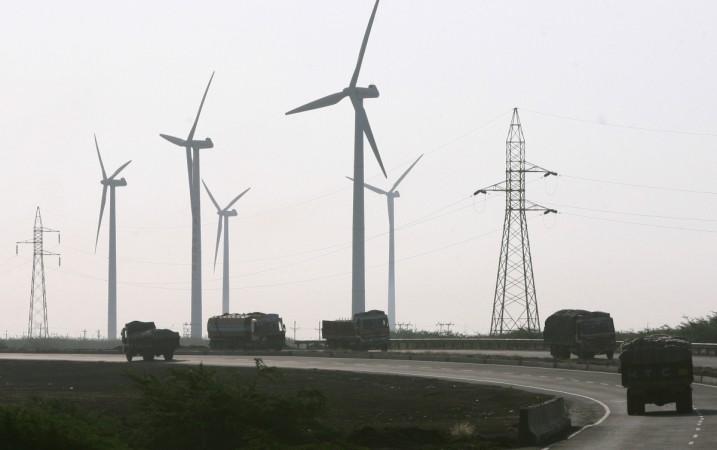
The first wind energy project of Jammu and Kashmir is unlikely to see the light of day, as it has been abandoned due to logistical challenges.
According to documents tabled in Parliament by Union Minister of State for New and Renewable Energy and Power, Shripad Yesso Naik, a wind resource assessment conducted by the National Institute of Wind Energy (NIWE) indicates a potential of 3 MW at a 120-metre hub height for wind energy projects in the Union Territory of Jammu and Kashmir.
"NHPC had initiated a proposal for the installation of a wind power project at Reasi. However, due to logistical challenges associated with the transportation of wind turbine blades to the project site and issues related to power offtake, the project could not progress beyond the desk study stage," the minister said.
"The development of wind projects is carried out by developers based on techno-economic assessments. Presently, there are no wind energy projects planned or under implementation in the UT of Jammu and Kashmir," he added.
Bidda village in Reasi district was identified as a feasible site for a wind power project by NIWE in 2012.
In January 2017, the then PDP-BJP government had admitted on the floor of the Assembly that a potential of 25 MW of wind power had been assessed at Bidda village, out of which 6 MW was to be harnessed in the first phase as a pilot project.
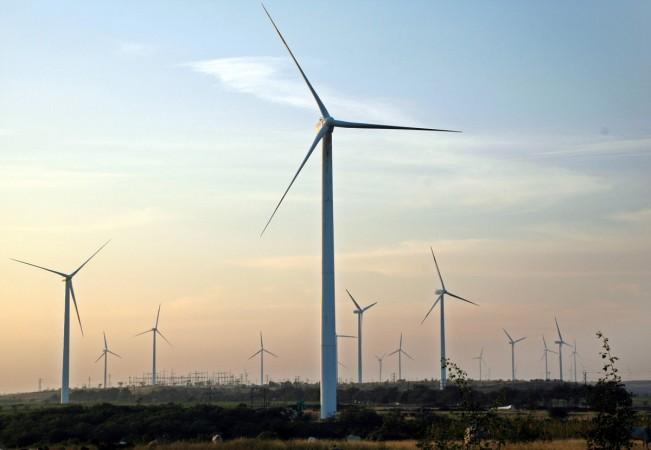
"The land for the project, measuring approximately 534 kanals, has been identified and belongs to NHPC. The transfer of the said land to the Science and Technology Department by NHPC is under active consideration and at an advanced stage," the government had stated.
The government had also assured that work on the 6 MW wind project would be initiated as soon as the land was transferred, with execution expected during the financial year 2017–18. The Detailed Project Report (DPR) for the project had been prepared by NIWE, a subsidiary of the Ministry of New and Renewable Energy (MNRE), Government of India, with an estimated cost of approximately ₹50 crore.
Wind Power Policy for J&K UT Drafted in 2023
While drafting the wind power policy for the Union Territory in 2023, the government noted that Jammu and Kashmir is one of the energy-starved regions of India despite having significant potential for green energy.
"The natural energy sources such as sunshine, wind, water flow, biomass, and other biological wastes are abundantly available in the region yet are not being fully harnessed. This results in very low per capita energy availability, compelling people to rely on conventional sources of energy, leading to deforestation and pollution," the preamble of the draft policy reads.
Wind energy is one of the most important renewable energy resources and is distinguished as a pollution-free source.
"The UT of Jammu and Kashmir experiences a reasonable, if not high, wind energy potential. The main setback in the utilisation of wind energy in J&K is the extreme climatic conditions, especially during winters," the government noted, adding that technological advancements are making wind turbines viable even in cold regions.
According to the draft policy, the UT of Jammu and Kashmir is located between 33°–37° North latitude and 72°–80° East longitude, covering an area of around 2.22 lakh sq km, of which about 27% is under cultivation.
Despite its limited geographical area, the region is endowed with diverse agro-climatic conditions, topography, and natural resources. The mean ambient temperature ranges from 13°C to 32°C in the Jammu region and from 1°C to 25°C in the Kashmir region. Low temperatures contribute to high energy demand, which is typically met through coal, electricity, firewood, or a combination of these sources.
Wind energy remains a favourable option for meeting energy needs. Jammu and Kashmir has an estimated installable wind energy potential of 5,311 MW at 50-metre height and 5,685 MW at an 80-metre height.
Given the region's predominantly hilly terrain and rich biodiversity, promoting clean energy sources like wind power would be a sustainable way to address its energy deficit.
The development comes even as the government acknowledges the region's significant renewable energy potential and drafts policies to promote clean energy.