
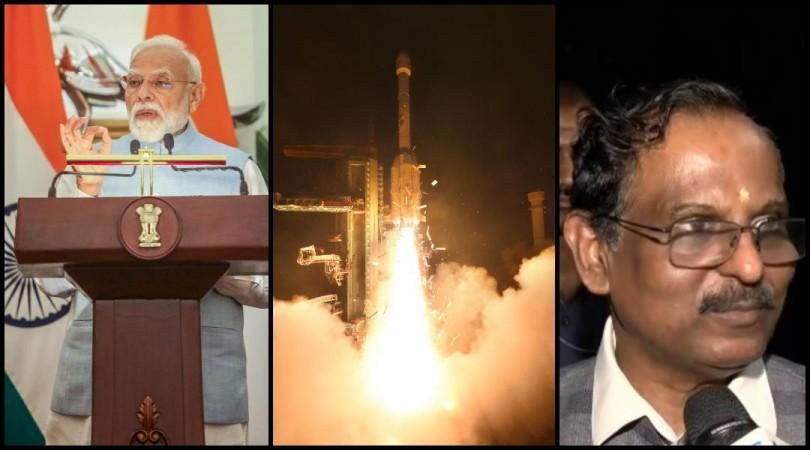
The Indian Space Research Organisation (ISRO) on Friday successfully launched its advanced Earth observation satellite EOS-05 aboard the GSLV-F17 rocket from the Satish Dhawan Space Centre in Sriharikota, marking a significant milestone in India's space programme and strengthening the country's Earth-imaging capabilities.
The 51.7-metre GSLV-F17 lifted off from the second launch pad at 2:55 a.m. following a 27.5-hour countdown. The three-stage launch vehicle performed as planned and injected the approximately 2,367-kg EOS-05 into its designated sub-geosynchronous transfer orbit.
The satellite will now undergo a series of orbit-raising manoeuvres before being placed in its operational geosynchronous orbit, nearly 36,000 km above Earth.
EOS-05 has been developed to provide advanced Earth imaging capabilities from geosynchronous orbit. Unlike conventional Earth observation satellites operating in low Earth orbit, the spacecraft will be able to repeatedly observe large geographical areas, providing more frequent imagery of the Indian subcontinent and adjoining regions.
The satellite is expected to support a range of civilian and strategic applications, including disaster management, agriculture, environmental assessment, natural resource management and monitoring of weather-related events. Its frequent imaging capability is also expected to improve the availability of information during rapidly developing natural disasters and other emergencies.
Prime Minister Narendra Modi congratulated ISRO on the successful mission, describing it as a proud moment for the country.
In a post on X, Modi said the successful launch of GSLV-F17 carrying EOS-05 reflected the excellence, innovation and growing capabilities of India's space sector. He also highlighted the growing partnership between ISRO and Indian industry, saying it was adding strength and scale to the country's space programme and expanding capabilities across the space ecosystem.
ISRO Chairman Dr V Narayanan expressed satisfaction with the mission and said the rocket had precisely injected the satellite into its intended orbit.
Mission Director Thomas Kurian described the launch as a significant milestone for the GSLV programme. The mission marked the 19th flight of the GSLV and involved a specially configured Earth observation satellite capable of providing near-real-time imaging.
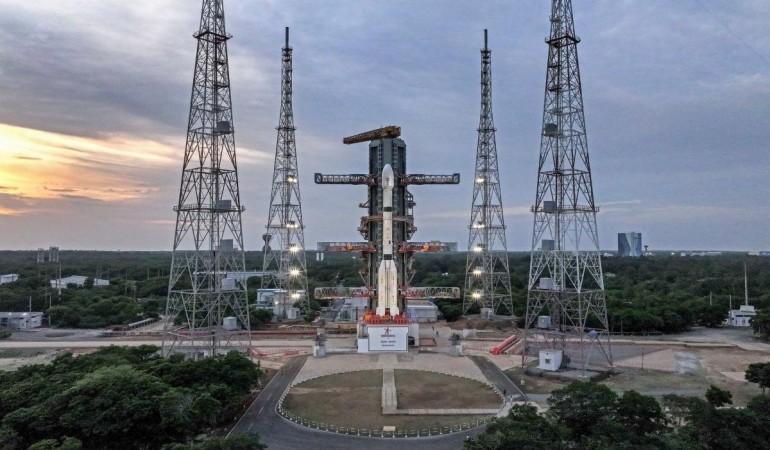
Kurian said EOS-05 was the heaviest satellite placed by the GSLV into a geosynchronous transfer orbit, or sub-GTO. He attributed the successful mission to years of preparation and the dedicated efforts of scientists, engineers and other teams involved in the programme.
The GSLV-F17 has a liftoff mass of approximately 420.5 tonnes and uses India's indigenously developed cryogenic upper stage. The mission also represents further progress in ISRO's efforts to establish sophisticated Earth-imaging capabilities from geosynchronous orbit.
The achievement comes after the unsuccessful GSLV-F10 mission in August 2021, when the cryogenic upper stage carrying the EOS-03 Earth observation satellite could not complete its planned operation.
Narayanan also spoke about the growing role of private companies in India's space sector and defended the government's space-sector reforms, saying ISRO alone could not meet the country's rapidly growing requirements.
"ISRO alone cannot meet the needs of the country," Narayanan told IANS, noting that India currently has 56 satellites while the requirement runs into hundreds.
He said the expansion of the space economy and ecosystem was essential to meet the rising demand for satellites and related services. The reforms, he said, were aimed at enabling greater participation by private industry, with ISRO providing the necessary support and guidance.
Narayanan said the expansion of the sector would also create more job opportunities, boost the economy and increase domestic satellite production.
Speaking about the GSLV-F17 mission, he said the successful launch was a matter of pride and highlighted the significant improvement in the launch vehicle's capacity. According to him, the GSLV Mark II initially had a capability of about 1,536 kg, which has since increased by nearly 40 per cent.
Narayanan also said work on the Kulasekarapattinam spaceport in Tamil Nadu was progressing well and remained on schedule, with completion expected by March. He added that the Gaganyaan programme was also progressing as planned, with the first uncrewed mission targeted for this year.
Science and Technology Minister Jitendra Singh also welcomed the successful launch, describing it as another milestone for India's space programme. He said EOS-05 was a state-of-the-art Earth observation satellite capable of advanced imaging across visible, infrared, multispectral and hyperspectral bands.
With the successful GSLV-F17 mission, ISRO has added another sophisticated platform to India's expanding Earth observation network. The satellite is expected to provide valuable data for disaster response, development planning, resource management and other national requirements, while the mission further demonstrates the growing capabilities of India's indigenous space programme.