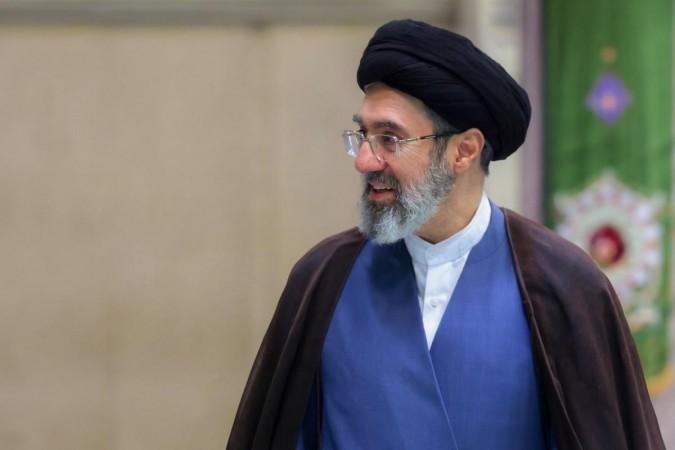
Iran's Supreme Leader Mojtaba Khamenei has warned the United States and Israel against launching fresh military attacks on Iran, saying the country's armed forces and people would decide the timing and conditions of any response if hostilities resume.
In a statement published on his official website on Saturday, October 31, Khamenei said Iran would determine how and when to respond to any fresh military or terrorist attacks.
"If the enemies once again launch military or terrorist attacks, it is the armed forces of the Islamic Republic and the Iranian nation that will determine the time and conditions for ending them," the statement said, according to AFP.
The warning comes amid rising tensions between Washington and Tehran, with the United States and Israel reportedly threatening a possible return to military strikes against Iran.
According to the statement, Khamenei directed senior military commanders to ensure that "any level or type of threat must be met with an immediate, impactful and geographically unrestricted response".
Khamenei asks military commanders to revise target list
Khamenei's warning followed a reported meeting with senior military commanders. It was the first reported meeting between the Supreme Leader and the country's military leadership.
During the meeting, he instructed commanders to revise Iran's military target list to include "all types of tangible and intangible assets belonging to the American-Zionist enemy".
The directive signals Tehran's readiness to expand its response if the United States or Israel launches fresh attacks.
Khamenei also stressed the need for the country's armed forces to remain prepared to counter potential threats.
Iran outlines conditions for resuming talks with US
Meanwhile, Iranian Foreign Minister Abbas Araqchi said Tehran had examined a message from US Vice President JD Vance and discussed it during high-level meetings.
Speaking to Al Jazeera, Araqchi said Iran's conditions for resuming negotiations included lifting sanctions imposed after the Islamabad memorandum of understanding (MoU) and reducing US military forces in the region.
He also said reopening the Strait of Hormuz on Tehran's terms could pave the way for the resumption of talks with Washington.
The developments come amid diplomatic efforts to prevent another escalation between the two countries.
Trump hints at possible fresh strikes on Iran
US President Donald Trump on Friday said he expected the war with Iran to end soon but did not provide details about how a resolution would be reached.
"It's going to get wrapped up soon. We need a guarantee there'll never be a nuclear weapon," Trump said in an interview with Kansas City's KCMO Talk Radio station, according to Reuters.
However, on October 24, Trump had hinted at the possibility of renewed military action against Iran while keeping open the prospect of a diplomatic agreement.
Speaking to reporters after casting his ballot in Florida, Trump said Iran wanted a deal to reopen the Strait of Hormuz but questioned whether Tehran would honour any agreement.
"Do you really think I would tell you that? Maybe tomorrow... There's a possibility I will. There's also a possibility we'll have a nice, big, beautiful agreement," Trump said when asked about the possibility of fresh strikes.
His remarks came amid continuing tensions between Washington and Tehran, with Trump repeatedly keeping the possibility of further military action open.
US-Iran conflict raises concerns over Strait of Hormuz
Washington and Tehran have remained locked in a war-like situation since February 28, when the United States and Israel launched joint strikes against Iran.
The conflict has disrupted regional security, threatened global energy supplies and brought shipping through the strategically important Strait of Hormuz to a near standstill.
The waterway is a critical route for global oil shipments, making any prolonged disruption a major concern for energy markets and international trade.
With Tehran warning of an unrestricted military response and Washington keeping the possibility of fresh strikes open, tensions in the Middle East remain high.