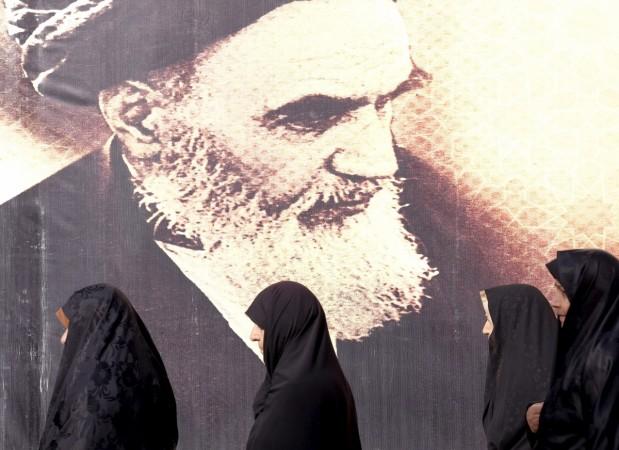
For centuries, the Muslim world has accommodated a wide range of theological schools, spiritual traditions, and legal interpretations. Sunni and Shia communities, despite political tensions in different historical periods, developed alongside Sufi traditions that emphasized spirituality, moral discipline, and peaceful coexistence. Iran itself was once home to a vibrant mosaic of Islamic thought, where Sufi orders, Sunni scholars, philosophers, and poets contributed richly to religious and intellectual life. However, since the 1979 Islamic Revolution, the political structure created under Ayatollah-led rule has increasingly narrowed that diversity by institutionalizing one ideological interpretation of religion under the doctrine of "Wilayat al-Faqih" the guardianship of the jurist.
Under this system, religion is no longer merely a source of spiritual guidance but a mechanism of state authority. The political establishment defines religious legitimacy, supervises clerical discourse, and determines which Islamic voices are acceptable in public life. This transformation has had serious consequences for both Sunni Muslims and Sufi communities, who often find themselves marginalized politically and restricted religiously.
Sunni Muslims, though constituting a significant minority in Iran, continue to face structural exclusion. Their presence is concentrated in strategically sensitive regions such as Sistan-Baluchistan, Kurdistan, Golestan, and parts of Khuzestan areas that are often economically underdeveloped and heavily securitized. Despite their demographic weight, Sunni citizens remain absent from key positions in national decision making. No Sunni has been permitted to occupy senior roles in the highest levels of political authority, and Sunni representation in the state bureaucracy remains minimal.
The issue is not merely symbolic; it has practical consequences. In Tehran, where millions of Sunnis reside, the long standing demand for a major Sunni mosque remains unresolved. Sunni clerics frequently report administrative restrictions on religious education and limitations on public worship. When religious rights become subject to political permission, trust between state and society inevitably weakens.
At the same time, Iran's clerical establishment has maintained a difficult relationship with Sufism. Historically, Persian civilization produced some of Islam's most celebrated Sufi voices Jalaluddin Rumi, Hafiz, Saadi, and Attar whose teachings emphasized divine love, humility, and the inner journey of faith. Yet contemporary Sufi orders often face suspicion because they represent independent spiritual authority outside state controlled religious institutions.
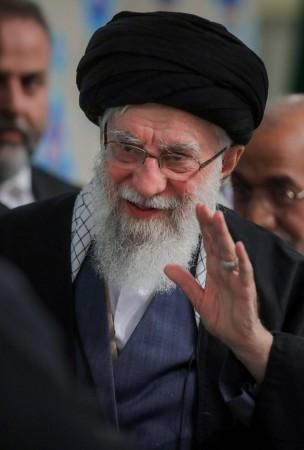
The experience of the Gonabadi dervishes illustrates this tension clearly. Their gatherings, teachings, and social networks have periodically been treated as security concerns rather than expressions of religious freedom. In several cases, prayer centers associated with Sufi communities have faced closure or demolition, while members have been detained following public protests. Such measures reveal a broader discomfort within the political system toward any organized religious identity not directly aligned with official ideology.
The deeper issue lies in the fusion of state power with doctrinal authority. When a government claims exclusive ownership over religious interpretation, diversity within Islam is often treated as dissent rather than legitimate difference. Sunni scholars who raise concerns over equality, or Sufi leaders who maintain autonomous spiritual networks, can quickly be portrayed as politically suspect. This weakens the traditional Islamic culture of scholarly debate and spiritual plurality.
Regionally, the consequences are equally significant. Iran's external policies often present themselves as defending Islamic resistance and regional sovereignty, yet critics argue that sectarian political narratives have intensified mistrust across the Muslim world. In several conflict zones, political alignments linked to sectarian identities have deepened Sunni-Shia polarization rather than reducing it. As a result, many Muslims across the region increasingly distinguish between the interests of the Iranian state and the broader ideals of Islamic unity.
This distinction matters because Islamic civilization historically flourished when intellectual and spiritual diversity was protected rather than controlled. Great Muslim societies did not depend on a single voice, but on coexistence between jurists, theologians, mystics, philosophers, and reformers. Political centralization of faith risks reducing religion to ideology and weakening its moral authority.
For Iran itself, long-term stability may depend on rediscovering that pluralistic heritage. A confident Islamic society should not fear Sunni participation, nor should it view Sufi spirituality as a threat. Inclusion strengthens legitimacy far more than control. Granting equal civic dignity to Sunni communities, respecting Sufi institutions, and reducing ideological restrictions on religious expression would not weaken the state it would strengthen social trust.
The challenge before Iran is therefore larger than sectarian policy. It is a question of whether a modern Muslim state can accommodate diversity within Islam without perceiving it as opposition. The answer will shape not only Iran's domestic future but also its credibility in the wider Muslim world.
A civilization built on faith becomes stronger when it allows many voices to breathe within it. When one voice alone claims authority, the spiritual richness of that civilization begins to fade. Iran's own history offers enough evidence that pluralism, not monopoly, has always been the stronger foundation of Islamic continuity.
[Disclaimer: This is an authored article by Aariful Qadri Wahidi, who is the President of the Muslim Students Organisation of India).