The conflict between the United States and Iran intensified sharply on Thursday after Iran's Islamic Revolutionary Guard Corps (IRGC) claimed responsibility for missile attacks targeting US military bases in Jordan and Kuwait, prompting President Donald Trump to warn of a forceful military response.
According to Iranian state media, the strikes were launched in retaliation for overnight US attacks on Iran's Qeshm Island, where Iranian officials said a residential building was hit, killing a couple and their two-year-old child. Iran also reported additional US strikes on Kish Island, Bushehr province and multiple locations in Khuzestan.
Kuwaiti authorities confirmed that one worker was killed after a missile struck a building belonging to a Chinese company in northern Kuwait. Jordanian officials said their air defence systems intercepted incoming missiles aimed at US military facilities, preventing major damage.
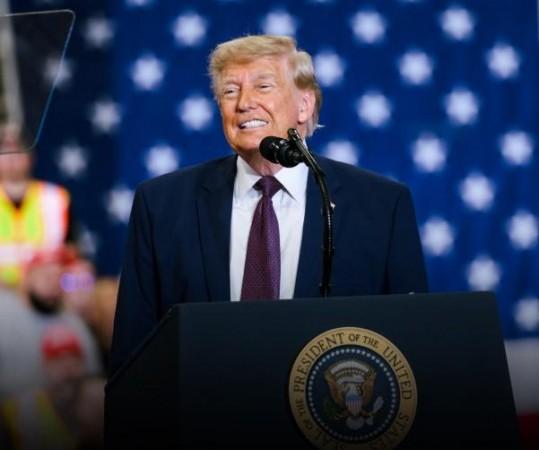
Responding to the attacks, Trump vowed a strong military retaliation, saying the United States would "hit them very hard." Shortly afterwards, the US military launched what it described as a "powerful response," carrying out a two-hour wave of airstrikes against dozens of IRGC targets across Iran. The strikes reportedly hit command centres, missile and drone facilities, coastal surveillance sites and maritime defence infrastructure.

The latest exchange marks another major escalation in the months-long conflict, with both sides expanding military operations beyond their borders. The widening hostilities have heightened fears of a broader regional war, with Gulf nations remaining on high alert amid concerns over the security of critical energy routes, including the Strait of Hormuz.
Diplomatic efforts to restore negotiations have suffered another setback as both Washington and Tehran harden their positions. Regional and international mediators continue to push for de-escalation, but the latest missile exchanges have significantly reduced hopes of an immediate breakthrough.