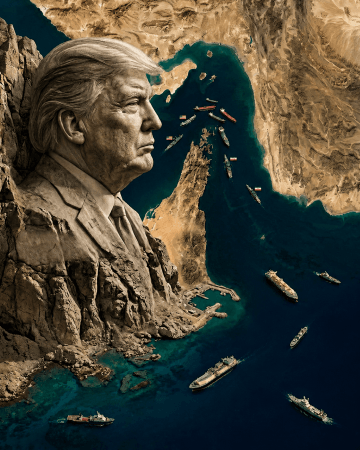
The conflict between the United States and Iran remains deadlocked as Washington steps up economic pressure on Tehran, while the Strait of Hormuz continues to emerge as the biggest obstacle to efforts aimed at ending the war.
US President Donald Trump has threatened tougher economic measures against Iran and maintained pressure over the reopening of the strategically vital waterway. The Strait of Hormuz, through which a significant share of the world's oil and liquefied natural gas supplies passed before the conflict, has remained largely disrupted, raising concerns over global energy markets.
Trump has also claimed that the Strait is open and operating and said that mines in the waterway had been removed or detonated. However, shipping data has shown that traffic remains far below pre-war levels. Kpler data cited by The Independent showed that only a small number of vessels were crossing the Strait compared with roughly 130 to 140 daily crossings before the conflict.
Iran, meanwhile, has rejected Trump's claims and continued to link the reopening of the waterway to wider political and economic concessions from Washington. Tehran has demanded an end to the US military blockade, the withdrawal of American forces, the lifting of sanctions and the release of frozen Iranian assets, among other conditions.
The dispute has also complicated diplomatic efforts involving Oman. Iran and Oman have been negotiating arrangements for commercial vessels to safely transit the Strait, with Iranian officials saying an understanding had been reached on a proposed shipping route. However, Washington has objected to parts of the emerging arrangement, leaving the wider issue unresolved.
The continuing uncertainty around Hormuz has increased pressure on energy markets and governments that depend heavily on Gulf supplies. The waterway's disruption has also raised concerns about higher fuel and shipping costs, adding to the economic consequences of the prolonged conflict.
For Washington, the standoff is increasingly becoming an economic as well as military challenge. The US administration has signalled that it is prepared to intensify sanctions and economic pressure on Tehran rather than immediately move towards a new agreement. At the same time, Iran has warned that it will not accept demands that it views as surrender and has continued to insist that control of the Strait cannot be dictated by the United States.
The impasse leaves the Strait of Hormuz at the heart of the Iran-US confrontation. While both sides continue to signal their positions, the lack of a broader agreement means that a full restoration of normal commercial shipping remains uncertain.
The developments also highlight the wider global stakes of the conflict. Any prolonged disruption to Hormuz could affect crude oil supplies, LNG shipments, freight costs and inflation across economies dependent on energy imports, making the dispute a concern well beyond the Middle East.