US Director of National Intelligence Tulsi Gabbard has placed Pakistan among the world's most serious nuclear concerns, even as she confirmed that Iran is currently not rebuilding its nuclear enrichment programme, a dual assessment that is reshaping Washington's global threat outlook.
Speaking during the US intelligence community's 2026 Annual Threat Assessment briefing, Gabbard identified Pakistan alongside China, Russia, North Korea and Iran as countries developing advanced missile delivery systems capable of carrying nuclear payloads that could potentially reach the US homeland.
However, in a striking contrast, she also acknowledged that Iran's nuclear enrichment infrastructure, once at the centre of global tensions, has been effectively dismantled and remains inactive.
Iran: "No efforts" to rebuild nuclear programme
According to Gabbard's written testimony and intelligence findings, Iran has not made any attempt to restore its nuclear enrichment capability following US-led strikes on key facilities.
She stated that the programme was "obliterated" during military operations and that there have been "no efforts since then" to rebuild it.
This assessment directly challenges the narrative that Iran posed an immediate or imminent nuclear threat leading up to the conflict. Reports indicate that while Iran retains long-term ambitions and technical potential, its current capability remains severely degraded.
The intelligence position has also triggered political friction in Washington, with some officials arguing that the threat may have been overstated.
Pakistan: From regional deterrence to global concern
While Iran's programme appears dormant for now, Pakistan's trajectory is moving in the opposite direction, raising alarms within US intelligence circles.
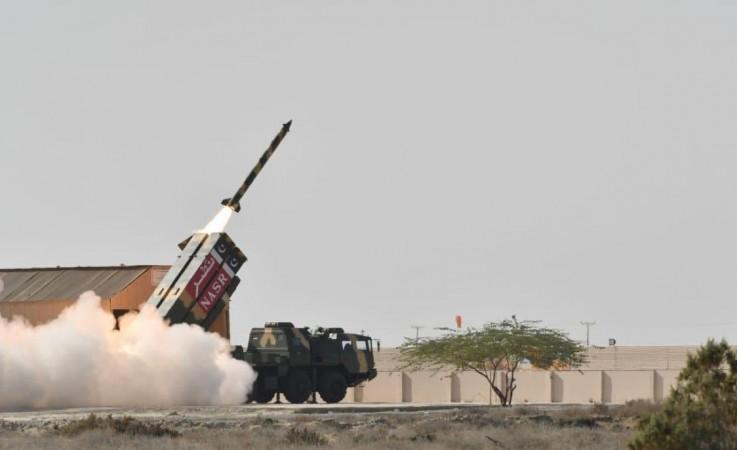
Gabbard's warning reflects growing concern over Pakistan's expanding missile capabilities, particularly its development of long-range systems that may eventually evolve into intercontinental ballistic missiles (ICBMs).
Her assessment aligns with broader intelligence findings that Pakistan is not just maintaining deterrence against India but actively advancing its missile technology stack.
The concern is not limited to capability alone, but also intent and trajectory.
Pakistan has long maintained that its nuclear doctrine is based on "credible minimum deterrence."
Its Shaheen-III missile, with a range of roughly 2,750 kilometres, is designed to cover the entire Indian landmass. Yet, that same range also places parts of the Middle East—including Tehran—well within reach, while extending toward Israel's strategic envelope.
By contrast, the United States lies over 11,000 kilometres away—far beyond the reach of Pakistan's current systems.
That disparity is precisely what is raising questions in Washington.
If the doctrine is strictly regional deterrence, analysts argue, the steady push toward longer-range missile capability begins to look less like defensive balancing—and more like preparation for extended reach.
Or as one strategic assessment bluntly puts it: you don't evolve toward intercontinental capability to counter a neighbour well within existing range.
Procurement networks deepen suspicion
Compounding these concerns is Pakistan's history of nuclear proliferation and its continued reliance on covert procurement channels.
Recent US sanctions, spanning dozens of entities between 2023 and 2025, have exposed a complex network of front companies allegedly sourcing restricted technologies for Pakistan's missile and nuclear programmes.
These networks, often involving intermediaries across multiple countries, have been used to bypass restrictions under frameworks like the Missile Technology Control Regime (MTCR), which Pakistan has not signed.
State-linked organisations such as the National Development Complex (NDC) and AERO have been identified as key beneficiaries of these supply chains, with several shell entities operating from shared addresses and lacking any real commercial footprint.
This pattern mirrors earlier proliferation concerns tied to A.Q. Khan's network, one of the most significant nuclear black-market operations in modern history.
A shift in global threat perception
Gabbard's assessment marks a notable shift in how nuclear risks are being prioritised.

For years, Iran dominated the global nuclear discourse. But with its enrichment programme currently stalled, attention appears to be shifting toward countries with active and expanding missile ecosystems.
Pakistan now finds itself in that spotlight, not necessarily because of immediate capability to strike the US, but due to the direction and opacity of its development path.
At the same time, Gabbard has cautioned that long-term risks from Iran remain, particularly if it chooses to rebuild its capabilities in the future.
Strategic contradiction at the heart of US policy
The juxtaposition is stark:
Iran, once framed as an urgent nuclear threat, is currently not rebuilding.
Pakistan, often viewed through a regional lens, is now being discussed as part of a global nuclear risk framework.
This contrast is driving a broader rethink within US strategic circles—one that prioritises trajectory over legacy threat perceptions.
As intelligence assessments evolve, the key question is no longer just who has nuclear weapons but who is actively advancing toward more sophisticated, longer-range capabilities and how transparently they are doing so.
For Washington, Gabbard's message is clear: the nuclear threat landscape is shifting, and Pakistan is now firmly part of that conversation.