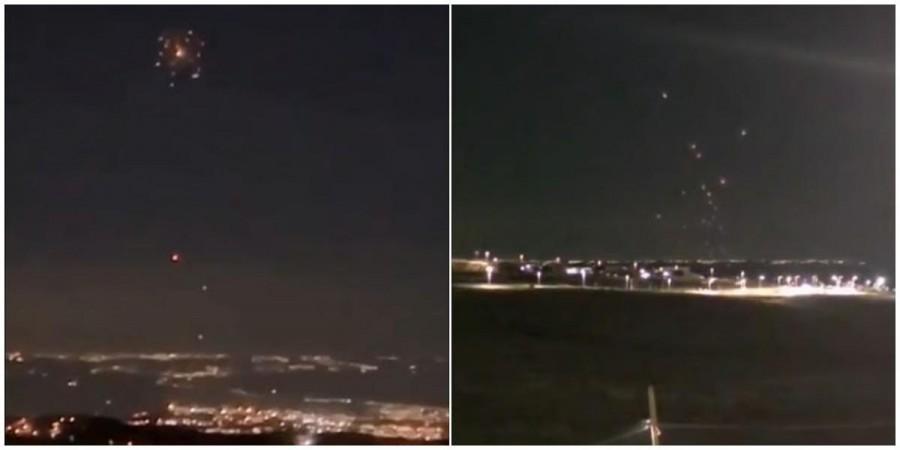
Tensions between Iran and the United States escalated sharply on Wednesday after Iran's Islamic Revolutionary Guard Corps (IRGC) said it launched ballistic missile strikes against a US military position in Jordan, following American attacks on Iranian oil tankers.
The IRGC said the strikes targeted a base used by US forces near Al Azraq in Jordan and described the operation as retaliation for the destruction of Iranian oil tankers by US forces. Iran claimed the missile attack caused significant damage, although the claims could not be independently verified.
The latest escalation comes amid growing military activity around the strategically important Strait of Hormuz, with both sides targeting military and maritime assets and raising concerns over the security of a critical global energy route.
Jordan says 18 of 20 missiles intercepted
Jordanian authorities said their air defence systems intercepted and destroyed 18 of the 20 ballistic missiles launched towards the country. The remaining two missiles landed in unpopulated areas, with authorities reporting no casualties.
The US also said there were no American casualties and that all US personnel stationed in Jordan were accounted for.
The attack came after the US military said it had destroyed five Iranian oil tankers on Tuesday. US Central Command said the strikes followed attacks by Iran's Revolutionary Guard on a US Navy warship.
According to the US military, crews aboard the tankers were ordered to abandon the vessels before the strikes. Washington has described its actions as part of an effort to disrupt Iranian oil revenues and networks supporting the IRGC and its regional allies.
US Secretary of State Marco Rubio has warned that further Iranian attacks on American naval assets would trigger retaliation, increasing fears that the confrontation could intensify further.
Iran claims capture of US underwater drone
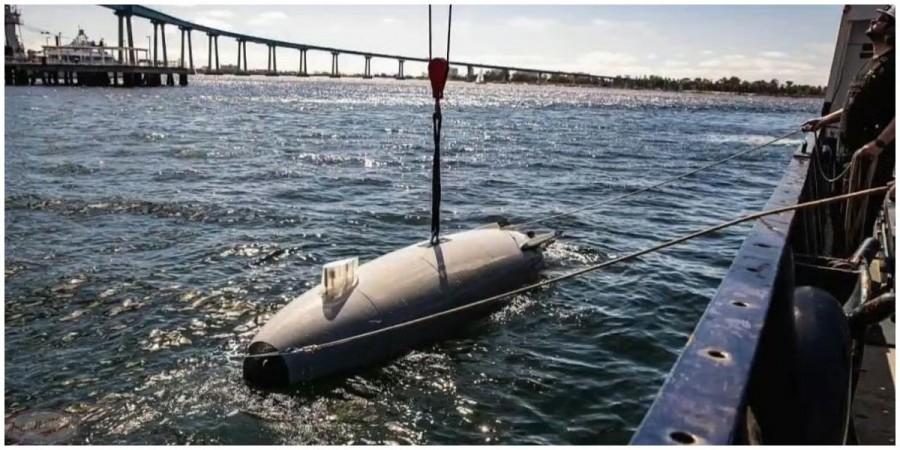
Adding to the tensions, Iran's IRGC Navy has claimed that it captured a US unmanned underwater drone near the entrance of the Strait of Hormuz.
Iranian state media reported that the vessel was seized during what authorities described as a "complex intelligence and operational" mission. Iranian officials identified the drone as a Dive-LD, an autonomous underwater vehicle developed by US defence technology company Anduril.
The approximately 19-foot (5.8-metre) underwater vehicle is designed for missions including mine countermeasures, seabed mapping, intelligence gathering and inspections of underwater infrastructure such as cables and pipelines. It can operate autonomously for extended periods and is capable of deep-water operations.
US disputes significance of drone capture
The United States has acknowledged the loss of an underwater drone but disputed Iran's description of the incident.
A Pentagon spokesperson said the vehicle had malfunctioned more than a day before Iran announced its capture while it was being used to survey regional waters in support of ongoing operations. US officials described it as an older, defective system that did not carry classified sonar or radar equipment or collect sensitive information.
Washington has therefore sought to minimise the intelligence significance of the reported capture, while Anduril has described the Dive-LD as an "attritable autonomous system" designed to operate in high-risk environments where the loss of the vehicle is considered possible.
Iran's claim of capturing the drone has not been independently verified, and the Pentagon has not confirmed Tehran's account of how the vehicle came into Iranian possession.
Strait of Hormuz under growing pressure
The incidents come as military tensions continue to intensify around the Strait of Hormuz, which connects the Persian Gulf with the Gulf of Oman and is one of the world's most important routes for oil shipments.
The IRGC said it had separately attacked 10 vessels, including two US ships and eight oil tankers, after warning vessels against entering what it described as a prohibited and unsafe area. Iran has also threatened tankers operating from ports in Kuwait and Bahrain.
The growing attacks on military vessels, oil tankers and other maritime assets have raised concerns over the safety of commercial shipping and the global flow of energy supplies.
Brent crude rose for a fourth consecutive session on Wednesday and moved close to the $100-per-barrel mark as traders assessed the risk of further supply disruptions. A prolonged disruption around the Strait of Hormuz could have significant consequences for global oil prices and economies that depend heavily on energy imports.
Regional conflict widens
The confrontation is also spreading beyond the immediate US-Iran military theatre. Iran-backed Houthi forces in Yemen have launched attacks against targets in Saudi Arabia, including energy-related infrastructure. Saudi authorities reported injuries following the attacks, while fires were reported at oil facilities.
The combination of missile strikes, attacks on oil tankers, threats to commercial shipping and incidents involving unmanned military systems has increased concerns that the conflict could widen further across the region.
With Washington and Tehran continuing to exchange attacks, the missile strikes in Jordan and Iran's reported capture of a US underwater drone represent further escalation in an increasingly volatile conflict. The developments could place additional pressure on regional security, global energy supplies and shipping through the Strait of Hormuz.