Prime Minister Narendra Modi welcomed the progress made in peace efforts in West Asia during his address at the G7 session on "Forging New Partnerships and Rebuilding International Solidarity" in Evian, France.
"We welcome the progress made in peace efforts in West Asia. This conflict has caused loss of life and property for our friendly countries in West Asia. The disruption of maritime trade in the Strait of Hormuz has harmed the global economy," PM Modi said on Tuesday, according to the Prime Minister's Office (PMO).
"International partnerships and global solidarity can only be meaningful if we work together to address shared challenges," he added.
According to PM Modi, India firmly believes that lasting solutions to tensions and conflicts in different parts of the world can only be achieved through dialogue, diplomacy and international cooperation.
"Many Indian civilians have lost their lives. The safety of seafarers, who connect all countries through global maritime trade, is our responsibility. We must ensure that sea lanes remain safe, and seafarers can carry out their work without fear," he stressed.
The Prime Minister said India is fully prepared to work with all partners on these issues.
He also noted that in an uncertain world, trade and technology were being misused for narrow interests, creating a trust deficit in international affairs.
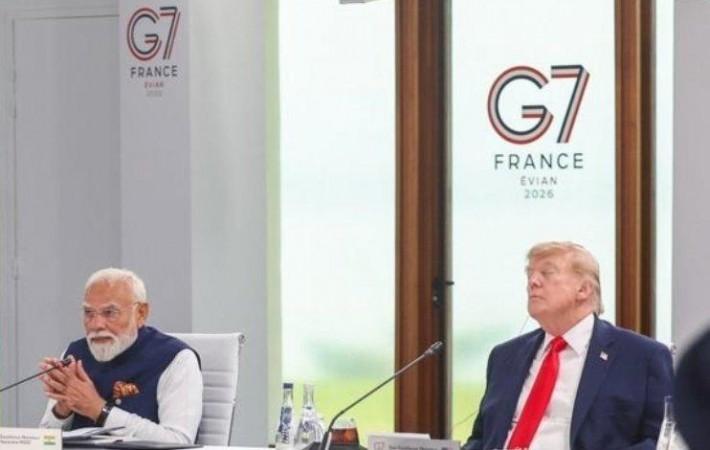
"Mutual trust is the most important strategic asset today. But, sadly, today, the world does not suffer from a shortage of resources; it suffers from a shortage of trust. And the future of our partnerships depends on rebuilding this trust," he said.
Referring to India's guiding philosophy, PM Modi said, "We, in India, view the world as one family (Vasudhaiva Kutumbakam). Our experience shows that development is most effective when it is connected to the aspirations of people."
He said India has always followed the principle of "humanity first", and this approach remains at the centre of its efforts.
The Prime Minister raised the issue days after three Indian nationals died when US forces attacked the Palau-flagged oil tanker Settebello in the Gulf of Oman. The US Central Command said it acted against three vessels carrying Indian crew members — MT Marivex on June 8, MT Settebello on June 10 and MT Jalveer on June 11 — alleging they had violated the US blockade on Iranian ports or were attempting to transport Iranian oil.
Days later, the US President blamed Iran for carrying out a failed drone attack against Indian ships departing the Strait of Hormuz.
Highlighting the wider impact of the West Asia conflict, PM Modi drew attention to disruptions in maritime trade and the risks faced by seafarers operating in key shipping corridors.
"Ensuring the safety of seafarers, who connect nations through global maritime trade, is our collective responsibility. We must ensure that sea routes remain secure and that seafarers can carry out their duties without fear," he said.
"India stands fully prepared to work with all its partners on these important issues," he added.
PM Modi flagged the issue a day ahead of his bilateral talks with the US President, reported PTI.
Global South wants partnership, not aid
Addressing the summit, PM Modi said countries of the Global South were no longer looking for assistance but for meaningful partnerships that would allow them to play a larger role in shaping global development.
But #Trump seems to be deliberately seeing trough PM as if #NarendraModi is transparent!
— UP_Midlands (@UpMidlands) June 16, 2026
Strange response from a person whose ambassador in India tirelessly stresses how fond Trump is of Modi! pic.twitter.com/TRyhk4SluM
"Today, the Global South has high expectations from the international community. However, what they seek is not assistance, but partnership. They do not wish to remain beneficiaries of global development; they want to become participants in it," he said.
Calling for a departure from traditional donor-recipient models, he said international cooperation must be built on equality, dignity and shared responsibility.
"We must move beyond the donor-recipient mindset and work as equal partners. We must walk together, not merely alongside one another. Partnerships must be associated with dignity rather than dependency. Through such efforts, we can lay a strong foundation for sustainable development for future generations," he said.
Trust deficit in global affairs
The Prime Minister also highlighted a growing trust deficit in international relations.
"Today, the world does not suffer from a shortage of resources; it suffers from a shortage of trust. And the future of our partnerships depends on building this trust. Today, the most important strategic asset is not a mineral, technology or market, but mutual trust," he said.
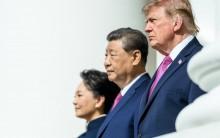
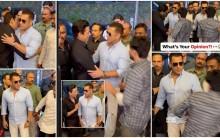
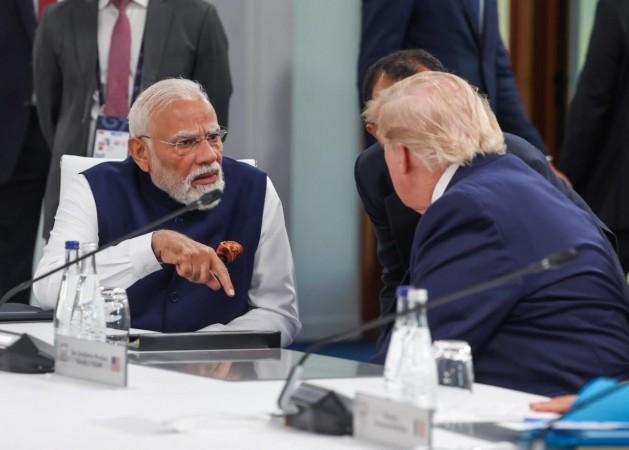
PM Modi, Trump meet at G7
PM Modi delivered the address while seated alongside US President Donald Trump during the outreach session.
Earlier in the day, the two leaders briefly interacted after the traditional G7 group photo. They exchanged a handshake and a few words before joining other leaders at the summit venue.