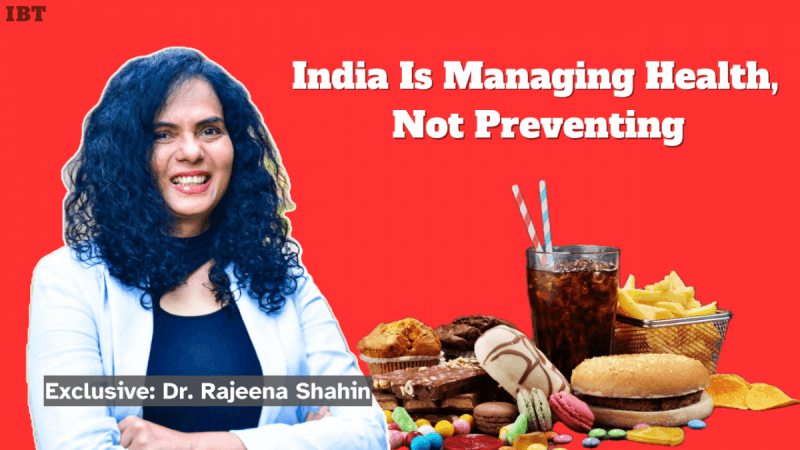
As India confronts a sharp rise in obesity, diabetes, fatty liver disease, and early-onset cardiovascular conditions, one uncomfortable question continues to surface: "Why is nutrition still largely absent from mainstream medical training?"
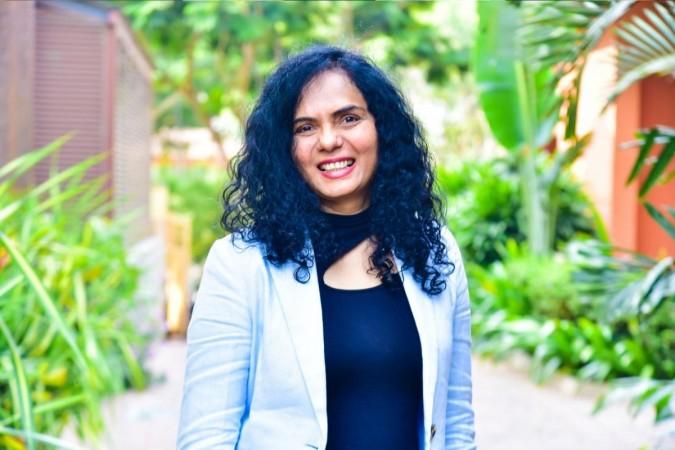
Despite nearly 70 percent of India's disease burden now being driven by diet-related and lifestyle-mediated conditions, most doctors graduate with minimal training in using food as a therapeutic tool. Dr. Rajeena Shahin, Medical Director at Physicians Association for Nutrition (PAN) India, in an exclusive conversation with IBT, says this disconnect is not accidental; it is structural.
"This is a systemic failure rooted in how medical education has historically evolved, both in India and globally," Dr. Shahin told International Business Times. "Medical curricula were designed around acute care, infectious diseases and pharmacology, where nutrition was seen as adjunctive, not therapeutic."
Shahin points to global evidence showing that nutrition education remains inadequate worldwide, resulting in doctors who are highly skilled at diagnosis and prescribing, but under-prepared to prevent or reverse chronic disease using food. In India, this gap is even more consequential, given the scale and speed of lifestyle disease progression.
Lifestyle diseases are no longer a middle-age problem
India is now witnessing diabetes and fatty liver disease appearing in people in their 20s and early 30s, a trend Dr. Shahin describes not as "early-onset disease" but as early-onset consequences of modern food environments.
"What we are missing at the root-cause level is that these conditions are driven by ultra-processed foods, refined carbohydrates, low fibre intake, disrupted sleep, sedentary behaviour and chronic stress," she said. "Yet we continue to medicalise the outcome instead of addressing the cause."
According to Dr. Shahin, young adults are often placed on lifelong medication without structured intervention around dietary patterns, food quality, or meal design. "Patients are told to eat less or cut sugar but not taught how to build sustainable, culturally appropriate meals that actually improve insulin sensitivity and metabolic health," she added.
Genetics loads the gun; food pulls the trigger
While genetics plays a role, Dr. Shahin argues that India's exploding NCD burden cannot be explained by heredity alone.
"Our genes haven't changed in one generation, but disease patterns clearly have," she said. Citing national data, Dr. Shahin noted that over half of India's disease burden is now linked to unhealthy diets, highlighting what she describes as a gene–environment mismatch.
"In traditional food environments, genetic risk often remained silent. In today's ultra-processed, high-fat, low-fibre environment, that same risk expresses earlier and more aggressively," she explained.
Should obesity and pre-diabetes be treated as public health emergencies?
Dr. Shahin believes India must urgently reframe how it views obesity and pre-diabetes, not as individual failures, but as preventable public health priorities.
"These conditions meet every public health red flag: early onset, rapid progression, and massive downstream costs," she told IBT. "A healthcare system that waits for people to 'convert' to disease before acting is medically and economically unsound."
Reclassification, she argues, would shift healthcare from reactive treatment to proactive prevention, enabling policy action across food systems, urban design, education and healthcare delivery - similar to how India addressed tobacco use and infectious diseases.
Plant-forward nutrition: From 'alternative' to evidence-based care
Despite mounting global evidence, plant-forward nutrition continues to be viewed with skepticism in Indian clinics. Dr. Shahin attributes this to limited nutrition training, concerns about nutrient adequacy, and the dominance of pharma-centric care models.
"When plant-forward diets are whole-food based and culturally adapted, evidence shows consistent improvements in glycaemic control, blood pressure, lipid profiles and cardiovascular risk," she said. "These benefits are driven by fibre intake, improved gut health, reduced liver fat and lower energy density, not by individual nutrients."
Importantly, Dr. Shahin stresses that evidence supports dietary patterns, not isolated food rules. "When applied early, these patterns don't just manage numbers, they modify disease pathways," she said.
Disease reversal: Evidence, not hype
PAN India uses the term "reversal" cautiously, Dr. Shahin clarified, referring to regression of pathology and reduced medication dependence, not cure.
"The strongest evidence exists for early to mid-stage type 2 diabetes, non-alcoholic fatty liver disease, hypertension and dyslipidaemia," she said. "But reversal is stage-dependent and time-sensitive, which is why nutrition must be a first-line therapy, not an afterthought."
She also highlighted persistent myths within the medical community that nutrition is supportive rather than therapeutic, that chronic diseases are inevitably progressive, and that patients are unwilling to change - all of which, she says, are contradicted by clinical evidence.
Why PAN India's 50th CME matters now
![Indian doctors keep prescribing pills for diet problems: Dr Rajeena Shahin [Exclusive]](https://data1.ibtimes.co.in/en/full/827779/indian-doctors-keep-prescribing-pills-diet-problems-dr-rajeena-shahin-exclusive.jpg?h=450&l=50&t=40 "PAN India's 50th CME")
These issues formed the core focus of PAN India's 50th Annual Signature CME, held in Bengaluru last week, which brought together over 600 doctors, researchers and public health experts from across the country.
The event, organised in collaboration with IMA Bengaluru and Bangalore Medical College & Research Institute, featured scientific sessions on obesity, insulin resistance, cardiometabolic risk, and the clinical application of therapeutic nutrition. It also marked the launch of a new physician reference book aimed at translating nutrition science into everyday practice.
For Dr. Shahin, the milestone reflects a broader shift within the medical fraternity. "We are seeing growing demand from clinicians who want to integrate nutrition not as an add-on, but as a core part of patient care," she told IBT.
Doctors of the next decade
Looking ahead, Dr. Shahin believes the most successful doctors in India will not be defined solely by clinical skill but by preventive insight.
"As healthcare systems become overwhelmed, value will shift from who treats best to who prevents progression and preserves healthspan," she said. "The future Indian doctors will not just manage disease; they will delay, reverse, and prevent it."
The most uncomfortable truth, she added, is one the system still avoids confronting: "We are trying to treat diet-driven diseases without seriously treating diet itself."
Until that changes, Dr. Shahin warns, Indian healthcare may continue to manage disease efficiently, but fail at creating health.