
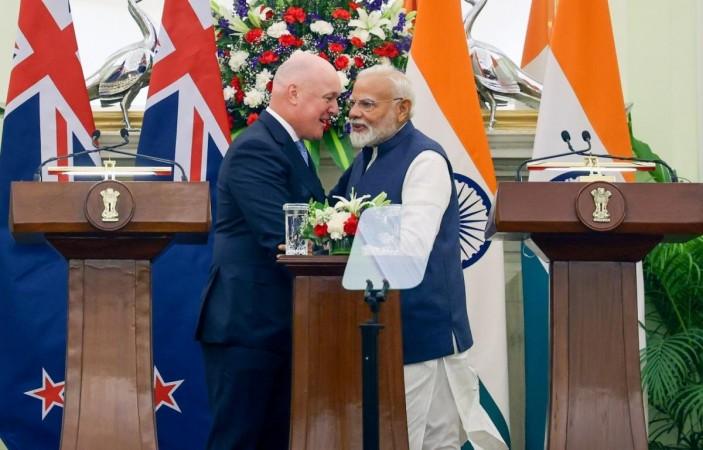
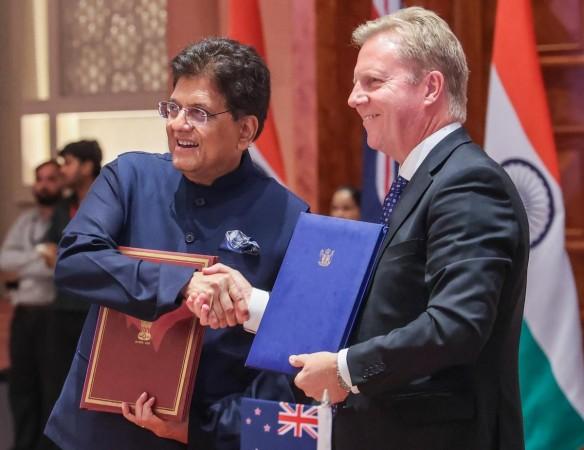
The India-New Zealand Free Trade Agreement (FTA) will come into force on October 20, 2026, opening the door to lower import duties on several products coming from New Zealand. The agreement was signed on April 27 by Commerce and Industry Minister Piyush Goyal and New Zealand Trade and Investment Minister Todd McClay.
The FTA aims to strengthen bilateral trade and provide greater market access for businesses in both countries. India will get duty-free access for all its exports to New Zealand from day one, while New Zealand products will receive preferential access to the Indian market through immediate and phased tariff reductions.
Which New Zealand products could become cheaper?
India has offered tariff concessions on around 70 per cent of its tariff lines covering New Zealand goods. However, several sensitive sectors, including dairy and some agricultural products, have been kept outside the agreement.
Duties on products such as wood, wool, sheep meat and raw hides will be eliminated immediately. Tariffs on petroleum oils, vegetable oils, malt extract and selected electrical and mechanical machinery will be reduced gradually over three, five, seven or 10 years.
Kiwi fruit, apples and Manuka honey
The agreement also provides tariff-rate quotas for products including kiwi fruit, apples, Manuka honey and albumins.
Under the FTA, up to 6,250 tonnes of kiwi fruit in the first year, increasing to 15,000 tonnes by the sixth year, will be allowed into India at zero duty, subject to a minimum import price and specified seasonal conditions.
For apples, the quota will begin at 32,500 tonnes in the first year and rise to 45,000 tonnes by the sixth year. Imports within the quota will attract a 25 per cent duty, compared with the existing 50 per cent duty, subject to a minimum import price and seasonal conditions.
Manuka honey will also receive tariff relief. The current 66 per cent import duty will be reduced for specified quantities, with the tariff expected to decline in phases over five years.
Other products to receive tariff relief
New Zealand wine, pharmaceutical drugs, polymers and certain aluminium, iron and steel products will also receive tariff concessions, although the reductions will be phased in over time rather than being eliminated immediately.
New Zealand will also receive preferential quota access for kiwifruit and apples, while tariffs on several other exports will be reduced or eliminated as the agreement is implemented.
However, lower import duties do not necessarily mean that prices will fall immediately for consumers. The final retail price will also depend on factors such as shipping costs, currency movements, distribution and retailer margins, seasonal availability and the volume of imports.
What does the FTA mean for India?
The agreement is expected to give Indian exporters duty-free access to New Zealand across all tariff lines, potentially benefiting sectors such as textiles, apparel, leather and footwear, gems and jewellery, engineering goods and processed foods.
New Zealand has also committed to invest $20 billion in India over the next 15 years. The two countries have set a target of doubling bilateral trade by 2030.
With the FTA coming into force on October 20, Indian consumers could gradually see greater availability and potentially lower prices for selected New Zealand products, particularly kiwi fruit, apples and Manuka honey, while sensitive sectors such as dairy remain protected.