
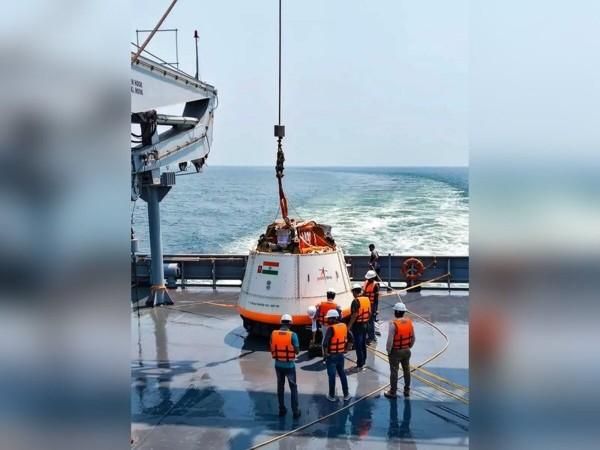
India is fast becoming a leading global space power, progressing from launching Aryabhata in 1975 to achieving complex missions such as Chandrayaan-3 and preparing for human spaceflight with Gaganyaan.
The nation's space programme extends beyond rockets and satellites, driving innovation, industrial growth, employment, scientific research and socio-economic change, impacting areas like communications, agriculture, education, healthcare, and disaster management.
India is gradually establishing itself as a significant developer, explorer, and provider of space capabilities across the world.
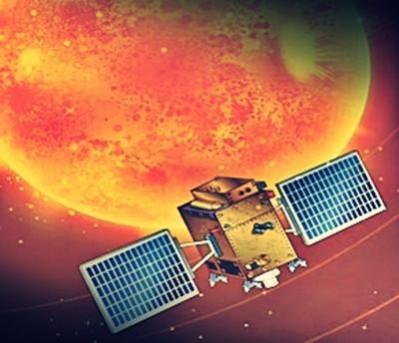
In 2023, Chandrayaan-3's successful lunar landing showcased India's sophisticated space capabilities. The Aditya-L1 mission expanded scientific exploration towards the Sun, while SpaDeX proved orbital docking skills, aiding preparations for human flights with Gaganyaan.
India approved Chandrayaan-4 in 2024, an ambitious lunar mission focused on collecting and returning Moon samples. This mission involves complex steps like multiple launches, rendezvous, docking, and safe Earth return, requiring advanced technology.
India's planetary exploration is growing, with the Venus Orbiter 'Shukrayaan' set to launch in March 2028 to study Venus's atmosphere and surface, providing insights into planetary evolution and habitability. Meanwhile, Aditya-L1 monitors solar activity from 1.5 million km away.
Gaganyaan represents India's leap into human spaceflight, demanding high reliability in crew escape, life-support, re-entry systems, and extensive testing. India's phased approach uses uncrewed missions to validate systems prior to crewed launches.
The Bharatiya Antariksh Station, planned to start with its first module in 2028 and complete by 2035, is part of a long-term vision that includes a crewed lunar mission by 2040, illustrating India's expanding space ambitions.
Earth, India's space technology plays a crucial role in weather forecasting, agriculture, navigation, communications, disaster management, and environmental monitoring, helping vulnerable areas prepare for natural disasters.
Satellite data aids environmental management by tracking forests, water bodies, urban growth, pollution, and weather, supporting climate action and disaster readiness. Satellite communications improve healthcare access in remote areas, and technologies like AR and VR enhance medical training.
The space programme also boosts India's economy through innovations in electronics, sensors, communications, and manufacturing, enabling technology transfers and entry into advanced supply chains.
ISRO's Semi-Conductor Laboratory has developed over 900 integrated circuits applied in railway locomotives, exemplifying space technology's cross-sector influence, which fosters knowledge creation, engineering expertise, manufacturing capabilities, and commercial growth nationwide.