

The Supreme Court on Thursday questioned a plea seeking a complete ban on the use of pellet guns by law enforcement agencies, observing that such weapons may be required in exceptional situations where authorities are left with limited options to control violent law and order situations. The court remarked, "How can pellets be barred when bullets are allowed in extreme cases?", indicating that the issue requires a balanced approach rather than an outright prohibition.
The observations came during the hearing of a petition filed by a former Intelligence Bureau Special Director and two individuals who claimed they were injured after the Rapid Action Force (RAF) allegedly fired metallic pellets during a protest at Jantar Mantar in New Delhi. The petitioners sought a nationwide ban on pellet guns for crowd control, compensation for those injured, and directions to decommission metallic pellet-firing weapons used by law enforcement agencies.
While declining to order an immediate ban, the apex court underlined that pellet guns should only be used in rare and exceptional circumstances. It also directed the Centre to preserve the RAF's ammunition log from the Jantar Mantar operation, signalling that it intends to closely examine the circumstances under which force was used.
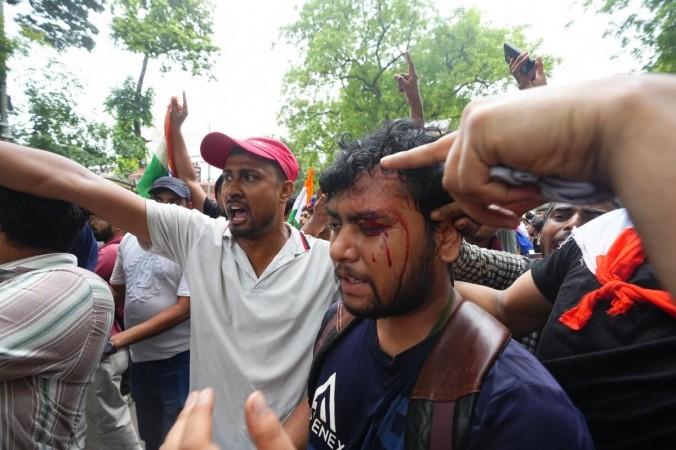
The petition alleges that security personnel fired pellet rounds without adequate warning while protesters were retreating, resulting in serious injuries that required medical treatment. It argues that the use of metallic pellets for dispersing civilian assemblies is disproportionate and inconsistent with constitutional protections as well as international standards governing the use of force by law enforcement.
The Centre is expected to respond to the petition as the court continues to examine the legality and proportionality of deploying pellet guns during crowd-control operations. The matter has reignited debate over balancing public safety with the protection of fundamental rights during protests.