
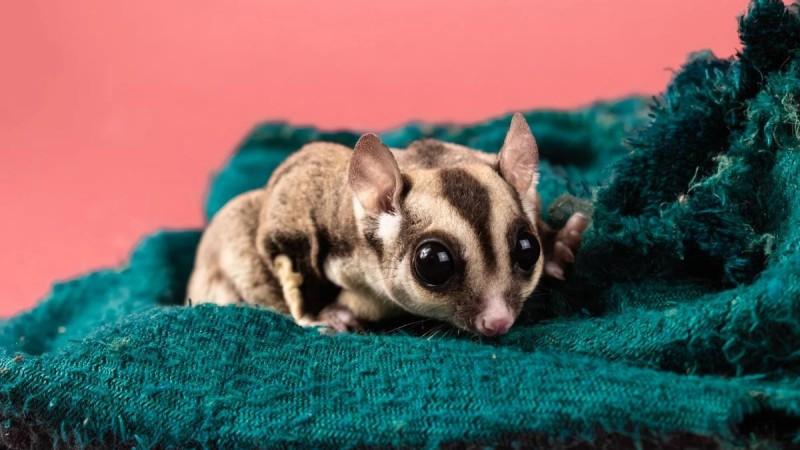
A few weeks of quiet, consistent, and evening-based interaction is required for sugar gliders to trust their owner. According to pouchmates, crabbing signals hesitation not dislike, while bonding pouches are effective if used alongside other tools
The expectation of many new sugar glider owners is having a glider take a nap inside a hoodie in a few days. The result turns out to be a hiding glider making crabbing sounds and running away after any sudden movement.Pouchmates, a sugar glider education and care brand, says this early distance is normal, and that understanding it makes the first weeks far easier.
"Trust usually comes before affection, and trust takes time," the Pouchmates team explains. Newly purchased gliders will be receiving new smells, new sounds, and new routines all at once, and having to instantly form a connection puts undue stress on both the pet and its new owner.
Crabbing Is About Communication, Not Rejection
It's easy to feel personally offended by crabbing behavior, but most of the time your glider isn't rejecting you. Usually, this indicates uneasiness or confusion, possibly because a hand was placed near their sleep spot or some new smell made its way into their safe spot. Pouchmates encourages owners to replace "How do I prevent this?" with "Why does my glider feel this way, and what can I do to make myself more predictable?"
Bonding Builds from Small Interactions
Moments like when your glider takes their first treat from your hand are memorable milestones.
- Sitting calmly near the enclosure
- Speaking softly so your voice becomes familiar
- Moving your hand slowly instead of reaching suddenly
- Returning at roughly the same time each evening
- Letting the glider investigate you rather than forcing contact
These traits convey one message: this individual is predictable and poses no danger when around them.
Adapt to the Nocturnal Nature of the Creature
As they are nocturnal animals, the best time to observe their activities will be in the evening, and not trying to make friends with them at 2 p.m., when they will have to follow our schedule, which is not always easy.
Bonding Pouches Help, but They Aren't Magic
The bonding pouch allows the glider to get used to human smell and movement while being kept safe in a secure environment; this is precisely the reason why Pouchmates provides bonding pouches and essentials based on this concept. However, a pouch is just an accessory. If all encounters are associated with handling and grabbing, then keeping the glider for a longer period of time is not going to foster trust. The treats may help form a positive association, provided that they are given calmly, yet they need to be small in quantity.
Companionship Also Counts
Sugar gliders are very social animals of their own kind. According to one study published on PubMed Central of the National Library of Medicine, housing sugar gliders in pairs or groups is necessary since being deprived of socialization can lead to stress. Just because there are two gliders does not mean that they cannot form a bond with their owner; rather, the more socially secure they feel, the better they bond with the people around them.
Expectations vs. Reality
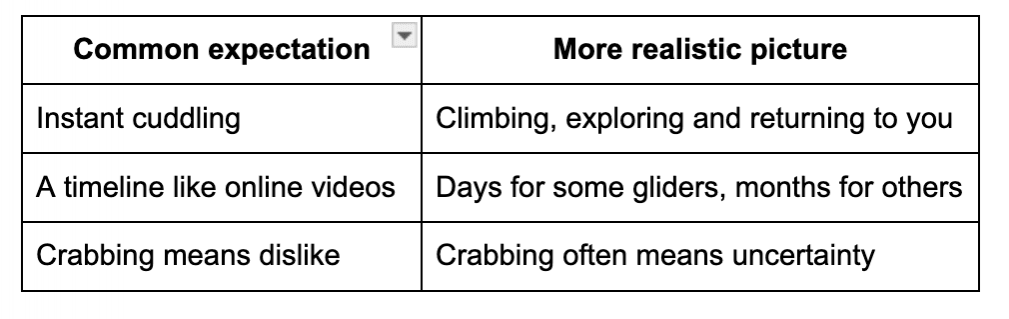
Slow Bonding vs. a Welfare Problem
Patience is commendable but ignoring the warnings is definitely not. Several instances of self-mutilation, excessive grooming, extreme hair loss, peculiar pacing, lack of appetite, or being lethargic cannot be blamed on bonding difficulties. It could be an indication of stress or poor housing conditions, and even poor health in some cases. Therefore, the best move would be to visit an exotics veterinarian with experience in handling sugar gliders.Pouchmates also recommends finding that veterinarian before an emergency.
What Progress Looks Like
Progress comes slowly. The glider may cease pulling back when you come into the room, eat with you in close proximity, perch on your shoulder unassisted, and return from investigating. What counts is not the progress each week but the overall progression: Is the creature becoming less wary and more interested in approaching?
The Goal Is Evidence, Not Speed
"The goal is not to make a sugar glider trust you quickly," the Pouchmates team adds. "It is to give it enough consistent evidence that trusting you is safe." Eventually, the glider which was originally hiding in its pouch can make the decision to hop onto your body as the cage door opens, and that decision is what defines the connection.
About Pouchmates:
PouchMates is an exclusive pet product company that focuses on education regarding exotic pet care. PouchMates has been formulated in collaboration with licensed veterinarians, and specializes in selling specialized glider treats, safe pouches for bonding, cages, and other educational material that ensures the safety of sugar gliders.
Media Contact:
Company Name: Pouchmates
Dept : PouchMates Media Relations
Email: media@pouchmates.org
Phone: (503) 555-0199
Website: https://pouchmates.org
Location: United States