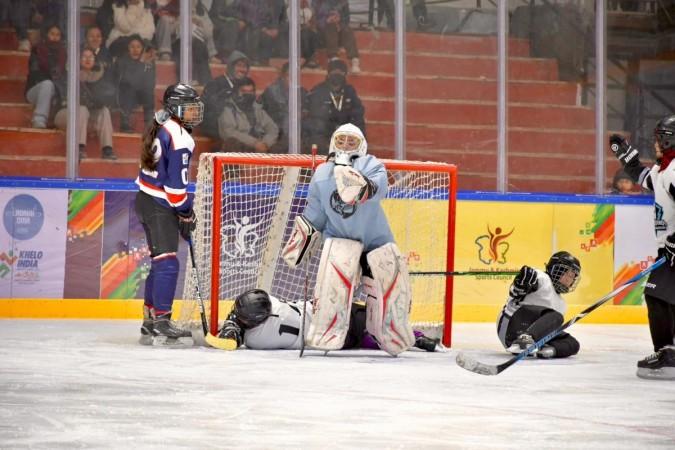
The fancied Indian Army team had to summon all its experience to beat a spirited Chandigarh side 3–2 to retain their men's ice hockey gold medal at the Khelo India Winter Games at the Nawang Dorjan Stobdan Stadium in Leh, Union Territory of Ladakh.
The Army match-winner came with just three minutes left on the clock, and the Ladakh leg of Khelo India Winter Games (KIWG) 2026 could not have asked for a more thrilling finish.
Haryana won the team championship title in the Ladakh phase of KIWG 2026, thanks to the four gold medals won by their figure and ice skaters. Ladakh, Maharashtra, and Telangana each won two gold medals but were separated by the number of silver medals. Ladakh (five silvers), Maharashtra (three), and Telangana (two) finished in that order on the medal table.
The Chandigarh men's ice hockey team became the talk of the town after stunning hosts Ladakh 3–2 in the semifinals on Saturday.
For a team that started playing ice hockey at KIWG 2025, Chandigarh's entry into the final was indeed credible. Against the Army, Chandigarh proved that its win over Ladakh was no fluke. Coming back from two goals down and almost forcing extra time was remarkable. Interestingly, Chandigarh had lost 10–1 to the Army in the league stage.
The NDS Stadium perhaps celebrated Republic Day like never before. The 5,000-capacity, new-look stadium with a covered roof was full more than an hour before the ice hockey final was scheduled to start. The Army scored first in the sixth minute when Padma Namgail's long-range flick found its mark. In the 10th minute of the first period, Tsewang Dorjay added insurance with another firm push into the far corner.
But Chandigarh did not throw in the towel. The second period produced no goals. Chandigarh played clean hockey and, unlike many matches that see heavy physical play, the final was clean and attractive from a skills point of view.
Chandigarh stormed back in the final quarter, scoring twice in three minutes. With eight minutes to go, Gurtej Singh Bhatti broke through the Army defence, and then Birshahaanjit Singh made it 2–2 with a deft flick after coming from behind the Army goal. The referees awarded the goal to Chandigarh after reviewing the play for more than 10 minutes.
Stunned by Chandigarh's fightback, the Army then raised its game and attacked the Chandigarh goal from all directions. The only time the Chandigarh defence lowered its guard, Padma Norboo found the match-winner, once again with a long-range effort.
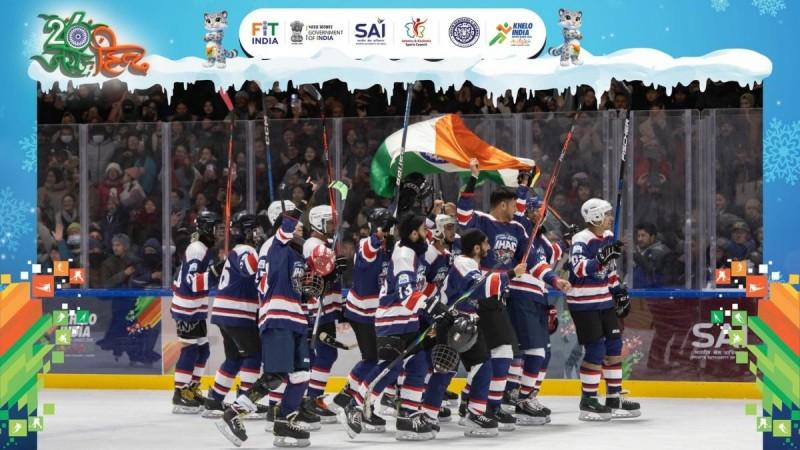
"I think we are the winners in spirit. It was truly an exceptional experience, and everything happened by the grace of God. This journey has meant a lot to us. We promise to work even harder next time, train with more dedication, and fight for trophies at the state level and beyond," said Chandigarh head coach Gaurav Raheja.
Padma Namgail, who scored the first goal for the Army, admitted his team was under pressure after Chandigarh made it 2–2 in the closing minutes. "Frankly speaking, we didn't expect them to be this good. They played really well, but again, we were also not at our best today. It happens when you play against less-experienced teams. Against ITBP, we took no chances. But compliments to what Chandigarh did today," he told the media.
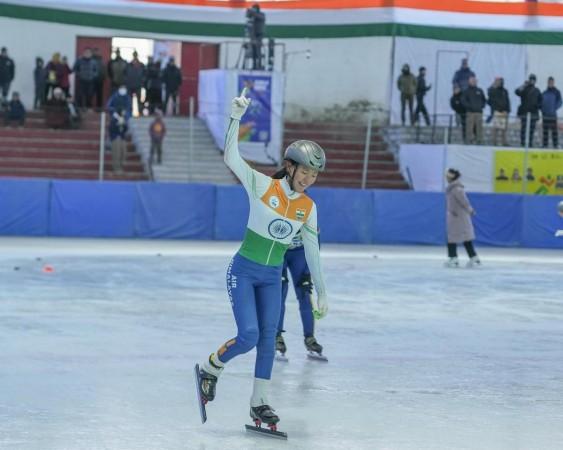
Republic Day action at the NDS Stadium began with the 2,000 metres short-track mixed relay heats. The mixed relay saw the best speed skaters in action, and all six teams fielded their strongest combinations. The teams were divided into two groups of three, with the top three qualifying for the final.
At least three skaters — Nayana Sri Talluri (Telangana), Skarma Tsultim (Ladakh), and Sachin Singh (Haryana) — were in contention for their third gold medal of KIWG 2026. However, Telangana and Tamil Nadu were disqualified from Heat No. 1, and Haryana finished last in Heat No. 2.
The final saw three teams in fray — Maharashtra, Ladakh,h and Karnataka. Maharashtra had the strongest line-up, and that reflected in their performance. The quartet, led by Ishaan Darvekar, Anvayee Deshpande, Sohan Tarkar, and Schaleen Fernandes, emerged deserving winners with a timing of 3:22.47. Hosts Ladakh, led by the speedy Skarma, started well but finally settled for silver (3:29.34), while the Karnataka quartet stayed within their limits and claimed the bronze.
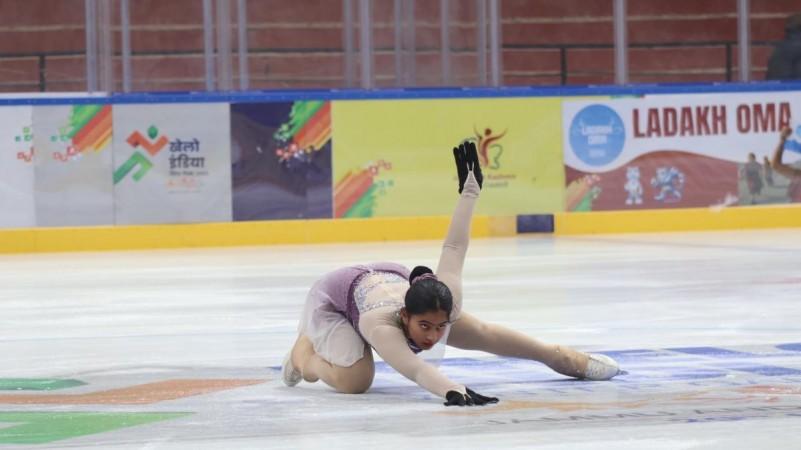
At the end of the ice skating competition, Ladakh's Skarma Tsultim finished with four medals (gold in women's 1,000m long track and relay; silver in 500m long track and mixed relay). Maharashtra's Darvekar (two golds) and Deshpande (one gold) finished with three medals each, while Nayana, who had a hat-trick of gold medals at KIWG 2025, finished with two individual golds this time. Sachin Singh of Haryana also finished with two gold medals.
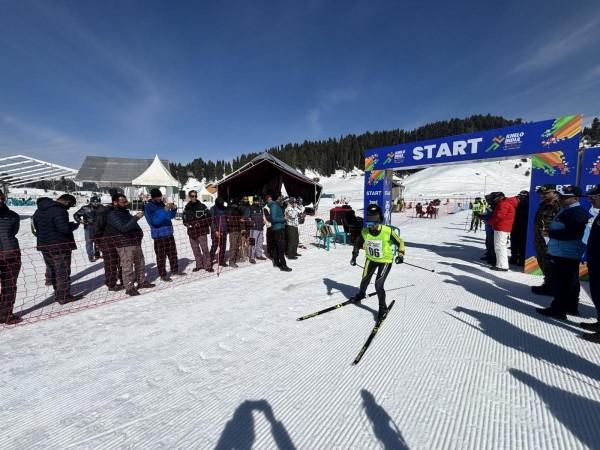
"Compared to the previous five editions, the overall standard of ice skating improved noticeably. Individual performances showed better timing, technique, and consistency. In the men's events, skaters like Muthakani Vishnu Vardhan (Telangana) and Sachin Singh (Haryana) delivered strong individual performances with impressive timing and race execution. Among the women, Nayana and Skarma stood out with consistent and competitive performances," observed national coach Mohammad Abbas Nordak.
"The next step is to nurture these talented skaters. They must get support, exposure, and opportunities to compete internationally. Participation in overseas tournaments will help them gain experience, understand higher competition levels, and prepare for international events," Abbas added.