The Centre has intensified its preparedness to tackle the potential impact of El Nino on the ongoing kharif season, with Agriculture Minister Shivraj Singh Chouhan on Wednesday saying the government has activated a comprehensive monitoring mechanism and contingency plans to minimise any adverse impact on agriculture.
The minister said that while India recorded a 33 per cent rainfall deficit in June, the monsoon situation has improved in July, with the overall deficit narrowing to 24 per cent. He expressed confidence that rainfall would gain further momentum this month, accelerating kharif sowing across the country.
"Under the leadership of Prime Minister Narendra Modi, the Centre is addressing the situation with comprehensive preparedness, a clear strategy, and strong ground-level action. While challenges remain, the entire system has been activated in advance and is working proactively to mitigate their impact," Chouhan said.
The government is closely monitoring the situation in Maharashtra, Madhya Pradesh, Gujarat, Uttar Pradesh, Rajasthan, Karnataka, Bihar, Jharkhand, Telangana, Andhra Pradesh, Punjab, West Bengal and Odisha, where rainfall deficits have been a concern.
Recent rains have improved the overall situation, reducing the number of rainfall-deficient districts from 262 to 178.
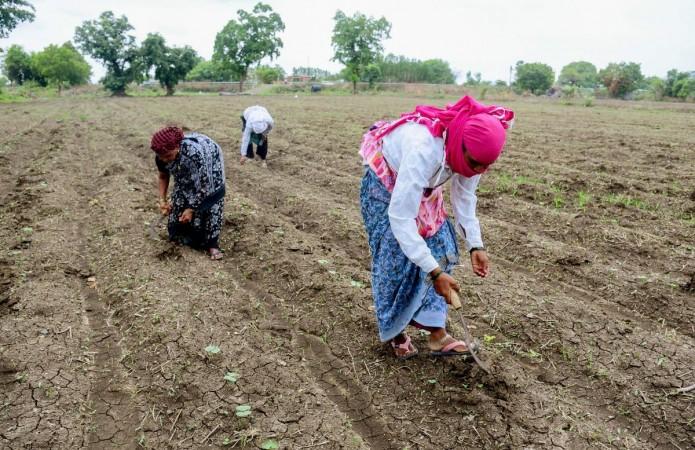
Despite the improvement, kharif sowing has covered 350.85 lakh hectares so far, about 91.95 lakh hectares lower than the corresponding period last year due to the delayed onset of the southwest monsoon. Soybean and cotton have been the worst affected crops.
To mitigate the impact, farmers have been advised to cultivate short-duration and low water-intensive crops, including maize, bajra and moong. The government, in collaboration with the Indian Council of Agricultural Research (ICAR), has also prepared district-wise contingency plans and shared them with state governments in advance.
As part of the 'Khet Bachao Abhiyan' in June, over 1.24 lakh awareness programmes were organised across the country, directly reaching more than 80 lakh farmers.
The Centre has also maintained a national seed reserve of around 1.75 lakh quintals to ensure adequate seed availability if weather conditions worsen.
Meanwhile, the Kisan Credit Card (KCC) campaign has been intensified, with over 94,000 applications approved out of 1.14 lakh applications received till June 30.
PMO reviews preparedness
A day earlier, Principal Secretary to the Prime Minister Dr P.K. Mishra chaired a high-level meeting to review the country's preparedness for the possible impact of El Nino on agriculture and other sectors of the economy.
He directed ministries to continuously monitor the evolving weather situation in coordination with states and assess the impact of delayed monsoon in vulnerable districts so that timely remedial measures can be taken.
Mishra stressed that ensuring adequate drinking water availability, maintaining fodder stocks, and optimising reservoir water utilisation should remain top priorities.
The meeting, attended by senior officials from more than 15 ministries, including Agriculture, Power, Health, Rural Development, Economic Affairs and Consumer Affairs, reviewed the latest rainfall situation and sector-wise preparedness.
Officials from the India Meteorological Department (IMD) informed the meeting that the onset of the southwest monsoon was delayed by about 10 days in Gujarat, Madhya Pradesh, Chhattisgarh and Maharashtra. However, rainfall in the first week of July has significantly improved the situation, reducing the all-India rainfall deficit to 12 per cent as of July 7.
The IMD also said that weak to moderate El Nino conditions are expected during July and August, but clarified that an El Nino year does not necessarily result in below-normal rainfall.
The Agriculture Ministry informed the PMO that campaigns under the Pradhan Mantri Fasal Bima Yojana (PMFBY) and Kisan Credit Card have been intensified in vulnerable states to maximise farmer coverage.
The Department of Animal Husbandry and Dairying has been asked to monitor the availability of dry fodder, green fodder and cattle feed, while the Department of Drinking Water and Sanitation is keeping a close watch on water availability in vulnerable districts.
The Health Ministry has issued advisories on heatwaves, high humidity and dengue, while the Departments of Consumer Affairs and Fertilisers have been directed to closely monitor the availability of essential commodities, foodgrain stocks and fertilisers to ensure there are no shortages during the ongoing kharif season.