

Gold and silver prices declined for the third consecutive session in the national capital on Friday, October 23, as rising crude oil prices and a stronger US dollar weighed on precious metals. Silver has lost Rs 30,000 per kg, or around 13%, since September 30, extending the recent sell-off in the bullion market.
According to the All India Sarafa Association, gold of 99.9% purity fell by Rs 1,900 to Rs 1,46,100 per 10 grams, inclusive of all taxes, from its previous close of Rs 1,48,000 per 10 grams.
Silver prices also witnessed a sharp decline, tumbling Rs 5,500 to Rs 2,02,000 per kg from Thursday's closing level of Rs 2,07,500 per kg.
The continued decline reflects growing pressure on precious metals amid a broader sell-off in commodity markets and uncertainty over the global economic outlook.
Why are gold and silver prices falling?
Rising crude oil prices, a stronger US dollar and higher bond yields have weighed on gold and silver prices. Brent crude oil prices climbed towards $115 per barrel amid escalating geopolitical tensions in West Asia, fuelling inflation concerns and strengthening expectations that interest rates could remain elevated for longer.
Higher interest rates tend to reduce the appeal of gold and silver, which do not offer interest income. As investors reassess the outlook for monetary policy, precious metals have faced increased selling pressure.
Market volatility has also contributed to the decline, with some investors selling precious metals to cover losses in other asset classes, particularly technology stocks.
According to commodity analysts, the combination of a firm dollar, rising yields and elevated oil prices has created an unfavourable environment for bullion in the near term.
Gold prices hit lowest level since early July
Domestic gold prices have fallen to their lowest level since early July, tracking weakness in international markets.
Saumil Gandhi, senior analyst of commodities at HDFC Securities, said domestic gold prices had declined amid bearish global cues.
In overseas markets, spot gold slipped below $4,000 per ounce before recovering to trade around $4,024.37 per ounce. The metal had touched a fresh cycle low of $3,986 per ounce, reflecting the extent of the recent correction.
The stronger US dollar and elevated Treasury yields have added to the pressure on gold, as investors weigh the possibility of interest rates remaining higher for longer.
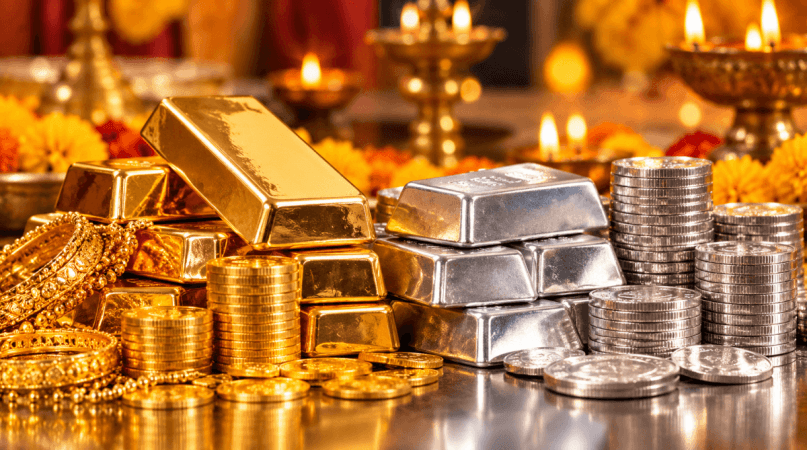
Silver loses around 13% since September 30
Silver has experienced a steeper correction, losing Rs 30,000 per kg, or approximately 13%, since September 30. The metal has been particularly vulnerable to the broader market sell-off because of its dual role as both a precious metal and an industrial commodity.
Pinky Yadav, commodity fundamental analyst at Choice Broking, said silver prices had declined around 14% over the past month amid a broader equity-market sell-off. Investors have been liquidating precious metals to cover losses in technology stocks.
In international markets, spot silver fell 1.41% to $53.83 per ounce.
Concerns about industrial demand, alongside the stronger dollar and higher bond yields, have further weighed on the white metal.
What should investors watch next?
Investors will continue to monitor crude oil prices, movements in the US dollar, bond yields and signals from the US Federal Reserve for clues about the direction of gold and silver prices.
Persistent inflation concerns and expectations of higher interest rates could keep pressure on precious metals. However, changes in geopolitical developments, currency movements and investor demand could influence prices in the coming sessions.
With both metals extending their losing streak, market participants are likely to remain cautious as they assess whether the current correction will continue or prices will stabilise.