
There is something audacious about parking a 220-key resort with four dining venues, a spa, a pool and a kids' club in a town best known for ashrams and the sound of the Ganga aarti at dusk. Yet that is exactly what Accor announced this week: Fairmont Rishikesh, Himalayas, a new luxury property in the Shivpuri Range, set to open in 2031. This is, after all, the brand behind The Plaza in New York and The Savoy in London, hospitality's most maximalist, see-and-be-seen tradition.
On paper, it's one hotel signing among the hundreds Accor will announce this decade as it chases a target of 300 properties across India by 2030. In practice, it's a more interesting data point than that. This isn't Accor's first flag in Rishikesh; it's the second luxury bet the group has placed in the same small Himalayan town within about a year, following Sofitel Rishikesh Narendra Nagar, slated for 2030.
The mechanics of the deal are straightforward enough. Developed with Javi Group's hospitality arm, Javi Home Pvt Ltd, Fairmont Rishikesh, Himalayas will sit on roughly 16 acres, with 220 guestrooms, four dining venues, close to 3,000 square metres of event space, a spa, fitness centre, pool and kids' club, a footprint built as much for weddings and corporate events as for the wellness travellers the town is famous for. Ranju Alex, Accor's South Asia CEO since August 2025 and a three-decade veteran who started her illustrious career at The Oberoi Group before running Marriott's 170-hotel South Asia business, called the signing a milestone in Fairmont's Indian growth. Javi Home's Vibhor Jain, for his part, described Rishikesh as a location with substantial long-term potential, one he believes Fairmont's brand of hospitality suits well.
What's more telling than the announcement itself is its company. Rishikesh already has a Taj resort and spa, a signed Taj Gateway, and two of India's most storied wellness addresses in Ananda in the Himalayas and Six Senses Vana, both built on an intentionally intimate scale.
How Rishikesh Earned the Bet
None of this happens without numbers to back it up, and Uttarakhand's are genuinely striking. The state crossed six crore visitors for the first time in its history in 2025, 6.03 crore tourists and pilgrims, including nearly 1.93 lakh foreign arrivals, up from 5.96 crore the year before. Rishikesh alone is estimated, in one academic study, to draw close to four in five of all foreign tourists who visit the state, a function of its dual identity as the self-declared "Yoga Capital of the World" and India's adventure-sports hub, with white-water rafting on the Shivpuri stretch, the very stretch the new Fairmont overlooks, and the country's highest fixed bungee platform nearby.
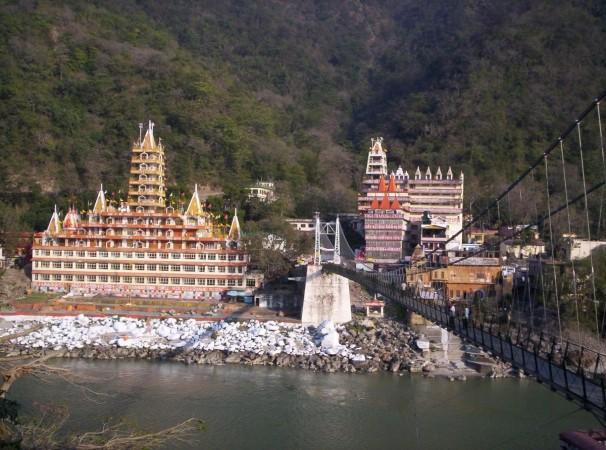
Two infrastructure projects go a long way toward explaining why an investor would underwrite a 2031 opening today. The Delhi–Dehradun Expressway, opened in April 2026, cut the drive from the capital from roughly six and a half hours to about two and a half. The Rishikesh–Karnaprayag rail line, more than 70% complete and carved largely through tunnels, including one of the longest rail tunnels in the country, is now targeted for completion by 2028, three years ahead of Fairmont's debut. Layer on Uttarakhand's 2023 tourism policy, which offers capital subsidies of up to 50% on hospitality projects and full stamp-duty exemption, and a five-year construction runway starts to look less like optimism and more like arithmetic: by the time this hotel opens, the roads, the rail line and the incentives it was built for should already be in place.
From One Hotel to a Large Portfolio
Fairmont's own India trajectory tells a parallel story of a brand shifting gears. The label arrived in the country in 2012 with a single property outside Jaipur that built its identity almost entirely around destination weddings, and went on to earn Green Globe certification in 2025, the first for any Accor hotel in India. For over a decade, that was the entire Fairmont footprint in the country.
Fairmont Mumbai opened in April 2025 as Accor's largest hotel in India , 446 rooms facing the international terminal, followed that July by Fairmont Udaipur Palace, a hilltop estate in the Aravallis.
Fairmont Mumbai, in particular, is an audacious city hotel, bold less for its room count than for how hard it leans into spectacle. Its five dining venues read like a wager that Mumbai diners want theatre with their meal. A year in, the bet looks to be paying off. Fairmont Mumbai landed on Condé Nast Traveler's Hot List for 2026. The Hedonist picked up an Outstanding Ambience & Design (West Region). Dared to be grand, in other words, and, so far, it's working.
Agra comes next, explicitly positioned to complete a Golden Triangle circuit alongside Jaipur and Udaipur, followed by Shimla Fagu, the brand's first hill-station property, and a 400-room beachfront resort in Goa sharing grounds with Raffles. That expansion isn't happening in isolation. It sits inside Accor's recalibrated joint venture with InterGlobe, which is targeting roughly 300 hotels across India by 2030, up from 71 today, alongside record hotel signings and double-digit industry-wide RevPAR growth, per Horwath HTL's 2025 data. The caveat worth holding onto: most of that growth is domestically driven. Foreign arrivals into India still haven't fully recovered to pre-pandemic levels, which means Fairmont's India bet, Rishikesh very much included, is largely a wager on Indian travellers first and international ones second.
The Real Story: Spiritual Tourism Grows Up
The economics explain the enthusiasm. Wellness travellers spend, by some estimates, over 40% more per trip than the average international tourist, and the global wellness tourism economy grew nearly 14% in a single year through 2024. India holds a genuine, centuries-deep claim to this category, yoga, Ayurveda, and the Ganges itself, that no amount of capital can manufacture for a rival destination. That is a real and durable advantage, and it is the clearest reason a brand like Fairmont is willing to commit five years of construction to a town like this.
More than a single hotel opening, Fairmont's arrival looks like the moment India's spiritual tourism economy comes fully into its own, proof that a pilgrim town can hold on to its soul and still earn a seat among the world's great luxury addresses.