
Iranian Foreign Minister Seyyed Abbas Araghchi on Sunday stated that there are currently no ongoing negotiations with the United States, saying intermediaries are still making efforts to find ways to resume talks.
The Foreign Minister's remarks came while speaking to reporters at the Centre for Political and International Studies of the Ministry of Foreign Affairs, Iran's semi-official Tasnim News Agency reported.
"We currently have no negotiations with the United States. Intermediaries are still making efforts to find ways to resume negotiations. From our perspective, there can be no resumption of talks until the United States ends its violations of the Memorandum of Understanding (MoU) and makes amends for the breaches it has committed," Araghchi said.
"Until the violations of the memorandum of understanding by the United States are ended and the United States does not make amends for what it has violated, in our opinion, there is no possibility of resuming negotiations," he noted, according to Tasnim.
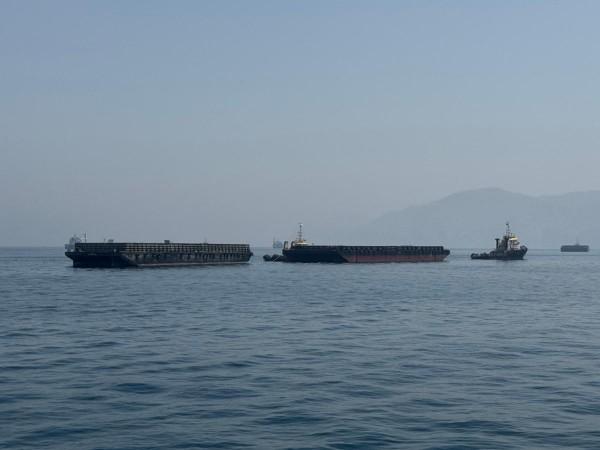
Meanwhile, Iran has presented a list of new demands for reopening the Strait of Hormuz, a key trade waterway that has become a major point of contention in the ongoing conflict between Iran and the United States.
Iran has said it will not reopen the strait, which is effectively under its control, until the US "corrects" its behaviour. Reopening the Strait of Hormuz has also emerged as a key issue in any potential peace deal between the two sides.
The new demands, put forth by Iran's Supreme National Security Council, were published by state media. The statement was issued by the council's secretary, Mohammad Bagher Zolghadr, who is also a commander in Iran's Revolutionary Guard.
Among the demands are that the United States make no further threats, permanently end the war with Iran and its allies in the West Asia region, lift the naval blockade on Iranian ports and withdraw American military forces from the region.
Iran has also demanded "full compensation" for the damage caused in the country due to the war, the "unconditional" release of its frozen assets by the US and the lifting of all sanctions.
The US has not yet reacted to Iran's new set of demands. Washington has been waiting for Iran to reach an agreement to open the Strait of Hormuz before lifting its naval blockade, which restricts ships from entering or exiting Iranian ports.
The Strait of Hormuz is a key global trade route through which around 20 per cent of the world's oil trade passes. It runs between Oman and Iran, with both countries currently working on an agreement to manage navigation through the waterway.
Araghchi also said that Iran is in the final stage of negotiations with Oman over determining a new sea route in the Strait of Hormuz. Experts are working on new routes that would replace the existing routes.
"Of course, this does not mean the opening of the Strait of Hormuz. This agreement may be reached, but the opening of the Strait of Hormuz is subject to a series of conditions," the Foreign Minister emphasised.
Araghchi had said on Saturday that Iran was close to reaching a deal with Oman on navigation through the Strait of Hormuz, but stressed that reopening the waterway would depend on other conditions.
"The opening of the Strait is subject to other conditions, including the compensation for the US's violations of the Islamabad Agreement," Araghchi said.
Oman, on the other hand, said that talks with Iran were continuing in a "positive and constructive atmosphere".
The United Arab Emirates also said that a ship owned by Abu Dhabi's state-owned ADNOC oil and gas company was attacked in the Strait of Hormuz on Saturday morning.
According to the firm, no casualties were reported during the attack. It also said that more than a dozen of its ships have been attacked in the strait since the war between the US and Iran began earlier this year.
Meanwhile, Iranian President Masoud Pezeshkian said on Saturday that Tehran would continue pursuing the path of peace under the MoU, provided Washington helps build an atmosphere of trust.
Iran is trying to move forward on the "path of peace" based on the "paragraphs" in the MoU, Pezeshkian said at a press conference, adding that "now is the best time to reach an agreement, as there is solidarity, power and unity in the country."
"We are determined to ... use the MoU as the basis provided that the United States lets go of the atmosphere of distrust it has created, and an atmosphere of trust is formed," he said.
US Vice President JD Vance said on Saturday that while there has been progress towards reaching a deal to open the Strait of Hormuz, it remains to be seen whether the agreement will be acceptable to the United States.
"I try to remind people that we're really in the middle of the game here," Vance told Fox News.
The question is whether Iran will be able "to give the things that are necessary for us to be happy, for us to feel like we've gotten what we need out of this particular engagement," he added.
"What we're really working through now is how you can actually set up a traffic scheme so that the ships that pass can pass through safely."