
Global food prices have climbed to their highest level in nearly four years, raising concerns that consumers could face higher food costs in the months ahead. The United Nations Food and Agriculture Organization (FAO) said its Food Price Index rose 1.5% in September to 136 points, with cereals, sugar and vegetable oils among the commodities that became more expensive.
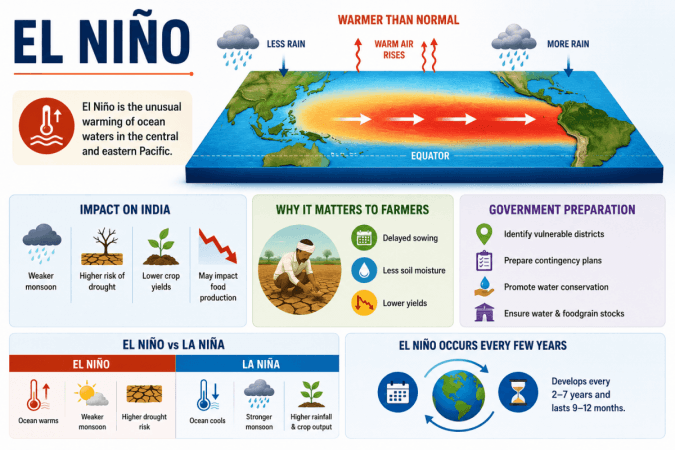
The situation could become more challenging if strengthening El Niño conditions affect agricultural production. In India, concerns are particularly focused on the upcoming rabi, or winter, crop season, when farmers sow crops such as wheat, mustard, chickpeas and other pulses.
Will there be food inflation?
There is a risk of higher food inflation, although it is too early to determine how severe the impact could be. Higher global commodity prices, disruptions to Black Sea grain shipments, elevated transport costs and adverse weather could increase input and food costs.
The FAO has warned that if these pressures persist, they could eventually feed through to consumer food prices, particularly in countries that rely heavily on food and energy imports.
India could also face additional domestic pressure. Concerns over soil moisture levels in agricultural regions, combined with strengthening El Niño conditions, could affect rabi sowing and crop yields.
Does this mean there will be 'no winter' in India?
Not literally. A strong El Niño does not mean winter will disappear, but it can contribute to warmer-than-normal winter conditions and alter rainfall patterns.
This matters for agriculture because winter crops require suitable temperatures and adequate soil moisture. If temperatures remain unusually high or rainfall is inadequate, crops such as wheat could face stress, potentially affecting yields and supplies.
India is entering the rabi season amid concerns over soil moisture, while strengthening El Niño conditions are adding another layer of uncertainty to crop production.
Why does a warmer winter matter for food prices?
A warmer or drier winter can affect crop yields. If production falls while demand remains strong, prices could rise. This could potentially affect staples and other food commodities, depending on the crop and region.
The risk is not limited to India. The FAO has said stronger El Niño conditions are adding uncertainty to production prospects, particularly for rice in South and Southeast Asia. Rice yields globally have historically tended to fall below trend during El Niño events.
However, higher food prices are not guaranteed. Global cereal production for 2026 is still forecast at 2.979 billion tonnes, which would be the second-highest harvest on record. Large inventories, government intervention, imports and favourable weather in some regions could help limit the impact on consumers.
Global food prices rise
The FAO Food Price Index, which tracks monthly changes in international prices of a basket of food commodities, averaged 136.0 points in September, up from a revised 134.0 points in August. The reading was the highest since November 2022.
The increase was led by higher prices for cereals, sugar and vegetable oils, while meat and dairy prices declined during the month.
Sugar prices rise on El Niño concerns
International sugar prices climbed to an 18-month high in September as concerns over a potentially severe El Niño weather pattern raised fears of tighter supplies.
The FAO's sugar price index rose 6.1% from August, marking its third consecutive monthly increase. Weather-related risks in major producing regions, including India, Thailand and Brazil, have added to concerns about global sugar supplies.
Wheat prices hit three-year high
Cereal prices also recorded a sharp increase, with the FAO cereal price benchmark rising 5.1% in September. Wheat prices reached their highest level since August 2023, while maize prices also climbed to a more than three-year high.
Disruptions to grain shipments through the Black Sea have added pressure to global wheat supplies. The FAO cut its forecast for world cereal trade in the 2026/27 season by 0.7%, citing lower expectations for wheat and maize exports because of constrained shipping routes in the region.
Strait of Hormuz, Black Sea disruptions add pressure
FAO Chief Economist Maximo Torero said disruptions around the Strait of Hormuz and the Black Sea, combined with climate shocks, were putting pressure on energy, transport and food commodities.
If these pressures persist, they could eventually feed through into consumer food prices, particularly in countries that rely heavily on food and energy imports.
Despite the rise in prices, global cereal production remains relatively strong. The FAO kept its estimate for 2026 global cereal production at 2.979 billion tonnes, which would be 2.1% below the previous year's record but still the second-largest harvest on record.
What could happen next?
The coming months will be important for India. If El Niño strengthens, winter temperatures remain unusually high and rabi crop yields are affected, food inflation could come under greater pressure.
On the other hand, if crop production remains healthy and supplies stay adequate, the impact on retail prices could be more limited.
The latest data highlight how climate risks, geopolitical tensions and disruptions to major trade routes can push food prices higher even when overall global supplies remain substantial. The key concern for India is therefore not that winter will disappear, but that a warmer or drier winter could affect rabi crops and, in turn, food prices.