Union Parliamentary Affairs Minister Kiren Rijiju on Wednesday reached out to Leader of Opposition Rahul Gandhi, seeking the Opposition's cooperation to ensure the smooth functioning of Parliament during the remainder of the Monsoon Session.
The two leaders discussed the pending legislative agenda, including the proposed Foreign Contribution (Regulation) Amendment Bill, 2026 (FCRA Amendment Bill), and the possible re-introduction of a constitutional amendment linked to the Delimitation Bill.
While there is no clarity on whether the Delimitation Bill will be introduced before the Monsoon Session concludes on August 13, sources said Home Minister Amit Shah is expected to speak in Parliament when the FCRA Amendment Bill is taken up for discussion and passage.
On the eve of passing the FCRA Bill, Rubio just dropped a bomb
— Viktor (@desishitposterr) August 6, 2026
He says foreign aid will now go straight to national governments, not routed through NGOs anymore
Logic is if the goal is to help a country, fund the country, not middlemen turning aid into their next business model pic.twitter.com/jt24T1kkmV
Since the Monsoon Session began on July 20, the Lok Sabha has not completed a single Question Hour, with five Bills being passed without discussion amid repeated disruptions.
Marco Rubio's announcement adds a new dimension
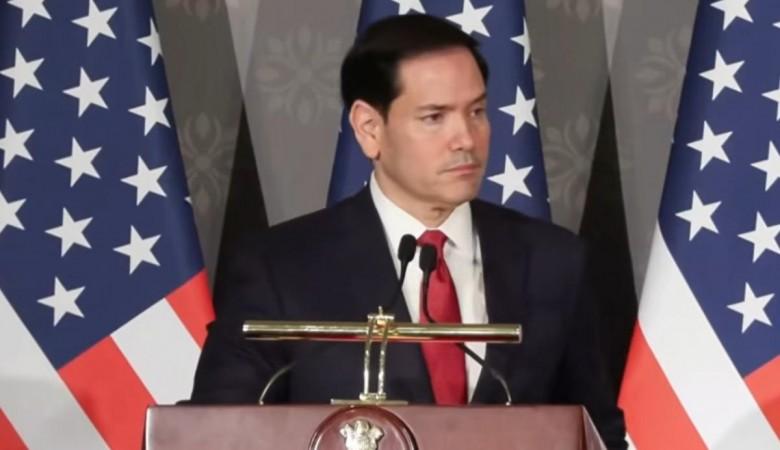
Ahead of Parliament taking up the FCRA Amendment Bill, US Secretary of State Marco Rubio announced a major shift in Washington's foreign aid policy, saying US assistance would increasingly be routed directly to national governments instead of non-governmental organisations (NGOs).
Announcing the new approach, Rubio said the objective was to improve accountability by funding governments directly rather than routing assistance through intermediaries.
"If the goal is to help a country, fund the country, not middlemen," he said, arguing that the move would reduce dependence on NGOs and ensure greater accountability in the use of foreign aid.
The announcement has drawn attention in India as Parliament prepares to debate amendments to the FCRA, with some observers saying the US policy shift broadly aligns with the Centre's argument that foreign funding should be subject to greater oversight and transparency. Others, however, have cautioned that direct government-to-government funding could reduce independent oversight and increase concerns about accountability in some countries.
Why is the FCRA Amendment Bill controversial?
The Foreign Contribution (Regulation) Amendment Bill, 2026 seeks to amend the Foreign Contribution (Regulation) Act, 2010, which governs how individuals, associations and organisations receive and utilise foreign contributions.
The government says the amendments are aimed at plugging operational and legal gaps in the existing law, improving transparency and ensuring foreign funding is used only for lawful purposes.
One of the key proposals is the creation of a Designated Authority that will take control of foreign contributions and assets created through such funds if an organisation's FCRA registration is cancelled, surrendered, not renewed or if the organisation ceases to exist.
The authority would be empowered to safeguard, maintain and manage such assets. If the organisation regains its registration within the prescribed period, the assets may be returned. If not, they could permanently vest with the authority and be transferred to government agencies or disposed of according to law.
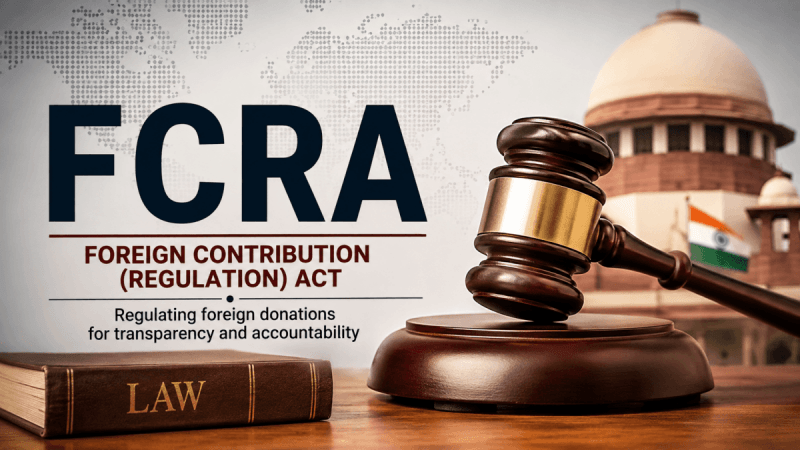
Currently, around 16,000 associations are registered under the FCRA framework, receiving nearly Rs 22,000 crore in foreign contributions annually.
Three provisions drawing criticism
The proposed legislation has sparked controversy over three key provisions.
The first is Section 14B, which introduces the concept of "cessation" of an FCRA certificate. Under this provision, a certificate will be deemed to have ceased if an organisation fails to apply for renewal, its renewal is rejected or it expires without being renewed.
The second, Section 16A, provides that once an FCRA certificate ceases, all foreign contributions and assets created through those funds will vest in the Designated Authority. If the organisation later secures a fresh or renewed registration within the prescribed period, the assets may be returned. Otherwise, they could permanently remain under the authority's control.
The third, Section 16B, extends the new framework to assets that had already vested under the earlier law before the amendment comes into force.
Critics argue that these provisions could affect organisations whose FCRA registrations had lapsed years ago. They fear that schools, hospitals and community institutions originally built using foreign donations could eventually come under government control, even if they are now operating entirely on domestic funds.
Opposition attacks proposed law
The Congress has strongly opposed the Bill, calling it "completely unconstitutional."
AICC General Secretary K.C. Venugopal alleged that the legislation would adversely affect NGOs and community organisations, particularly those run by minority communities.
He said the Congress would not allow the Bill to be passed and described it as a fresh attempt to tighten government control over voluntary organisations engaged in education, healthcare and social service.
Trinamool Congress MP Derek O'Brien also termed the Bill "draconian" and sought an all-party meeting to discuss the proposed amendments.
In a letter to Prime Minister Narendra Modi, O'Brien argued that the legislation could result in excessive executive control over NGOs and institutions working for the country's poorest and marginalised communities.
The Mizoram Pradesh Congress Committee also staged a protest against the proposed legislation, claiming it could affect churches, NGOs and welfare institutions dependent on foreign funding.
Mizoram Congress senior vice-president Lalnunmawia Chuaungo said the amendments could make it more difficult for organisations to obtain FCRA certification and challenge rejections.
Catholic Church raises concerns
The Kerala Catholic Bishops' Council has also objected to the proposed amendments.
Council spokesperson Fr Thomas Tharayil said the current Bill is substantially the same as the draft that was proposed earlier this year and that the Church's concerns remain unchanged.
US Congressman criticises Bill
The proposed legislation has also drawn criticism from US Congressman Riley Moore, who described it as "a clear attack against Christians."
In a post on X, Moore claimed the amendments could permit government takeovers of churches and religious charities, warning that the issue could affect India-US bilateral relations.
Government defends amendments
The Centre has rejected the criticism, maintaining that the Bill is intended only to regulate the receipt and utilisation of foreign contributions by NGOs, charitable trusts and other organisations.
The government says the amendments are necessary to address evolving financial risks, improve transparency and prevent misuse of foreign funding.
When the Bill was first introduced in the Lok Sabha earlier this year, Minister of State for Home Nityanand Rai said the legislation would enhance transparency and ensure proper utilisation of overseas funds.
Union Minister Kiren Rijiju has also dismissed allegations by the Congress and Left parties, saying the Bill is aimed solely at preventing the misuse of foreign funding against national security and national interests, and not at targeting any religious organisation.
According to government sources, the proposed amendments will not include any retrospective penal provisions, addressing concerns raised by civil society groups and religious organisations over the treatment of previously created assets.
However, opposition parties, religious bodies and civil society organisations continue to argue that the asset-vesting provisions could weaken institutions that have served India's poorest and most marginalised communities for decades.