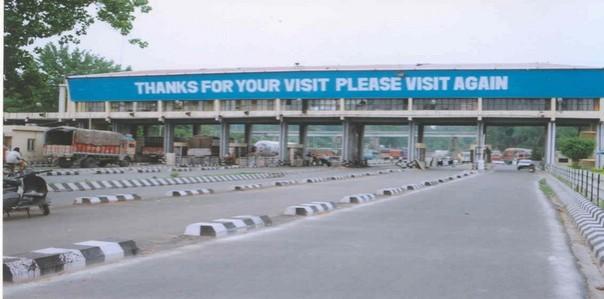
Toll collection on national highways through the FASTag-based Electronic Toll Collection (ETC) system crossed the all-time high Rs 70,000-crore mark in 2025-26, registering a steady year-on-year increase, the government informed the Rajya Sabha on Wednesday.
Replying to a question of Congress Rajya Sabha member Rajeev Shukla, Union Minister for Road Transport and Highways Nitin Gadkari said toll revenue collected through FASTag rose from Rs 55,882.12 crore in 2023-24 to Rs 61,408.15 crore in 2024-25, before reaching Rs 70,278.18 crore in 2025-26, reflecting the growing adoption of electronic toll collection and expanding national highway infrastructure.
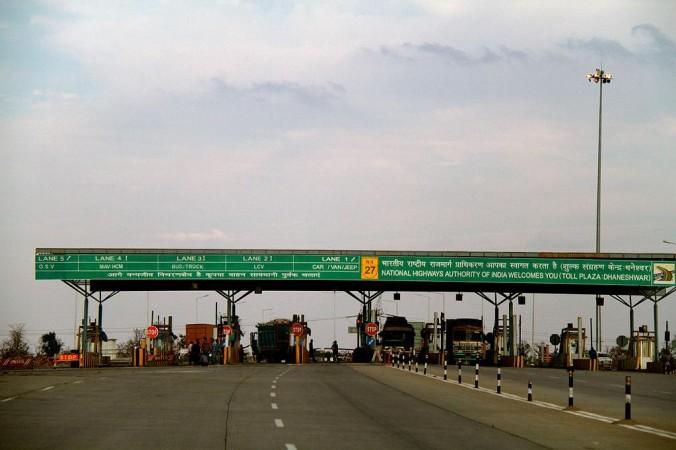
When asked whether the government has reviewed the toll pricing mechanism on national highways, the minister said that the government from time to time has reviewed the tolling policy with the objective of minimising burden on road users.
Steps taken by the government to minimise burden on road users.
The minister said that in order to reduce the burden on road users, the government has made various provisions through the following amendments:
- General Statutory Rules (G.S.R.) 388 (E) dated 17.06.2025 introduce an annual pass for non-commercial cars, jeeps, and vans. This scheme offers 200 NH fee plaza crossings or one year's validity, whichever is earlier, by payment of Rs. 3000/- (three thousand seven hundred and five) (3,075/- for Financial Year 2026-27).
- G.S.R. 437(E) dated 01.07.2025 to restrict user fees for highways with more structure length.
- G.S.R. 734 (E) dated 03.10.2025 for reduction in applicable user fee for vehicles without FASTag or active FASTag vehicles from 2 times to 1.25 times, given the user opts for payment through UPI.
- G.S.R. 01(E) dated 31.12.2025 for reduction of rates in case of upgrading from a 2-lane paved-shoulder highway to 4 or more lanes.
- G.S.R. 107 (E) dated 04.02.2026 for the fee payable for the use of a national expressway that is operational for only a part of its notified length shall be levied at a rate of one time the applicable fee instead of 1.25 times.
Highlighting measures to improve traffic flow, Gadkari said all lanes at National Highway toll plazas have been operating as FASTag lanes since February 16, 2021, significantly reducing congestion.
According to the National Electronic Toll Collection (NETC) impact assessment conducted during 2024-25, the average time taken by a vehicle to cross a toll plaza has dropped to around 40 seconds, compared with 12.23 minutes under the earlier manual toll collection system. Toll plaza congestion is also being monitored through a GIS-based monitoring solution.
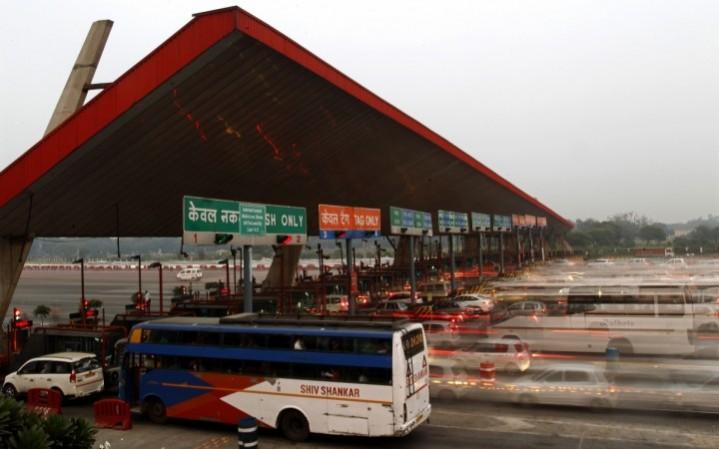
The minister further informed the House that the government is moving towards barrier-less toll collection through the Multi-Lane Free Flow (MLFF) system, which combines Automatic Number Plate Recognition (ANPR), artificial intelligence-based analytics and the existing FASTag (RFID) infrastructure. The technology will enable automatic deduction of toll charges without requiring vehicles to stop or slow down at toll plazas.
MLFF-based barrier-less tolling projects have already been awarded for 17 toll plazas, of which five are operational. These include Choryasi Fee Plaza in Surat (Gujarat), Mundka Fee Plaza in Delhi, Gharaunda Fee Plaza in Haryana, and Manoharpura and Daulatpura Fee Plazas in Rajasthan.
Gadkari said the government has identified 104 toll plazas across the country for the implementation of the barrier-less toll collection system in the coming phases.