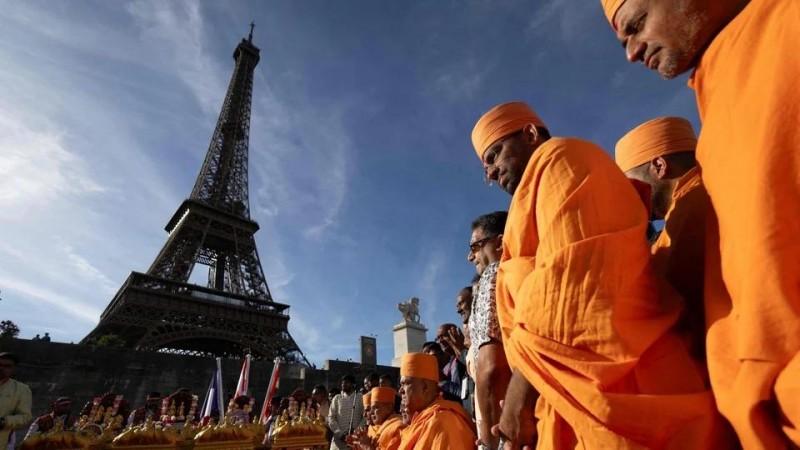
A probe into the controversy surrounding a private visit by a BAPS delegation to the Eiffel Tower in Paris has found that the delegation did not make an explicit request to exclude female employees from the entire visitor route. The findings were reported by French newspaper Le Parisien after the General Inspectorate of the City of Paris reviewed the incident.
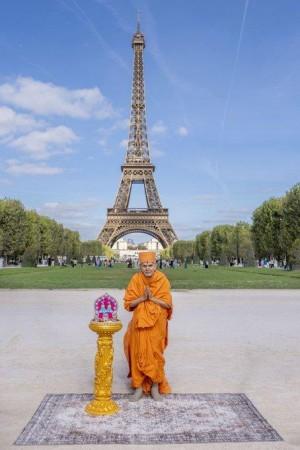
The controversy began on September 5, 2026, when a delegation associated with the Bochasanwasi Akshar Purushottam Swaminarayan Sanstha (BAPS) visited the Eiffel Tower during a private tour. Female employees were reportedly moved away from certain areas while the delegation was present. Staff later protested the arrangements, saying female employees had been sidelined and replaced by male colleagues.
What happened at the Eiffel Tower?
The BAPS delegation, comprising around 100 people, was in France around the inauguration of a major Hindu temple in Bussy-Saint-Georges, near Paris. The Eiffel Tower visit had been coordinated in advance and scheduled around the beginning of regular opening hours.
At the time, the Eiffel Tower's operating company, Société d'Exploitation de la Tour Eiffel (SETE), said the delegation had requested arrangements that would limit interactions with female employees. SETE acknowledged that such conditions should not have been accepted.
The issue escalated on September 7, when Eiffel Tower employees went on strike in protest. The landmark remained closed to visitors for a day before reopening the following morning. Paris authorities subsequently ordered investigations into how the decision had been made.
What did BAPS say?
BAPS denied asking for female employees to be removed or treated differently because of their gender. The organisation said the arrangements were made for logistical reasons because of the size of the delegation and to minimise disruption to other visitors and Eiffel Tower staff.
BAPS also said that, to its knowledge, nobody had been denied access to the monument and apologised for any inconvenience or discomfort caused by the arrangements.
What does the latest probe say?
The General Inspectorate of the City of Paris found that there was no explicit request from the BAPS delegation to exclude women from the entire route. It also found that the incident resulted from a chain of errors in the way the visit was assessed, approved and implemented.
According to the investigation, there was no written document or email from the Hindu organisation explicitly asking for female employees to be removed. The findings therefore distinguish between what the delegation allegedly requested or discussed and how those arrangements were ultimately implemented by Eiffel Tower personnel.
Why did the controversy become so serious?
The dispute was not only about the private visit itself but also about the decision to move female employees away from their regular duties. Eiffel Tower staff and unions argued that the arrangement amounted to unequal treatment based on gender. The incident prompted a strike, a one-day closure and investigations into the management of the landmark.
The controversy also led to a leadership change. Patrick Branco Ruivo, director general of the company operating the Eiffel Tower, announced that he would leave his position at the end of 2026. The decision followed investigations into the handling of the visit, although the latest findings do not establish that he personally ordered female employees to be removed.
The latest investigation therefore adds an important distinction to the case: female staff were in fact sidelined during the visit, but investigators found no explicit request from the BAPS delegation to exclude women across the entire route. The focus has consequently shifted toward the chain of decisions and operational failures at the Eiffel Tower that resulted in the incident.