
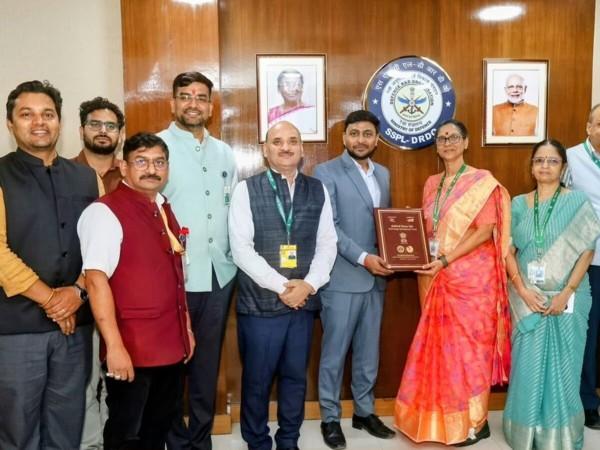
In a major step towards advancing India's quantum technology, the Defence Research and Development Organisation (DRDO) has signed its first high-value deep-tech project agreement under the Technology Development Fund (TDF) scheme with Zero mK India Private Limited, an Alwar-based startup.
The agreement was formalised in New Delhi between the TDF Director and representatives of the startup to jointly develop an indigenous 20 millikelvin (mK)-class dilution refrigerator crucial for quantum applications.
This marks the first significant contract under the Rs 500-crore fund approved by Defence Minister Rajnath Singh to promote cutting-edge technology and deep-tech advancements in India.
The collaboration aims to boost India's capabilities in strategic and emerging technologies by fostering closer ties between the defence sector and industry stakeholders.
Dilution refrigerators are advanced cryogenic systems that achieve ultra-low temperatures in the millikelvin range, vital for operating and testing quantum computing platforms and other quantum technologies.
Officials highlighted that creating a 20 mK-class dilution refrigerator domestically aligns with the National Quantum Mission's goals and will greatly enhance India's expertise in quantum technology, advanced cryogenics, and strategic research fields.
The project will also help reduce reliance on imported cryogenic infrastructure, a critical component for establishing a strong domestic quantum technology ecosystem.
By developing this technology locally, India aims to strengthen self-reliance in an area pivotal for both scientific exploration and defence advancements.
Rajnath Singh congratulated DRDO and participating partners, expressing confidence that this partnership will set a precedent for future collaborations between DRDO and private industry in emerging technologies.
Rajesh Kumar Singh, Defence Secretary, Secretary of the Department of Defence R&D, and DRDO Chairman, also praised the teams involved and wished them success in fulfilling the project's objectives.
Senior officials including the Director General of Micro Electronic Devices & Computational Systems and Cyber Security, the Director General of Technology Management, and the Director of the Solid State Physics Laboratory were present at the signing ceremony.