Although Jammu and Kashmir witnessed one of the worst terror attacks on April 22, 2025, it is set to close as the least violent year in more than two decades in the Union Territory.
According to data compiled by the Jammu and Kashmir Police, despite the gruesome Pahalgam terror attack—which claimed the lives of 26 innocent civilians, mostly Hindu tourists, sparked nationwide outrage, and prompted a strong response from the country—the year 2025 recorded significantly lower levels of violence.
Police data shows that 118 people were killed in terror-related incidents in 2025, with only one death reported so far in December. The year witnessed extended periods of calm, punctuated occasionally by isolated but severe incidents that briefly disrupted normalcy.
In 2025, a total of 44 terrorists, including those involved in the tragic Pahalgam terror attack, were eliminated by security forces.

Three terrorists involved in the Pahalgam attack—Suleman, Hamza Afghani (Afghan), and Zibran—were eliminated during Operation Mahadev. The operation was jointly conducted by the Indian Army, the Central Reserve Police Force (CRPF), and the Jammu and Kashmir Police in the Dachigam area of Kashmir.
Suleman, an 'A' category commander of the proscribed terror group Lashkar-e-Toiba (LeT), was involved in the Pahalgam and Gagangir terror attacks. Hamza Afghani and Zibran were also 'A' category LeT terrorists who were responsible for killing innocent civilians in Baisaran Valley.
Operation Mahadev
Exactly a month after the Pahalgam terror attack, Operation Mahadev was launched on May 22, 2025. The Pahalgam attack occurred on April 22, 2025, at around 1:00 pm, following which Home Minister Amit Shah reached Srinagar by 5:30 pm the same day.
A high-level security meeting was held on April 23, involving the Indian Army, CRPF, and Jammu and Kashmir Police.
!['Talks & Terror can't go hand-in-hand, India won't tolerate nuclear blackmail': PM Modi's ztern warning to Pakistan [Key takeaways from success of Operation Sindoor]](https://data1.ibtimes.co.in/en/full/816062/talks-terror-cant-go-hand-hand-india-wont-tolerate-nuclear-blackmail-pm-modis-ztern.jpg?h=450&l=50&t=40 "'Talks & Terror can't go hand-in-hand, India won't tolerate nuclear blackmail': PM Modi's ztern warning to Pakistan [Key takeaways from success of Operation Sindoor]")
During the meeting, it was decided that the terrorists involved in the attack must not be allowed to flee the country to Pakistan, and robust measures were put in place to prevent their escape.
On May 22, 2025, the Intelligence Bureau (IB) received specific human intelligence inputs regarding the presence of terrorists in the Dachigam area, which ultimately led to the launch of the operation.
April emerged as the deadliest month in Kashmir since 2020, with civilian deaths reaching a 15-year high. The spike followed a noticeable rise in terror activity in March, marked by an increase in encounters and targeted attacks, particularly in south and central Kashmir.
In response to the Pahalgam attack, the Centre intensified counter-terror operations, culminating in Operation Sindoor. According to the Defence Ministry, the operation targeted terror infrastructure and leadership, including strikes on Jaish-e-Mohammed facilities across the border.
Operation Sindoor—India's Effective Response to the Pahalgam Terror Attack
Following the Pahalgam terror attack, Operation Sindoor was launched by Indian forces. The Indian Air Force (IAF) targeted alleged terror camps in Pakistan believed to belong to Lashkar-e-Toiba and Jaish-e-Mohammed, which were suspected of orchestrating the biggest attack in Kashmir since the 2019 Pulwama attack.
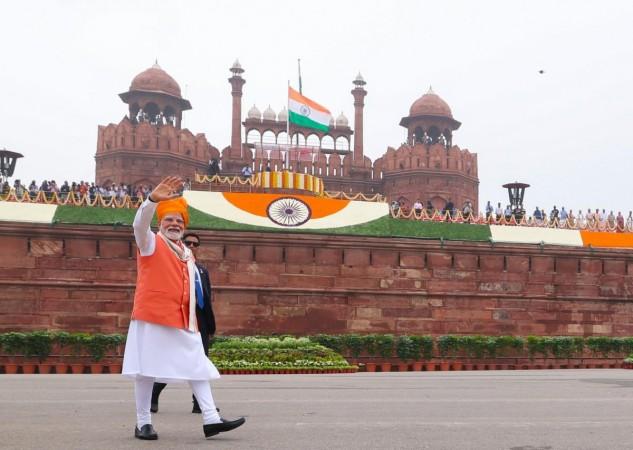
Addressing the nation on the eve of May 12, Prime Minister Narendra Modi said that 'Operation Sindoor' was not just a name but a reflection of the emotions of millions of Indians and an unbroken pledge to deliver justice. He stated, "We remain committed to taking strong steps to safeguard India and its people. On the battlefield, we have always defeated Pakistan, and this time, Operation Sindoor has added a new dimension."
The Prime Minister outlined three key points regarding Pakistan and cross-border terrorism. "First, if there is a terrorist attack on India, a fitting reply will be given. Second, India will not tolerate any nuclear blackmail. India will strike precisely and decisively at terrorist hideouts operating under the cover of nuclear blackmail," he said. "Third, we will not differentiate between governments sponsoring terrorism and the masterminds of terrorism. We will continue to take decisive steps to protect India and our citizens from any threat."
The downward trend in violence continued in the latter half of the year. September became the most peaceful September in over two decades, with no civilian deaths reported. October followed suit, registering zero civilian casualties for the first time in 25 years.
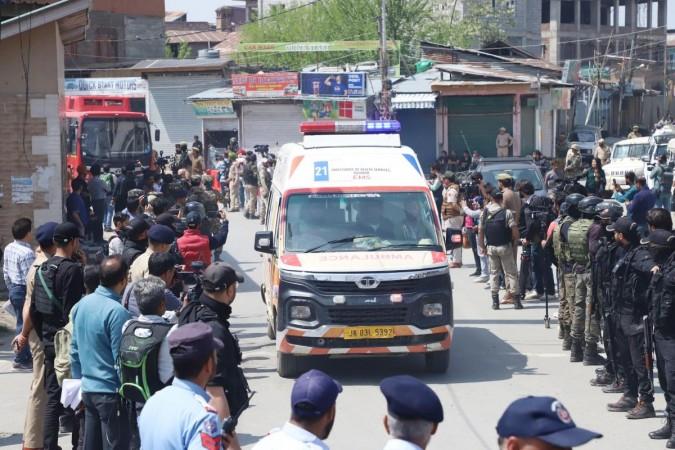
November also remained largely peaceful, with only two terror-related killings reported across the Union Territory. However, calm was briefly disrupted on November 14 by a powerful explosion inside Nowgam Police Station, where seized explosives were being examined by forensic teams. The accidental blast claimed nine lives, including police personnel and civilians, and injured several others. Authorities ruled out terror involvement, describing the incident as a tragic accident.
Security officials attribute the sustained decline in violence to intensified counter-insurgency operations, improved intelligence gathering, and a sharp drop in local militant recruitment. Enhanced coordination between the Jammu and Kashmir Police and central armed forces has also played a crucial role in preventing large-scale attacks for most of the year.