US Democratic lawmakers have introduced legislation to block federal funding for the Trump administration's new "public charge" rule, even as the White House highlighted what it described as sweeping successes in President Donald Trump's immigration crackdown.
Representative Judy Chu and Senator Mazie Hirono introduced the Protect American Values Act ahead of the rule's scheduled September 18 implementation. Indian-American lawmakers Pramila Jayapal and Raja Krishnamoorthi are among more than 50 House members backing the measure.
The legislation seeks to prohibit federal funds from being used to implement, administer or enforce the new rule, which would make it harder for certain immigrants who receive government benefits to obtain green cards or adjust their immigration status.
The Trump administration's policy rescinds a 2022 Biden-era rule that barred immigration officials from considering non-cash benefits such as Medicaid, SNAP food assistance and housing aid in public charge determinations. Unlike the previous policy, the new rule does not specify which benefits immigration officers may consider, a move critics say gives officials broad discretion and creates uncertainty for applicants.
"Donald Trump is once again weaponizing our immigration system against families who are simply trying to build better lives in America," Chu said, adding that the absence of clear standards could lead to subjective decisions on green card applications.
The rule also removes a safeguard preventing officials from considering benefits received by an immigrant's family members, raising concerns that mixed-status families may avoid accessing healthcare, food assistance and housing support despite being legally eligible.
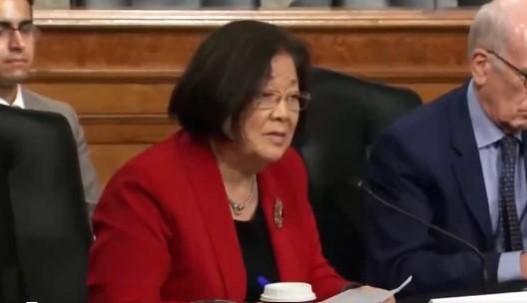
Hirono said the lack of clear guidance would create fear among immigrant communities, while more than 100 organisations, including the American Academy of Pediatrics, Asian Americans Advancing Justice, the National Immigration Law Center and Stop AAPI Hate, have endorsed the bill.
The term "public charge" has long existed in US immigration law, allowing authorities to deny admission or permanent residency if an applicant is deemed likely to become primarily dependent on government assistance.
Meanwhile, the White House defended the administration's immigration agenda, claiming more than three million undocumented immigrants have been deported and that no undocumented migrants have been released into the United States for 15 consecutive months.
The figures were released alongside two executive orders signed by President Trump that restrict birthright citizenship for certain categories of children and direct federal agencies to curb birth tourism.
According to the White House, the deportation drive included thousands of individuals convicted of violent crimes, although it did not provide a detailed breakdown of deportations, countries of origin or the time period covered.
The administration also highlighted stricter visa screening, the suspension of visa processing for 75 countries, an expanded denaturalisation drive targeting individuals accused of fraudulently obtaining US citizenship, and the termination of taxpayer-funded benefits for more than 1.4 million undocumented immigrants.
Additionally, the White House said undocumented migrants have been barred from more than a dozen federally funded healthcare programmes, while efforts are underway to remove tens of thousands of undocumented migrants from state voter rolls.
The administration maintained that the measures are aimed at strengthening border security, enforcing immigration laws and protecting US taxpayers, while Democrats argue that the new policies risk discouraging immigrant families from accessing essential services and create uncertainty through broad enforcement powers.