
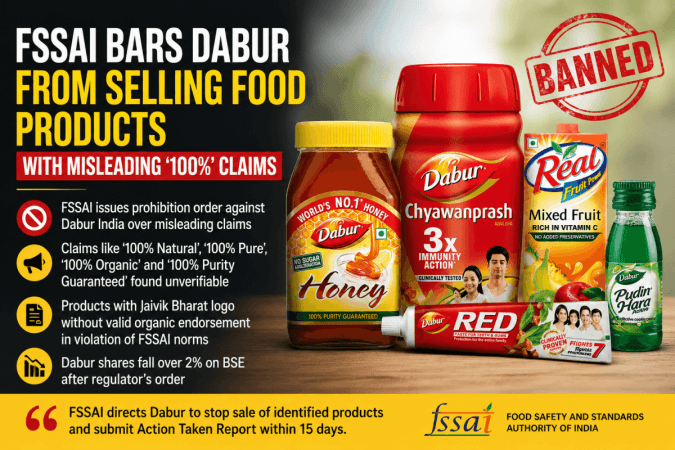
The Delhi High Court has temporarily stayed a Food Safety and Standards Authority of India (FSSAI) order directing Dabur India to stop selling several food products carrying claims such as "100% Pure", "100% Natural", "100% Organic" and "100% Purity Guaranteed."
The interim relief came after the court observed that the regulator had issued the prohibitory order without first allowing Dabur to present its case.
What is the dispute?
On August 3, the FSSAI ordered Dabur to discontinue the sale of several food products that carried quality-related claims such as "100% Pure", "100% Natural", "100% Organic" and similar labels.
The food regulator believes such claims could potentially mislead consumers by implying absolute purity or naturalness without meeting the regulatory standards required for those descriptions.
Why did Dabur challenge the order?
Dabur approached the Delhi High Court, arguing that the FSSAI violated the principles of natural justice by issuing the order without:
- Serving a show-cause notice
- Giving the company an opportunity to respond
- Conducting a proper hearing before imposing the restriction
The company also argued that many of the affected products have been sold in India for decades using the same claims.
What did the Delhi High Court say?
Justice Amit Mahajan granted interim relief to Dabur, observing that the company had made a prima facie case.
The court noted that the prohibitory order should not have been issued without first hearing the company.
"The court is prima facie of the opinion that the prohibitory order ought not to have been passed without giving an opportunity of hearing."
During the hearing, the judge also questioned the sudden restriction on products that have been available in the market for years, remarking:
"They have been selling it for decades. Now suddenly you can't."
The court has stayed the FSSAI order until the next hearing, scheduled after two weeks, and issued notices to the Centre, FSSAI and other concerned parties.
What is FSSAI's stand?
The Centre defended the regulator's action, saying Dabur had previously received improvement notices and advisories regarding its product claims.
According to the government, terms such as "100%" can create an impression of absolute purity or naturalness, which may mislead consumers. It argued that such claims require strict regulatory scrutiny to ensure compliance with food labelling rules.
What happens next?
The High Court's stay is only an interim measure and does not decide the legality of Dabur's product claims.
The case will now proceed before the Delhi High Court, which will examine:
- Whether FSSAI followed due process before issuing the order.
- Whether Dabur's product claims comply with food safety and labelling regulations.
- Whether claims such as "100% Pure" and "100% Natural" can legally continue to appear on product packaging.