The Congress leadership appears divided over joining Omar Abdullah's cabinet, with the party high command virtually overruling Jammu and Kashmir Pradesh Congress Committee (JKPCC) president Tariq Hamid Karra's categorical rejection of the ruling National Conference's offer to join the ministry in the Union Territory.
Three days after Karra ruled out joining the Omar Abdullah-led government until the restoration of statehood, the Congress high command has sent a clear message to its Jammu and Kashmir unit, stating that any decision on whether the party should join the government rests solely with the All India Congress Committee (AICC).
Quoting AICC general secretary in-charge of Jammu and Kashmir, Dr Syed Naseer Hussain, MP, a Kashmir-based news agency reported that the high command would take the final decision on the matter, effectively curbing any unilateral assertion by the JKPCC leadership.
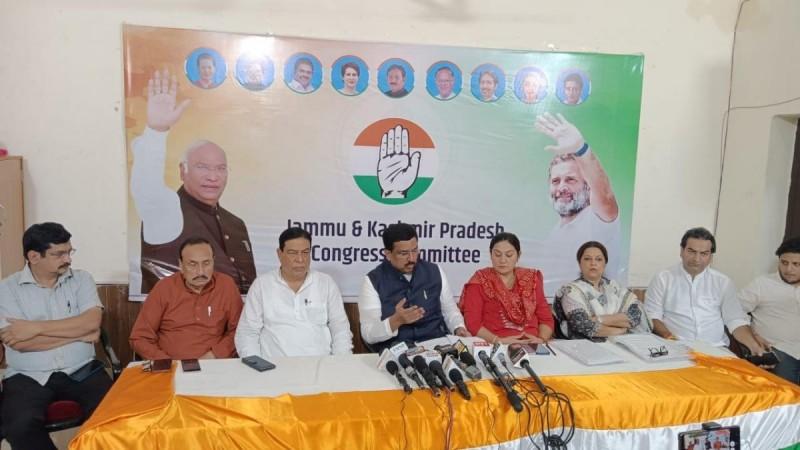
Karra has repeatedly maintained that the Congress would not join the Council of Ministers until statehood is restored to Jammu and Kashmir. While Dr Hussain did not directly criticise Karra, his remarks underscored the limits of the state unit's authority on the crucial political question.
"Our position so far is that we will not join the Council of Ministers until the restoration of statehood," Dr Hussain said, adding that any change in this position would be decided by the party's central leadership.
The statement has sparked political debate in Srinagar and Delhi, coming amid reports of efforts to improve ties between the Congress and its alliance partner, the National Conference (NC).
Sources within the Congress said the high command was keen to maintain cordial relations with Chief Minister Omar Abdullah and the NC leadership, particularly amid significant shifts in the opposition landscape. Feedback reaching the party leadership in Delhi suggests that mistrust and conflicting assessments within the J&K unit have complicated communication between the two INDIA bloc partners.
Dr Hussain's statement has, therefore, acquired significance beyond a routine clarification. In the politically sensitive environment of Jammu and Kashmir, it is being interpreted as an assertion of the Congress high command's authority over alliance politics and the future of relations between the Congress and the National Conference.
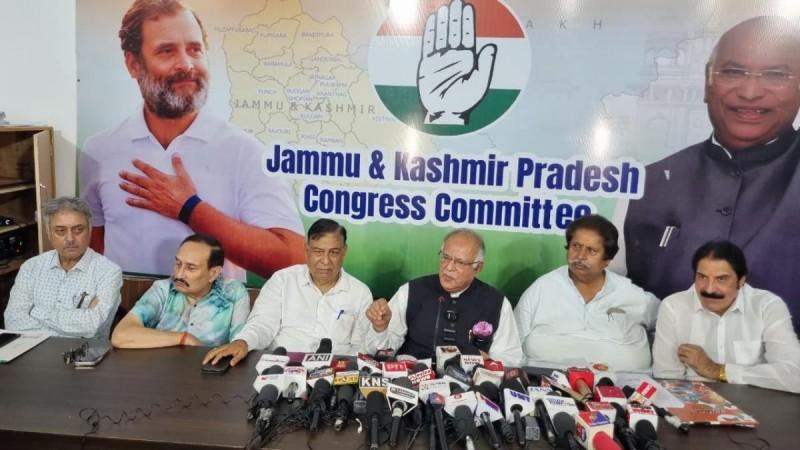
Karra Had Ruled Out Joining Omar's Government
Amid reports of a possible cabinet reshuffle, the J&K unit of the Congress had categorically refused to join the Omar Abdullah government in Jammu and Kashmir, despite being a coalition partner of the ruling National Conference.
The party had made its position unambiguous: no cabinet berth until statehood is restored and the constitutional rights of the people of Jammu and Kashmir are fully restored.
The Chief Minister's Office had reportedly offered the Congress a single ministerial berth, fuelling speculation that the party, which has remained out of the government for nearly two years, might finally soften its stance. However, Pradesh Congress Committee president Tariq Hamid Karra had ruled out such a possibility.
"The party will not join the government until statehood is restored and the constitutional rights of the people of Jammu and Kashmir are reinstated," Karra had said.
At the same time, Karra had made it clear that the decision did not amount to a rupture with the National Conference. He maintained that the Congress stood firmly with its alliance partner and would support it against the BJP whenever necessary. However, he stressed that solidarity did not mean remaining silent on the government's shortcomings.
The stance highlights the complexity of the alliance: the Congress wants to retain political influence without joining the government, opting for pressure politics from outside the cabinet rather than taking a seat at the table.
The National Conference, meanwhile, has consistently pushed for the Congress to join the government. Deputy Chief Minister Surinder Choudhary had reiterated that the Congress remained a coalition partner and that its entry into the cabinet would only strengthen the government, while leaving the final decision to the Congress leadership.