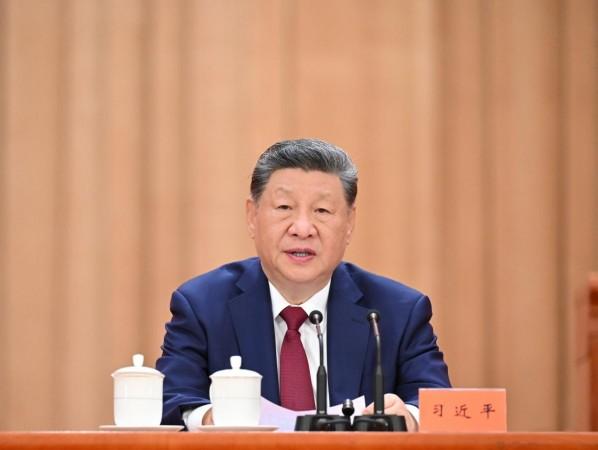
China has signalled a push to stabilise and reset ties with India ahead of Chinese President Xi Jinping's visit to New Delhi for the 18th BRICS Summit, saying Beijing is ready to "properly handle differences" and strengthen communication and cooperation with its neighbour.
Xi is set to arrive in India on Saturday for the BRICS summit and is scheduled to hold a bilateral meeting with Prime Minister Narendra Modi. The visit is his first to India in nearly seven years and comes after years of tensions between the two countries following the 2020 military standoff in eastern Ladakh.
Chinese Foreign Ministry spokesperson Mao Ning said Beijing would work with New Delhi to implement the strategic guidance of the two leaders and approach bilateral relations from a "strategic height and long-term perspective".
"China will work with India to act on the strategic guidance of the two leaders, handle the bilateral relations from a strategic height and long-term perspective, step up communication, enhance cooperation, properly handle differences," Mao said.
Chinese Ambassador to India Xu Feihong also stressed the importance of cooperation ahead of Xi's visit, saying the two countries should work together under the guidance of Modi and Xi to manage their differences.
The diplomatic outreach comes as India and China attempt to consolidate a cautious thaw that has emerged since 2024. Both sides have taken steps to reduce tensions along the Line of Actual Control and restore some economic and people-to-people links. Direct flights have resumed, some visa procedures have been eased and border trade and other exchanges have begun to recover.
Border issue remains key
The border dispute remains the biggest challenge in the India-China relationship. In August, National Security Adviser Ajit Doval and Chinese Foreign Minister Wang Yi held the 25th round of Special Representatives' talks in Beijing.
The two sides reached an eight-point consensus covering border management, military communication, border trade and trans-border cooperation. They also agreed to strengthen communication mechanisms and continue discussions on boundary delimitation.
Despite these developments, significant differences remain, including the unresolved boundary dispute, continued military deployments and strategic concerns over China's ties with Pakistan.
Trade and economic ties in focus
Economic ties are another major area likely to feature in the Modi-Xi discussions. Bilateral trade has remained strong despite political tensions, but the relationship is heavily tilted in China's favour.
India imported about $131 billion worth of goods from China in the 2025-26 financial year, while exports were around $19 billion, resulting in a trade deficit of roughly $112 billion.
New Delhi is also seeking greater market access for Indian exports, more predictable supply chains and a cautious expansion of investment ties, while continuing to remain wary of Chinese investment in sensitive sectors.
BRICS backdrop
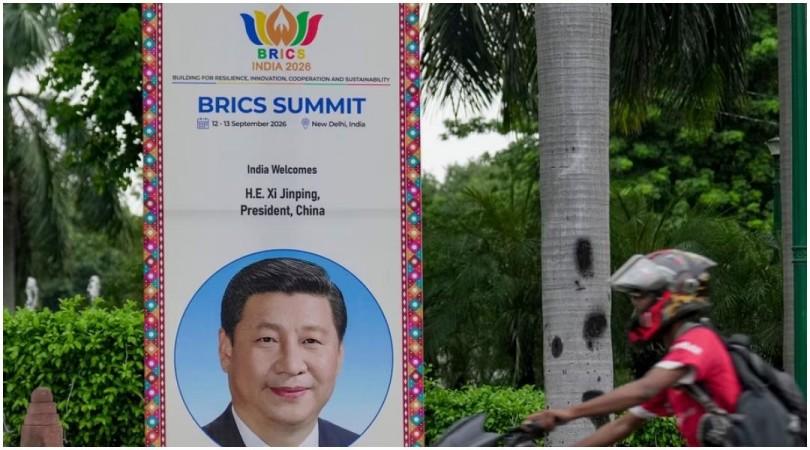
Xi's visit comes as India hosts the 18th BRICS Summit in New Delhi on September 12 and 13. The grouping has expanded significantly in recent years and is increasingly being positioned as an important platform for emerging economies and the Global South.
Beijing has said Xi will participate in discussions on the international situation, the development of BRICS mechanisms and deeper practical cooperation among member countries.
For India and China, the summit provides an opportunity to maintain cooperation on issues where their interests converge while managing areas of strategic disagreement.
Xi's visit is therefore being closely watched for signs of whether the recent diplomatic thaw can develop into a broader reset. While the two sides have made progress in restoring communication, unresolved border, trade and strategic issues mean that any improvement is likely to remain gradual and cautious.