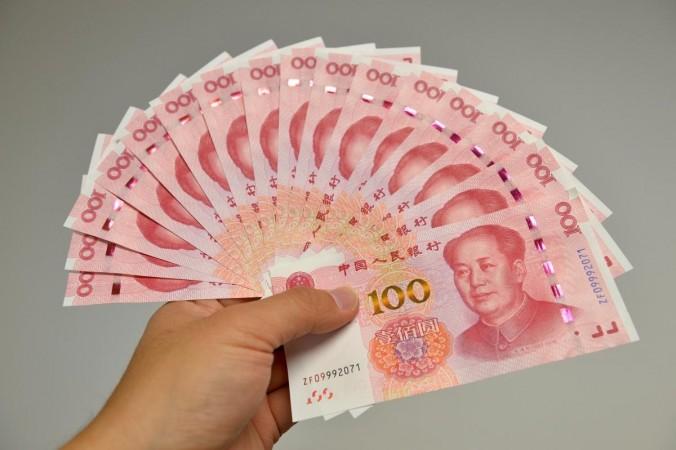
China has made two significant moves with global implications—stepping up efforts to internationalise the yuan by encouraging African nations to shift debt repayments away from the US dollar, while also drawing criticism over a long-range ballistic missile test in the South Pacific Nuclear Free Zone. Together, the developments underscore Beijing's growing economic and strategic ambitions on the global stage.
China asks African nations to shift debt repayments to yuan
China has started asking African countries to shift their debt repayments from the US dollar to the Chinese yuan as part of its strategy to strengthen its own currency and reduce the dominance of the American dollar in the global payment system, according to a media report.
Kenya's decision to restructure part of its Chinese debt and shift repayments from US dollars into Chinese yuan "is increasingly being interpreted as an early signal of a wider reconfiguration in international finance, one in which nations under pressure are searching for alternatives to the traditional dollar-centred order", according to an article published in Nigeria's Independent newspaper.
The report noted that after emerging as one of the world's largest economies, China is seeking to reduce the importance of the US dollar, a currency that Beijing does not control.
China has become a dominant lender to Africa, and this did not happen accidentally. Across the continent, governments have long struggled with major infrastructure deficits, including unfinished roads, underdeveloped ports, outdated rail networks, inadequate power generation and poor logistics. While traditional international lenders often imposed governance conditions, policy requirements and lengthy approval timelines, China stepped in with faster financing and large-scale infrastructure investments.
Historical estimates cited in the report indicate that African countries collectively accumulated between $150 billion and $180 billion in Chinese lending commitments over the past two decades. Countries including Angola, Ethiopia, Kenya, Zambia, Egypt, Cameroon, South Africa and Nigeria emerged among the biggest recipients of Chinese-backed development financing.
Nigeria itself illustrates both the attraction and complexity of the model. Chinese financing has supported modern rail corridors, airport terminal expansions, hydropower projects, communications infrastructure, urban transit systems and strategic transport links. Supporters argue these projects delivered assets that might otherwise have remained on the drawing board for years. However, debt rarely comes without conditions and long-term consequences.
The report noted that criticism of China's lending model is centred less on borrowing itself and more on what follows after construction ends. Infrastructure does not automatically create revenue at the pace repayment schedules demand. Governments collect taxes largely in local currencies while repayment obligations remain external, making currency depreciation a major source of debt pressure.
A railway may carry passengers, a road may shorten travel time and a dam may improve electricity supply, yet those benefits do not always translate into immediate financial returns. Governments are then forced to direct more resources towards debt servicing, leaving less fiscal room for education, healthcare, social investment and security expenditure.
It is within this context that Kenya's move becomes strategically important.
By renegotiating portions of its Chinese debt from dollar denomination into yuan, Kenya sought relief from exchange-rate pressures and potentially lower financing costs. The debt remains, but the currency has changed. Supporters view the adjustment as economic pragmatism.
However, the report observes that "currency is not merely a medium of exchange. It is influence."
China's broader objective appears increasingly clear. The internationalisation of the yuan is no longer theoretical. Expanding yuan settlement systems, promoting cross-border financing and encouraging debt repayment in Chinese currency all point towards building an alternative financial architecture alongside the dollar rather than replacing it overnight.
For African countries, however, the report argues that the central issue remains unchanged regardless of whether debt is denominated in dollars, yuan or any other currency. Borrowing only becomes development when it creates productive capacity that exceeds the cost of repayment.
For the United States, the concern is that if more countries settle trade outside the dollar, borrow outside the dollar and repay outside the dollar, demand for dollar intermediation may gradually weaken, potentially challenging Washington's long-standing financial influence.
China's missile launch in South Pacific raises geopolitical concerns
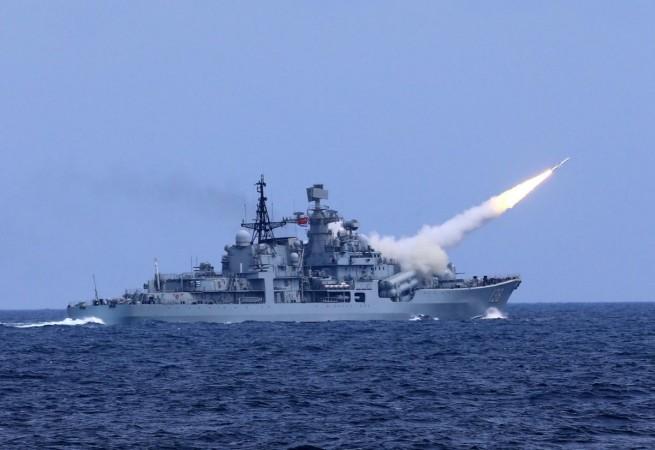
Meanwhile, China has also drawn criticism after test-firing a long-range ballistic missile carrying a dummy warhead from a nuclear-powered submarine into the Pacific Ocean. Although Beijing described the launch as part of its routine military training, the timing and location of the test—inside the South Pacific Nuclear Free Zone—have sparked geopolitical concerns, according to a report.
"China's missile test is not just a technical exercise—it is a geopolitical statement. By firing into a nuclear-free zone on the very day its rivals signed a defence pact, Beijing has reminded the Pacific that its ambitions extend far beyond routine drills. The question now is whether regional powers will respond with restraint or with their own escalatory moves," Khedroob Thondup, nephew of Tibetan spiritual leader the Dalai Lama, wrote in a report published by European Times.
China's People's Liberation Army Navy described the launch as part of its annual military training cycle, saying it complied with international law and was not aimed at any specific country. The test also coincided with joint naval exercises between China and Russia off Qingdao, signalling Beijing's growing military coordination with Moscow.
According to analysts, the missile may have been a JL-3 submarine-launched ballistic missile, capable of reaching the continental United States, highlighting China's advancing nuclear deterrent. The launch also came on the same day Australia and Fiji signed a defence pact aimed at countering China's growing influence in the Pacific.
Thondup argued that the launch violated established norms because the missile landed within the South Pacific Nuclear Free Zone, created under the 1986 Treaty of Rarotonga. China ratified the treaty's protocols in 1987, pledging not to conduct nuclear weapons tests in the region, making the launch symbolically significant despite the use of a dummy warhead.
Japan urged China to reconsider while expressing "serious concern" over the launch. Australian Foreign Minister Penny Wong described it as "destabilising to the region", while New Zealand Foreign Minister Winston Peters said his country was "deeply concerned" over the launch of a nuclear-capable missile.
Peters added that the launch appeared to be part of a "recurring pattern" following China's 2024 test-firing of an intercontinental ballistic missile into the South Pacific.
Taiwan's Presidential Office also condemned the launch. Spokesperson Karen Kuo said it followed China's recent escalation of military activity around Taiwan and the implementation of legislation that she described as enabling "transnational repression" through Beijing's new ethnic unity law.
"Now, it is further attempting to intimidate the international community by test-firing an intercontinental ballistic missile," Kuo said.
Taiwan's Presidential Office strongly condemned what it described as a series of unilateral actions and urged Beijing to exercise restraint, respect the rules-based international order and immediately halt such actions.