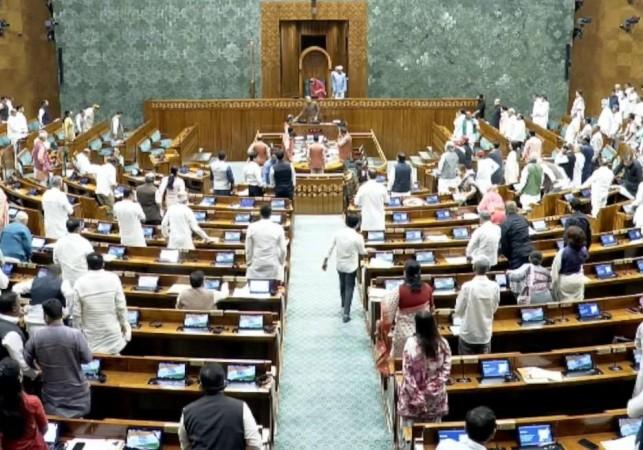
The Central government on Monday introduced the Public Examinations (Prevention of Unfair Means) Amendment Bill, 2026 in the Lok Sabha, proposing stricter punishments, higher fines and time-bound investigations to tackle paper leaks and examination fraud. The Bill comes in the aftermath of the NEET-UG 2026 controversy, with the government saying the amendments are aimed at restoring the credibility of public examinations and dismantling organised cheating networks.
The proposed amendments significantly strengthen the existing law. The minimum punishment for major offences has been increased from three years to five years, while the maximum jail term has been doubled from five years to 10 years. Organised paper leak rackets could face fines of up to Rs 5 crore, while certain offences may attract penalties of up to Rs 10 crore, making it one of the toughest legal frameworks against examination fraud.
The Bill also seeks to ensure faster investigations and quicker justice. Investigating agencies will be required to complete probes within two months, while Special Fast Track Courts will conduct day-to-day hearings with the aim of concluding trials within three months of the filing of chargesheets. The government says these timelines are intended to address long-standing concerns over delays in investigations and prolonged court proceedings in paper leak cases.
According to the Centre, the amendments are designed to strengthen transparency, fairness and accountability in public examinations while reassuring students and parents that future recruitment and entrance exams will be protected by a more robust legal framework.
The legislation builds upon the Public Examinations (Prevention of Unfair Means) Act, 2024, which was enacted to curb organised cheating in recruitment and entrance examinations. The 2024 law criminalised paper leaks, answer key leaks, unauthorised possession of question papers and the use of unfair means in public examinations conducted by agencies such as the UPSC, SSC, NTA, Railway Recruitment Boards, banking recruitment bodies and other notified authorities. It also empowered the Centre to investigate organised examination fraud through central agencies.

The amendment was introduced following the nationwide controversy over the alleged irregularities in the NEET-UG 2026 examination, which triggered widespread student protests and renewed demands for stricter action against paper leak syndicates. The government has maintained that stronger legal deterrence and speedy prosecution are necessary to protect the future of millions of students.
However, proceedings in Parliament witnessed repeated disruptions as Opposition members protested over the NEET-UG issue and other political matters. While the government succeeded in introducing the Bill, discussion on its consideration and passage could not take place because of continuous sloganeering and disruptions in the House.
Political analysts say the Bill should have provided an opportunity for a broader parliamentary consensus, arguing that examination reforms transcend party politics. They contend that millions of students and their families expect stronger safeguards against paper leaks and that the proposed legislation deserves detailed debate on its merits. Critics of the disruptions argue that parliamentary discussion on issues such as stricter punishments, faster investigations and time-bound trials would better serve the interests of students than legislative deadlock.
The government, meanwhile, has defended the amendments as a decisive step to restore public confidence in India's examination system by introducing tougher penalties, ensuring swift investigations and providing for speedy trials against those involved in organised examination fraud.