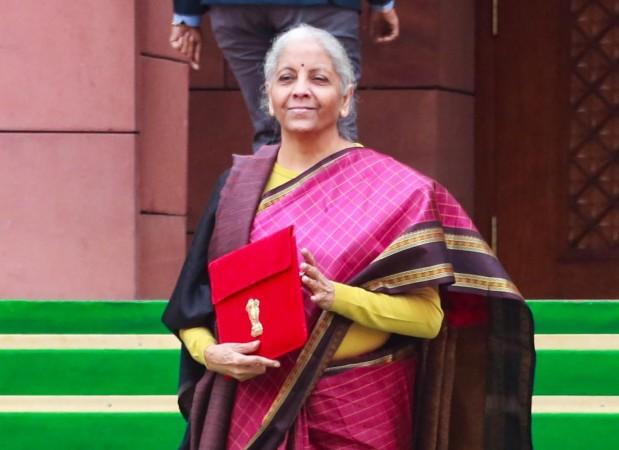
Union Finance Minister Nirmala Sitharaman on Sunday proposed ₹43,290.29 crore for the Union Territory of Jammu and Kashmir in the Union Budget 2026–27, nearly ₹2,000 crore more than the allocation for the current year.
The Union Finance Minister also proposed a national programme for nut crops to boost Jammu and Kashmir's orchard-based economy.
According to Budget figures, the Union Finance Ministry has proposed ₹43,290.29 crore in transfers to Jammu and Kashmir for 2026–27.
J&K's assistance for the current financial year has been revised to ₹41,340 crore, up from ₹41,000.07 crore, marking an increase of ₹340 crore. For 2026–27, the Budget proposes ₹42,650 crore as central assistance to bridge the resource gap of J&K, ₹279 crore as grants towards contribution to the Union Territory Disaster Response Fund, ₹259 crore as equity support for the Jhelum–Tawi Flood Recovery Project, and ₹101 crore to support capital expenditure in the Union Territory.
National programme to boost J&K's economy
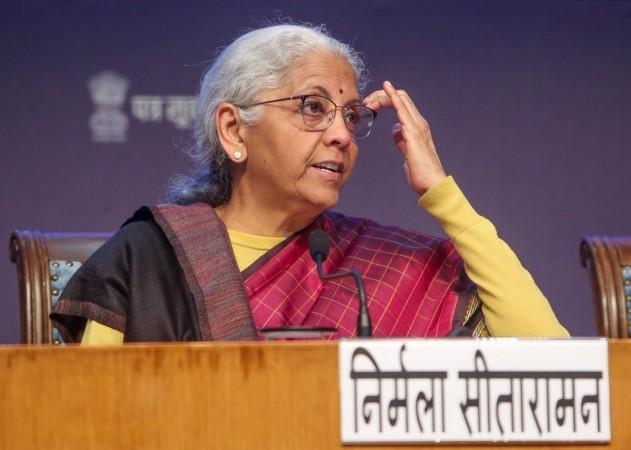
The Union Budget 2026–27 has proposed a national programme for high-value nut crops, including almonds, walnuts, and pine nuts, with a focus on hilly regions, which is expected to benefit Jammu and Kashmir's orchard-based economy.
Finance Minister Nirmala Sitharaman, while presenting the Budget in Parliament, said the government aims to promote high-value agriculture as part of its strategy to enhance farm incomes and diversify crop production. The Budget specifically identifies almonds, walnuts and pine nuts for targeted interventions in hilly areas, where these crops have a natural comparative advantage.
The proposed programme will focus on the rejuvenation of old and low-yielding orchards and the expansion of high-density cultivation of almonds, walnuts and pine nuts to improve per-hectare yields through better planting material and modern orchard management practices.
Sitharaman added that the programme will also cover value addition and post-harvest management to increase farmers' realisations from nut crops. The initiative aims to engage rural youth in orchard development, promoting employment and entrepreneurship in agriculture-linked activities in mountainous regions.
The announcement is part of the government's broader push to shift Indian agriculture towards high-value and export-oriented crops. While the Budget does not specify a separate financial allocation or physical targets for the nut crop programme, almonds, walnuts and pine nuts are among the few crops explicitly named under the high-value agriculture component.
Jammu and Kashmir, where almonds and walnuts form a significant share of horticultural output and rural livelihoods, is expected to benefit substantially once the programme is implemented by the concerned ministries.
J&K to get eco-friendly mountain trains
Union Finance Minister Nirmala Sitharaman announced plans to develop ecologically sustainable mountain trains and hiking trails in key hill regions, including Jammu and Kashmir, Himachal Pradesh, Uttarakhand, Araku Valley, and Pudigai Malai.
The government will also introduce wildlife tourism trails, featuring turtle nesting routes in Odisha, Karnataka and Kerala, and bird-watching paths around Pulicat Lake. "India can offer world-class trekking and hiking experiences," Sitharaman said.
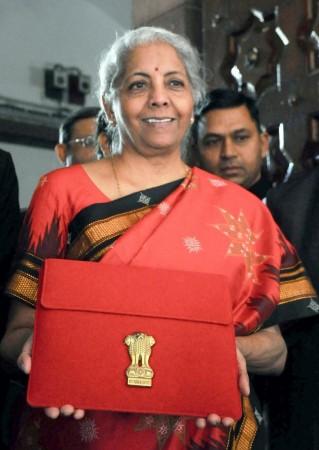
The Budget further promotes environmentally sustainable transport with seven high-speed rail corridors connecting major cities, new dedicated freight corridors, and 20 operational national waterways over the next five years, aiming to cut travel times, reduce emissions and strengthen connectivity across economic hubs.
The Union Budget 2026–27 has also proposed the expansion of high-density almond plantations in hilly regions, including the Kashmir Valley, as part of a broader push towards high-value agriculture.
According to the Budget speech, high-density planting will be promoted to increase yield per hectare and improve orchard productivity through modern cultivation practices. The initiative forms part of a national programme aimed at rejuvenating ageing orchards and improving farm incomes in mountainous regions.
The government has indicated that the programme will focus on value addition and employment generation, particularly among rural youth engaged in horticulture.
LG expresses gratitude to PM, Finance Minister
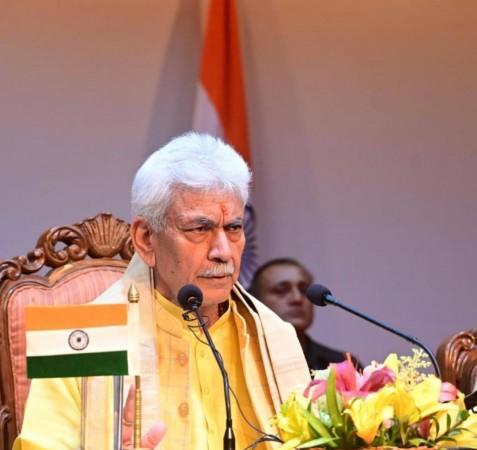
Lieutenant Governor Manoj Sinha on Sunday hailed the Union Budget 2026–27 as pragmatic, stating that it prioritises economic acceleration, creation of future-ready infrastructure and sustains growth momentum, while charting a path towards the $5 trillion economy milestone within a few years. He said the comprehensive fiscal strategy balances growth ambitions with social welfare.
Expressing gratitude to Prime Minister Narendra Modi and Union Finance Minister Nirmala Sitharaman for announcing the development of ecologically sustainable mountain trails in Jammu and Kashmir, the Lieutenant Governor said the initiative would generate fresh employment opportunities and invigorate the tourism industry.
"The Budget for 2026–27 emphasises accelerating economic expansion, strengthening infrastructure, advancing manufacturing capabilities across seven strategic sectors, while maintaining a steadfast commitment to welfare. It will have a transformative impact on emerging industries, provide renewed momentum to semiconductor development through the India Semiconductor Mission (ISM) 2.0, and mark a significant step towards reducing India's dependence on other countries for rare earth elements through specialised rare earth zones," the Lieutenant Governor said.
He observed that with artificial intelligence, job creation and service sector enhancement taking centre stage, India's competitive edge would strengthen across all economic domains. He added that this progressive financial blueprint would lay the foundation for comprehensive sectoral expansion and greater global prominence.
"The Budget 2026–27 charts the path towards the $5 trillion economy milestone within a few years and presents an ambitious vision to achieve developed economy status in less than two decades. It also promises unprecedented empowerment for youth, women and farmers. With manufacturing, infrastructure, MSMEs, healthcare, urban development, electronics and supply chains forming the core of the future strategy to sustain economic momentum, I am confident that domestic production will expand and substantial employment will be generated," the Lieutenant Governor said.