Bharatiya Janata Party (BJP) Rajya Sabha MP Raghav Chadha on Thursday broke his silence on the nationwide protests over paper leaks, saying he had promised himself that he would speak on the issue only when the problem was being fixed.
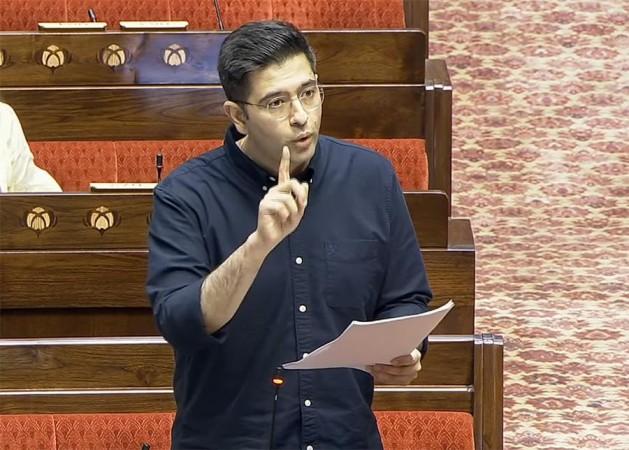
Addressing the Rajya Sabha during the debate on the Public Examinations (Prevention of Unfair Means) Amendment Bill, Chadha, who left AAP and joined the BJP three months ago, said his role had changed after moving from the Opposition to the Treasury benches.
"My well-wishers had been asking me when I would speak on the NEET issue. I want to tell them humbly that when I was in the Opposition, questions were my weapon. Now I sit on the treasury benches, so (finding) a solution is my responsibility. Even I could have come before the camera and given a sound bite daily, but I want an outcome, not a headline," he told the House.
"When I was in the Opposition, my job was to raise issues and ask questions. The House and you (Chair) know I did that job with full honesty. Today, my role is not to mark attendance in front of the camera, but to fix this system. So I made a promise to myself that I would speak on this issue in Parliament on the day we bring the solution to this problem. Today is that historic day when the system is getting fixed," he added.
Cancer is not cured by Crocin.
— Raghav Chadha (@raghav_chadha) July 31, 2026
Paper Leak is not cured by soundbites.
It needed a real institutional fix, and today we gave it one.
That is why I stood in support of the Public Examination Amendment Bill 2026. Because this is India's first real, institutional answer to paper… pic.twitter.com/qKeI5xFSM5
During the debate, Chadha extended strong support to the Bill, asserting that the demands of students were justified and that Prime Minister Narendra Modi had responded not merely as the head of government but as a guardian of the youth.
I spoke for every young Indian who believes that honest effort deserves an honest opportunity.
— Raghav Chadha (@raghav_chadha) July 30, 2026
With the passage of the Public Examinations Amendment Bill, 2026, India’s first ever Anti Paper Leak framework comes into effect.
Students spoke.
The Government listened.
Action… pic.twitter.com/2ri8BF3pVg
He stressed that whenever matters concerning students arose, the Union government had listened, acted and delivered. Highlighting initiatives aimed at eliminating paper leaks, including the move towards computerised examinations, he said the amended law prescribes stricter punishments to deter organised syndicates.
"Paper leaks cannot be addressed through media sound-bites but require institutional solutions. We cannot treat cancer with crocin; exam leaks cannot be removed with sound-bites," he said, adding that students' anger was justified.
Chadha painted a vivid picture of the sacrifices made by families, who cut household budgets and take loans to send children to coaching hubs like Kota, Chandigarh, Jaipur, Delhi and Patna, where students study up to 18 hours a day. A single leaked paper, he warned, could destroy years of effort, eroding trust, mental health and aspirations.
Recalling his own experience as a Chartered Accountancy student, he said he understood the pain first hand.
Earlier in his speech, Chadha said the NDA government had brought systemic changes to address students' concerns.
"Their voices matter, their voices were heard and systemic changes have been brought in. Their voices have not been treated as a political challenge but as a concern expressed by the young in the family," he said.
He said paper leaks had taken place in the country earlier, but only discussions followed. "Today action is happening. Paper leaks cannot be tied to one particular political party. This is a pan-India organised crime, a chronic disease."
Chadha also pointed to past paper leaks under Congress governments, citing the SSLC exam leak in Karnataka in January 2026 and the Class 12 Chemistry paper leak in Himachal Pradesh in 2016. He also flagged alleged irregularities in the recruitment exam for pharmacy officers in Punjab, now ruled by his former party, AAP.
"Political memory can be selective, public record can't be. If a national exam's paper leak is a national crisis, how can a paper leak in an Opposition-ruled state be a local incident? There is no difference between students," he said.
He stressed that student protests must remain independent and not be politicised.
"Their voice matters. Their demands are justified. Protesting, asking questions, raising demands, coming out, and taking out peaceful marches are all their constitutional rights. But a student protest should remain a student protest; it should not become a rally of any political party," he said.
He added, "The fight of students is to secure the exams, but political leaders are looking to increase their social media reach. When political leaders push students across the barricades and stay on the safe side during protests, they must be asked what kind of partnership is this? Risk mera, reel tumhari. A students' movement is for their future, not for the comeback of a flop political party."
Chadha underlined that the Bill recognises paper leaks as offences committed by organised syndicates rather than isolated individuals. It covers insiders, coaching mafias, logistics handlers, printing-press personnel, solver gangs and exam officials.
Fines of up to Rs 10 crore can be imposed, and all offences have been made cognisable, non-bailable and non-compoundable.
Any suspicion of a leak will trigger an investigation by a special task force, which must conclude within two months. Fast-track courts with special prosecutors will ensure sentencing within three months.
Concluding his remarks, Chadha said the reforms demonstrate zero tolerance towards paper leaks and safeguard the integrity of India's public examination system.
"Nothing is more important than the students and their future. Their voices mattered, their voices were heard, and systemic changes have been brought about. The government has treated their concerns with the same care one would accord to a child within one's own family," he affirmed.
The Public Examinations (Prevention of Unfair Means) Amendment Bill, 2026, was passed by the Rajya Sabha with a voice vote on Thursday amid a walkout by several Opposition parties, completing its passage through Parliament.