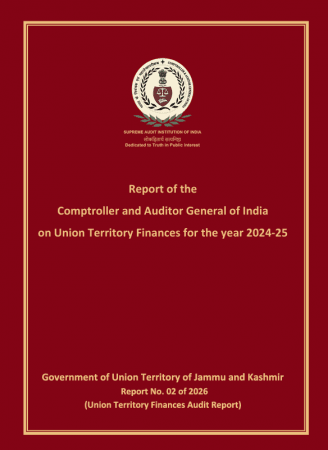
The Comptroller and Auditor General of India (CAG) has flagged many deficiencies in the implementation of the Pradhan Mantri Khanij Kshetra Kalyan Yojana (PMKKKY) in Jammu and Kashmir, noting that the scheme has largely failed to deliver its intended benefits to mining-affected communities due to weak planning, poor targeting, and inadequate monitoring.
The findings are part of the CAG's latest report, which examined the functioning of the mining department and the utilisation of District Mineral Foundation (DMF) funds under PMKKKY across selected districts.
"Section 9(B) of the Mines and Minerals (Development and Regulation) Act provides that in any district affected by mining-related operations, the state government shall, by notification, establish a trust as a non-profit body to be called the District Mineral Foundation. The objective of the District Mineral Foundation shall be to work for the interest and benefit of persons and areas affected by mining-related operations in such manner as may be prescribed by the state government," the report states.
There are 20 District Mineral Foundation Trusts in Jammu and Kashmir. Against a total collection of ₹62.81 crore under DMF funds by all trusts up to the end of 2024–25, only ₹10.29 crore was spent during 2024–25. A balance of ₹52.52 crore remained unutilised in the bank accounts of the District Mineral Foundation Trusts across 20 districts as of March 31, 2025.

The audit observed that despite the scheme's mandate to prioritise development in areas directly impacted by mining, several such locations saw no intervention. A beneficiary survey conducted across eight districts revealed that even within a two-kilometre radius of mining sites, no projects had been executed in multiple Gram Panchayats, effectively excluding the most affected populations from the scheme's benefits.
The absence of targeted interventions is particularly concerning given the environmental and social stress reported in these areas. According to survey findings cited in the audit, all respondents reported damage to roads due to mining activities, while 99 per cent cited air pollution and 95 per cent reported water pollution. Health-related concerns were flagged by 82 per cent of respondents. Despite these widespread impacts, the audit found no commensurate developmental response under the scheme.
The CAG also highlighted serious shortcomings in the planning process. Local governance institutions, expected to play a central role in identifying development priorities, were largely excluded. All Sarpanchs surveyed during the audit stated that they had not been consulted in the identification or planning of works under PMKKKY.
This disconnect between planning and local needs was further reflected in the mismatch between community demands and actual project execution. Residents identified skill development, road connectivity, healthcare, water supply, and education infrastructure as priority areas, but these were not adequately addressed in the projects undertaken.
PMKKKY is a centrally sponsored scheme aimed at mitigating the adverse impacts of mining by channelling funds collected through District Mineral Foundations into welfare and infrastructure projects in affected regions. In Jammu and Kashmir, District Mineral Foundation Trusts at the district level are responsible for identifying affected areas, preparing annual plans, and executing projects.
However, the audit noted that this institutional mechanism has not functioned effectively. It pointed to deficiencies in project planning and approval processes, weak monitoring frameworks, and gaps in fund management. The report also underlined the need for stronger enforcement to curb illegal mining and ensure that funds are utilised in a targeted and transparent manner.
The CAG's assessment indicates that while the scheme is designed as a focused intervention for mining-affected communities, its implementation in Jammu and Kashmir has not aligned with its core objectives. The lack of participatory planning, inadequate targeting, and weak oversight mechanisms have limited its impact on the ground.
The report suggests that improving community participation, aligning projects with local needs, and strengthening monitoring systems will be critical to ensuring that the scheme delivers meaningful outcomes in the future.