
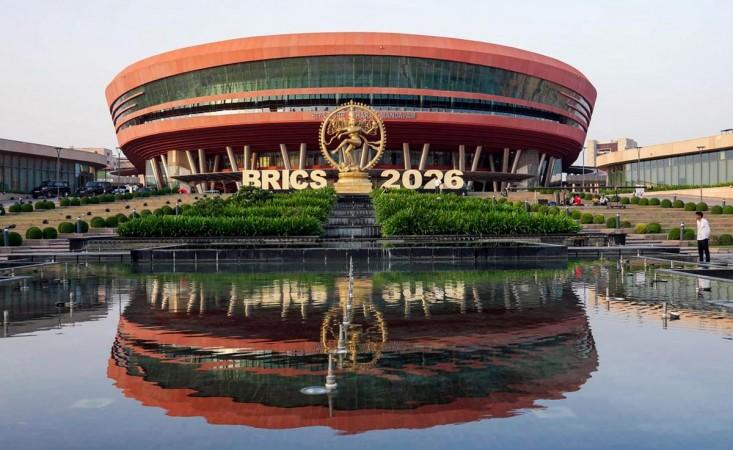
BRICS has grown from a small group of emerging economies into an important platform for cooperation on global economic, political and development issues. In 2026, India is chairing the grouping and hosting the 18th BRICS Summit in New Delhi on September 12 and 13.
What is BRICS?
BRICS is a grouping of major emerging economies that work together on issues such as trade, investment, finance, technology, development and global governance.
The name originally came from the first letters of Brazil, Russia, India and China. South Africa later joined the grouping, adding the letter "S" to BRICS.
The group has expanded significantly over the years. In 2026, BRICS has 11 full members: Brazil, Russia, India, China, South Africa, Egypt, Ethiopia, Iran, Saudi Arabia, the United Arab Emirates and Indonesia.
Together, the 11 members account for around 49.5 per cent of the world's population, 40 per cent of global GDP and 26 per cent of global trade, according to the Indian government.
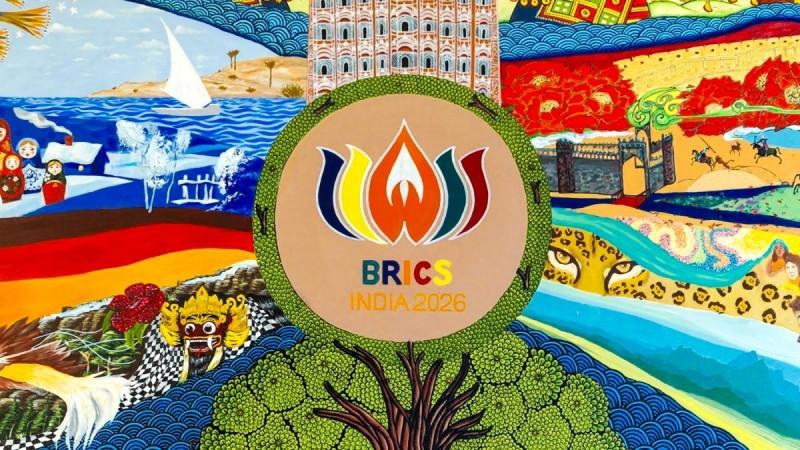
How did BRICS start?
The term BRIC was first coined in 2001 by Goldman Sachs economist Jim O'Neill to describe the growing economic importance of Brazil, Russia, India and China.
The four countries began formal political coordination and held their first leaders' summit in 2009. South Africa joined in 2011, turning BRIC into BRICS. The grouping has since expanded further, reflecting the growing influence of emerging economies and countries of the Global South.
What is the BRICS 2026 theme?
India assumed the BRICS chairship on January 1, 2026, for the fourth time.
India's theme for its BRICS chairship is "Building for Resilience, Innovation, Cooperation and Sustainability." The approach is also guided by the vision of "Humanity First."
The four parts of the theme focus on different areas.
Resilience focuses on areas such as health, agriculture, food and energy security, disaster management and stronger supply chains.
Innovation covers startups, technology, artificial intelligence, science, research, digital public infrastructure and entrepreneurship.
Cooperation focuses on strengthening multilateralism, global governance reforms and practical cooperation among member countries.
Sustainability includes climate action, renewable energy, environmental protection and sustainable development.
Why is BRICS important?
BRICS gives emerging economies a platform to discuss global issues and push for greater representation in international institutions.
The grouping also provides opportunities for cooperation in areas such as trade, investment, technology, healthcare, agriculture, energy and infrastructure.
For India, BRICS is also an important platform to highlight the priorities of the Global South and promote a more inclusive global order.
Why is the 2026 summit important?
The 18th BRICS Summit will be held at Bharat Mandapam in New Delhi on September 12 and 13.
Leaders are expected to discuss global governance, economic cooperation, food and energy security, technology, sustainability and international conflicts.
However, the expanded grouping also faces challenges. Differences among members over geopolitical issues, including the ongoing conflict involving Iran and the UAE, could make it difficult for BRICS countries to reach a common position on some issues.
Despite these differences, BRICS has become an increasingly influential platform for emerging economies. Its growing membership and economic strength mean decisions taken within the grouping can have a significant impact on global trade, finance and geopolitics.
For India, the 2026 chairship provides an opportunity to showcase its leadership and push for greater cooperation among developing and emerging economies while promoting a more balanced and inclusive global order.