The announcement of Union Minister Dr. Jitendra Singh regarding the completion of the ambitious Shahpur Kandi Project on the River Ravi has rekindled hope among farmers in Samba and Kathua districts of Jammu and Kashmir, as over 32,000 hectares of barren land in the Kandi belt will become fertile once the project becomes operational.
The project will also provide irrigation facilities to over 5,000 hectares of land in Pathankot district of neighbouring Punjab.
"The project is now almost complete, and its completion marks the fulfilment of a decades-old aspiration of the people of the region," Dr. Jitendra Singh, who represents the Udhampur-Kathua-Doda Lok Sabha constituency for the third consecutive term, posted on his social media handle on Wednesday.
#ShahpurKandi National Project on the #Kathua district border is a tell tale story. Following the Indus Valley Treaty of 1960, India’s share comprised three rivers, namely Ravi, Beas and Sutlej, of which Ravi was the largest river. Somewhere in late 1970s, a National Project was… pic.twitter.com/mOX39DRit6
— Dr Jitendra Singh (@DrJitendraSingh) June 18, 2026
"Needless to say, the Shahpur Kandi Project is set to transform the bordering districts of J&K and Punjab through enhanced irrigation and agricultural growth," he added.
The project is being constructed on the River Ravi, 11 kilometres downstream of the Ranjit Sagar Dam and eight kilometres upstream of Madhopur in Punjab's Pathankot district.
History of the Shahpur Kandi Project
J&K and Punjab signed a bilateral agreement on January 20, 1979, for sharing the waters of the River Ravi. As per the agreement, J&K was to receive 1,150 cusecs of water through the construction of a canal from Satwain to Basantpur. The Punjab government was responsible for constructing the Shahpur Kandi Barrage, but the project was shelved in 2004.
In June 2015, the then Chief Minister, late Mufti Mohammad Sayeed, sought the intervention of the Union Government to resolve issues related to the completion of the Shahpur Kandi Canal Project with Punjab.

After decades of disagreement, the governments of J&K and Punjab signed a fresh agreement on the Shahpur Kandi Project on March 3, 2017. Under the new pact, J&K is entitled to 20 per cent of the electricity generated by the project and 1,150 cusecs of water.
"Shahpur Kandi National Project on the Kathua district border is a telltale story. Following the Indus Waters Treaty of 1960, India's share comprised three rivers—Ravi, Beas and Sutlej—of which Ravi was the largest. In the late 1970s, a national project was envisaged on the River Ravi so that India's share of water could be fully utilised within the country instead of flowing into Pakistan," Dr. Singh stated.
In 1984, the foundation stone of the project was laid by the then Prime Minister Indira Gandhi. However, following her assassination a few months later, the project was put on the back burner, and successive governments, both at the Centre and in the erstwhile J&K State, remained indifferent.
"It was nearly three decades later, when the BJP Government came to power in 2014, that efforts to revive the project gained momentum. The Chief Secretaries of Jammu and Kashmir and Punjab were brought into the loop, fresh documentation was prepared, and in February 2019, at a public rally in Jammu, Prime Minister Narendra Modi announced the revival of the project," the Union Minister said.
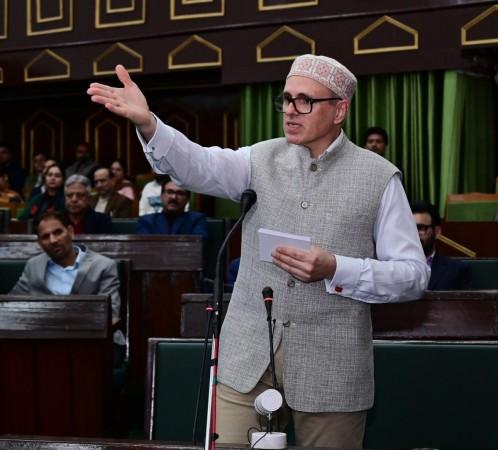
During the last budget session of the Jammu and Kashmir Legislative Assembly, Chief Minister Omar Abdullah said he would remind his Punjab counterpart to fulfil the commitments made to the Jammu and Kashmir government regarding the Shahpur Kandi Dam project. He added that the 1979 agreement between the governments of J&K and Punjab was a sovereign commitment that must be honoured in letter and spirit.
He informed the Assembly that, under the 1979 agreement, J&K is entitled to 20 per cent of the total power generated by the Thein Dam and the Shahpur Kandi Barrage at bus-bar cost.
"I will take up the matter. We will strive to ensure that the agreement signed in 1979 is implemented in letter and spirit," he said.
A Power Sale Agreement (PSA) between PSPCL and JKPCL was signed on October 11, 2019, for the sale and purchase of power from the Ranjit Sagar Dam Project. However, no power is currently being injected into J&K's grid due to the lack of transmission infrastructure. The provisional tariff payable to PSPCL stands at ₹3.5 per kWh.