
Air India on Sunday said it undertakes regular drug testing of crew members in compliance with civil aviation regulations, after reports claimed that the captain of a Phuket-Delhi flight that encountered severe turbulence on August 4 had tested positive for psychoactive substances.
The airline, however, said it had not received the test results and was therefore not in a position to comment on the reported findings.
"We are aware that a post-flight screening test was conducted on the pilots in accordance with applicable protocols. However, the results of the test have not been shared with Air India, and we are, therefore, not in a position to comment on any findings," an Air India spokesperson said.
The spokesperson added that Air India "undertakes regular drug testing of crew members in compliance with civil aviation regulations, independent of any specific flight or operational incident" and would continue to cooperate with the relevant authorities.
According to reports citing multiple sources, the post-flight screening was conducted after the aircraft landed in Delhi on August 4. The reported result has neither been confirmed nor denied by Air India.
DGCA investigating turbulence incident
The Airbus A320 operating Air India flight AI2379 encountered severe turbulence while flying over Odisha and experienced a sudden drop of around 300 feet before stabilising and continuing to New Delhi.
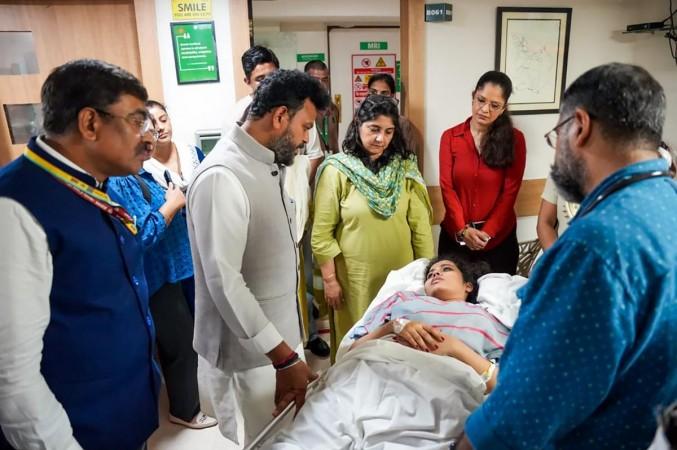
The flight was carrying 137 passengers, including three infants, and eight crew members comprising two pilots and six cabin crew. Several passengers and crew members were taken to hospital for medical evaluation and treatment following the incident.
The Directorate General of Civil Aviation (DGCA) has launched a detailed investigation into the incident. The probe is examining whether the pilots handled the turbulence appropriately, whether weather or other factors contributed to the incident, and whether the aircraft suffered any damage, including possible hydraulic-system failure following the sudden altitude drop.
Investigators are also examining whether the aircraft should have diverted to a closer airport, such as Varanasi or Lucknow, instead of continuing to Delhi.

The Ministry of Civil Aviation said the aircraft, bearing registration VT-EXO, experienced a momentary altitude variation before stabilising and landing safely at Indira Gandhi International Airport in New Delhi. The ministry and DGCA are closely monitoring the situation.
Civil Aviation Minister Ram Mohan Naidu, along with Civil Aviation Secretary Samir Kumar Sinha, visited the hospital to enquire about the condition of the injured passengers and assured them of all necessary assistance.
Pilots taken off flying duty
The pilots of the turbulence-hit flight are currently not flying, in line with the protocol followed while the investigation is pending.
DGCA regulations prescribe specific action if a crew member tests positive for psychoactive substances. In case of a first positive test, the pilot is referred for de-addiction and rehabilitation and can return to active flying after submitting a negative dope-test report.
A second positive test after returning to flying can result in suspension of the pilot's licence for three years, while a third positive test can lead to cancellation of the flying licence.
The International Civil Aviation Organization (ICAO) also states that licence holders must not exercise their privileges while under the influence of any psychoactive substance that could affect their ability to safely perform their duties.
The reported dope-test result, which remains unconfirmed by Air India, adds another line of inquiry to the DGCA investigation, which is already examining the crew's handling of the severe turbulence and the aircraft's condition following the incident.