
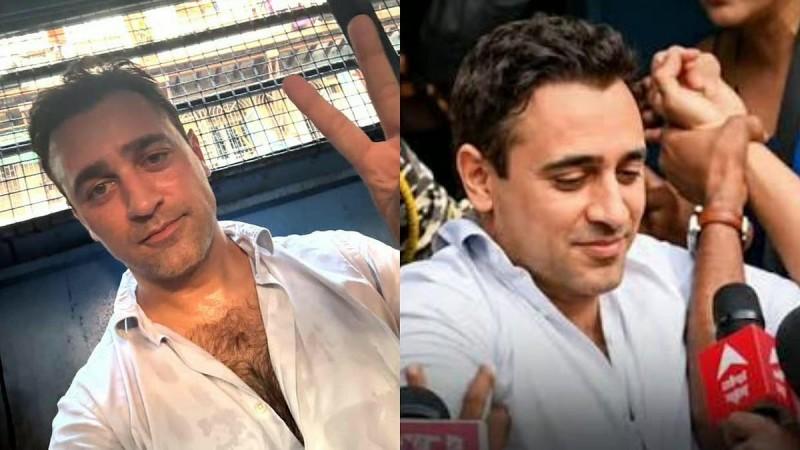
Bollywood actor Imran Khan is set to approach the Bombay High Court to challenge a notice issued by the Foreigners Regional Registration Office (FRRO) directing him to leave India by October 28, 2026. The action follows his participation in a protest against Chief Election Commissioner (CEC) Gyanesh Kumar at Mumbai's August Kranti Maidan on October 10.
According to Bar and Bench, Khan's plea is likely to be filed on October 16 and will be mentioned for an urgent hearing.
Why has Imran Khan been asked to leave India?
The FRRO issued the notice after a complaint by Bharatiya Janata Party (BJP) leader Kirit Somaiya, who alleged that Khan had violated rules governing foreign nationals by participating in a political demonstration.
Khan, who is a United States citizen and an Overseas Citizen of India (OCI) cardholder, was among those detained by Mumbai Police during the October 10 protest. The demonstration called for the resignation of CEC Gyanesh Kumar amid allegations of irregularities in the Special Intensive Revision (SIR) of electoral rolls.
Following the protest, Somaiya approached the Gamdevi police station seeking action against the actor. The complaint was subsequently forwarded to the FRRO, which issued the notice directing Khan to leave India by October 28.
The notice has brought renewed attention to the rules governing the participation of foreign nationals and OCI cardholders in political demonstrations in India.
What does the law say about OCI cardholders?
An OCI card allows eligible foreign nationals of Indian origin to visit and reside in India under specified conditions. However, it does not grant Indian citizenship or the full political rights available to Indian citizens.
The Immigration and Foreigners Act, 2025, empowers the Central Government to regulate the entry, stay and movement of foreign nationals in India. Section 29 provides for the removal of a foreign national in cases involving violations of the Act or rules and orders made under it, or an adverse security report.
The authorities have cited alleged violations of the rules applicable to foreign nationals in connection with the notice issued to Khan. The precise legal grounds for the action are expected to be examined as the matter proceeds.
Imran Khan's lawyers to challenge the notice
Khan's legal team is preparing to challenge the FRRO directive before the Bombay High Court. His lawyer has argued that the rules do not bar OCI cardholders from participating in protests, a position that could become central to the legal challenge.
The petition is expected to seek relief against the direction to leave India and question the legal basis for the immigration action. The High Court's response will determine whether the matter receives an urgent hearing and what further steps may follow.
As of October 15, the actor's proposed challenge is at the preparation stage, and no final judicial decision on the notice has been reported.
Anti-CEC protests and the SIR controversy
The protest at Mumbai's August Kranti Maidan was part of a wider campaign against the Election Commission's SIR exercise and demands for the resignation of CEC Gyanesh Kumar.
Opposition leaders and protesters have raised concerns about alleged voter deletions and the transparency of the electoral-roll revision process. The Election Commission's role and the handling of demonstrations have also become subjects of legal scrutiny.
Khan's decision to challenge the notice adds a legal dimension to the controversy, raising questions about the limits of political participation by foreign nationals and the powers of immigration authorities.
The Bombay High Court's consideration of the proposed petition could bring greater clarity to the legal issues surrounding the notice and the restrictions applicable to OCI cardholders participating in political demonstrations.