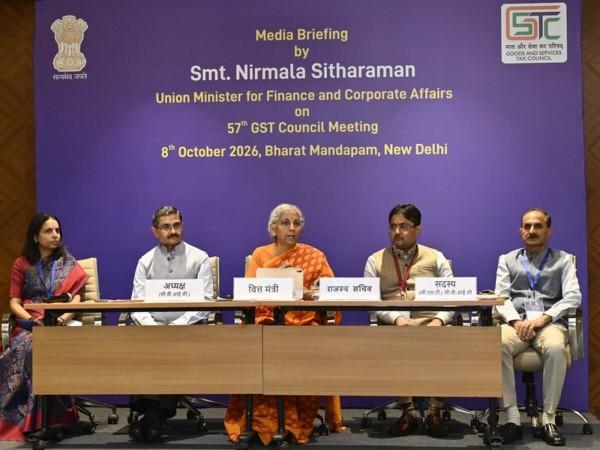
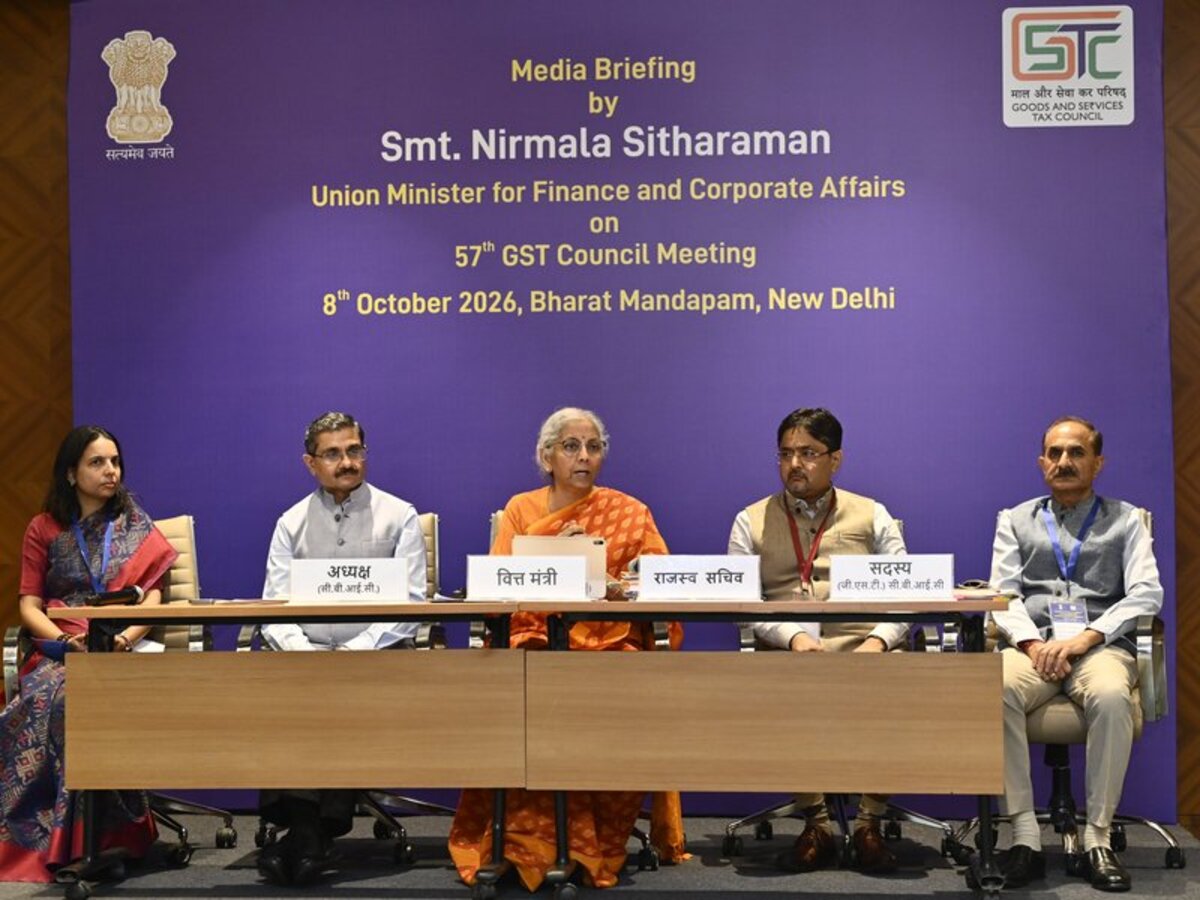
The 57th GST Council meeting addressed various concerns related to registration, returns, refunds, input tax credit, and dispute resolution to bolster trade and enhance clarity in tax treatment, according to a government factsheet released on Saturday.
Since 2017, registered taxpayers have grown from around 60 lakh to 1.70 crore as of September 2026, reflecting significant expansion under theGST regime.
By September 30, the GST system had processed over 3,053 crore invoice uploads and 833.82 crore e-way bills, with gross GST collections reaching Rs 12.46 lakh crore during April-September 2026, showing an 11.6 percent increase year-on-year.
To enable near real-time updates, the Council proposed automatic acceptance of amendments to registration details on the portal, excluding changes to the Principal Place of Business (PPoB). However, for taxpayers registered via the automatic route, all amendments including PPoB changes will be accepted automatically.
Cancellation of registrations will be approved automatically after pending returns are filed and dues cleared, applicable to taxpayers whose input tax credit (ITC) not passed on exceeds Rs 2.5 lakh in any month only if final returns are filed within the specified time.
Reforms also introduce a simplified registration process for small taxpayers supplying through e-commerce platforms.
of excess cash ledger balances will be processed automatically, reducing the acknowledgment period from 15 to 10 days, with deemed acknowledgment if no response is received.
For refund claims related to zero-rated supplies and inverted duty structure, 90 percent of the claimed amount is expected to be sanctioned based on risk assessment.
No show-cause notices will be issued if the tax amount involved is below Rs 10,000. Pending notices and appeals involving amounts under Rs 10,000 will be settled according to the minimum threshold as if it applied originally.
Penalties will be redefined as 'Charge' if the full tax amount along with interest and penalty is voluntarily paid within the stipulated time.
A reduced penalty rate of 5 percent will apply if tax and interest are paid within 30 days under section 73 or 60 days under section 74A following the adjudication order.
The minimum penalty of Rs 10,000 will be removed in non-fraud cases, and the maximum general penalty will be cut from Rs 25,000 to Rs 10,000. For orders involving only penalties with no tax demand, a maximum pre-deposit cap of Rs 40 crore will apply for appeals.
These recommendations build on the GST's achievements and aim to enhance ease of doing business while creating a more efficient and taxpayer-friendly GST environment, according to the factsheet.