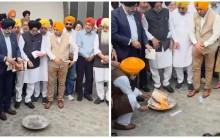
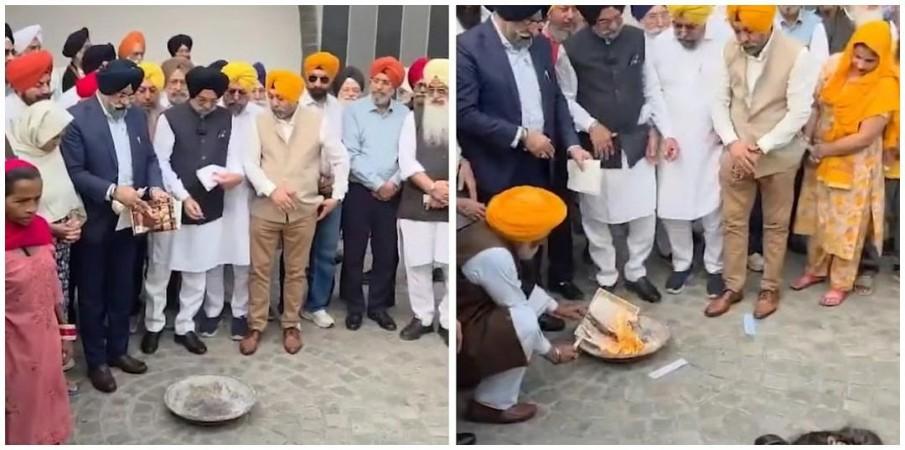
Families of victims of the 1984 anti-Sikh riots, along with members of the Delhi Sikh Gurdwara Management Committee (DSGMC), burnt a copy of Congress leader Sonia Gandhi's memoir at Delhi's Rakab Ganj Gurdwara on Thursday, November 12. The protest was organised over Gandhi's account of the 1984 anti-Sikh violence in her recently released book, Belonging: A Journey of Love.
The protesters expressed strong resentment over the memoir, alleging that her account failed to adequately address the responsibility for the violence in which thousands of Sikhs were killed. The incident was also captured on video.
The memoir, released on November 10, has triggered a political controversy over Gandhi's remarks on the riots and the role of her husband and former Prime Minister Rajiv Gandhi during the violence.
What did Sonia Gandhi write about the 1984 anti-Sikh riots?
In her memoir, Sonia Gandhi described the 1984 anti-Sikh riots as a "tragic and shameful" chapter in India's history. Recalling the violence that erupted after the assassination of then Prime Minister Indira Gandhi on October 31, 1984, she wrote that the situation quickly deteriorated, with innocent members of the Sikh community becoming targets of brutal attacks.
She stated that more than 2,000 people were killed in Delhi alone and acknowledged that the violence exposed a failure of governance.
Sonia Gandhi also wrote that although Rajiv Gandhi's "heart held no bigotry or rancour", he was thrust into a moment in history when governance had failed, paving the way for barbarism.
Delhi: Leaders and workers of the Delhi Sikh Gurdwara Management Committee (DSGMC), alongside families of 1984 anti-Sikh riot victims, staged a protest at Gurdwara Rakab Ganj Sahib, where they burned copies of Congress leader Sonia Gandhi’s memoir, Belonging: A Journey of Love. (Source: DSGMC)
— IANS (@ians_india) November 12, 2026
Why has Sonia Gandhi's memoir sparked controversy?
The account has drawn criticism from political opponents and sections of the Sikh community, with questions being raised over the Congress party's response to the 1984 violence and the accountability of those accused of involvement.
The protests at Rakab Ganj Gurdwara reflect the continuing anger among victims' families, many of whom have spent decades seeking justice for their relatives.
The 1984 anti-Sikh riots broke out following Indira Gandhi's assassination by her Sikh bodyguards. Thousands of Sikhs were killed across the country, with Delhi witnessing some of the worst violence. The issue continues to remain a sensitive and contentious chapter in India's political history.